Li Qingxiang, Xu Le, Li Yuke, Yang Rong, Qiao Qiao, Wang Yifei, Wang Lin, Guo Yuxing, Guo Chuanbin
Department of Oral and Maxillofacial Surgery, Peking University School and Hospital of Stomatology, National Center of Stomatology, National Clinical Research Center for Oral Diseases, National Engineering Laboratory for Digital and Material Technology of Stomatology, Beijing Key Laboratory of Digital Stomatology, Research Center of Engineering and Technology for Computerized Dentistry Ministry of Health, NMPA Key Laboratory Technology for Computerized Dentistry Ministry of Health, NMPA Key Laboratory for Dental Materials, Beijing, China.
Front Genet. 2021 Jul 8;12:670746. doi: 10.3389/fgene.2021.670746. eCollection 2021.
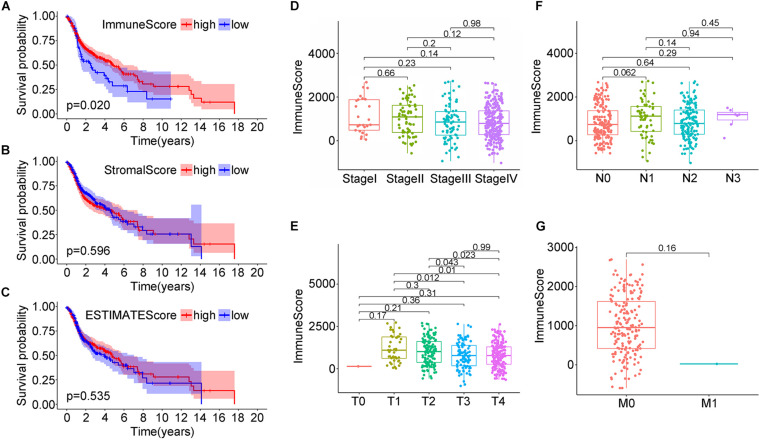
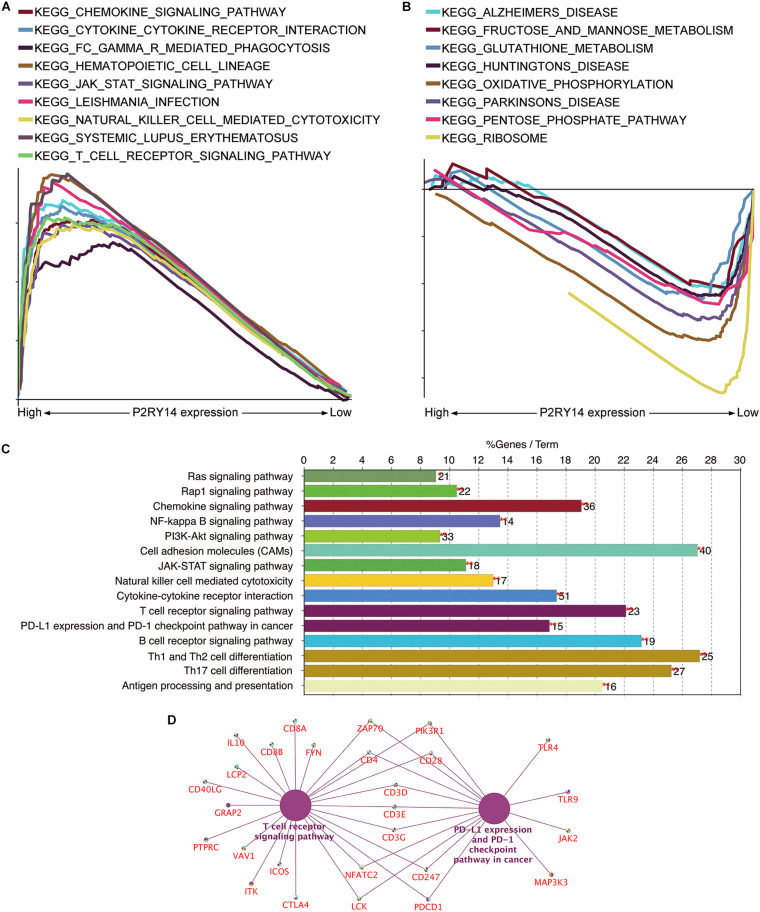
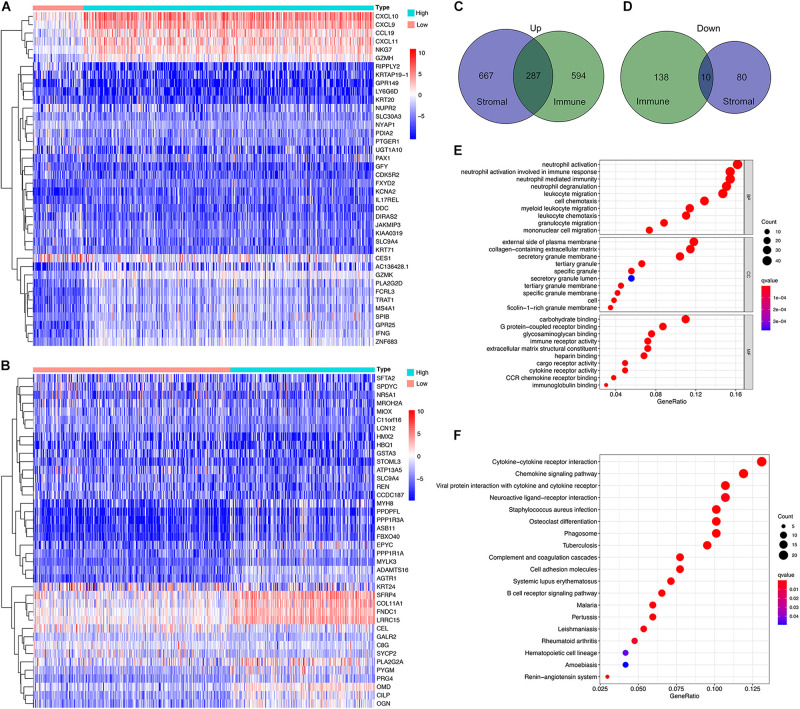
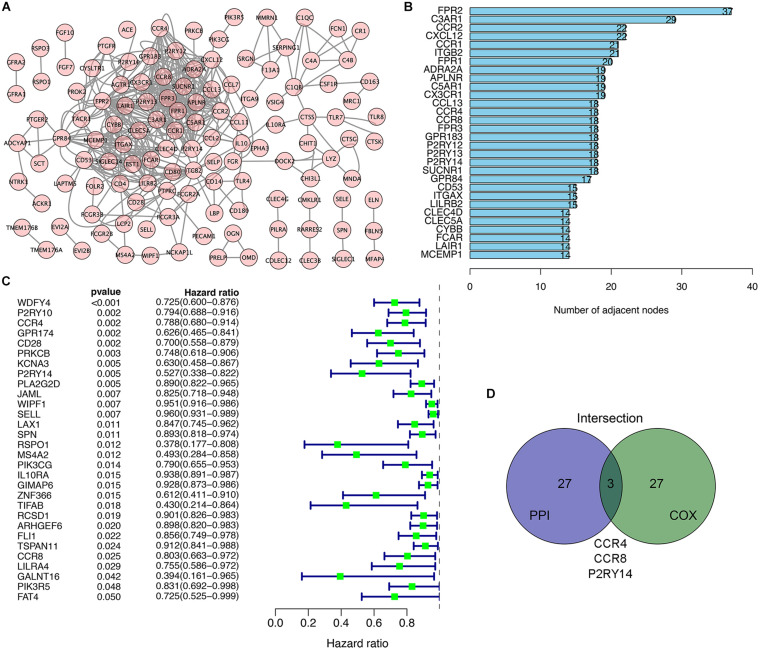
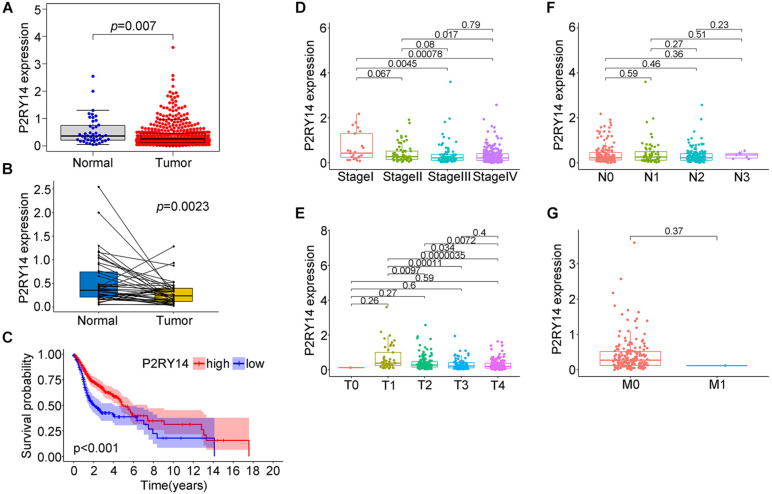
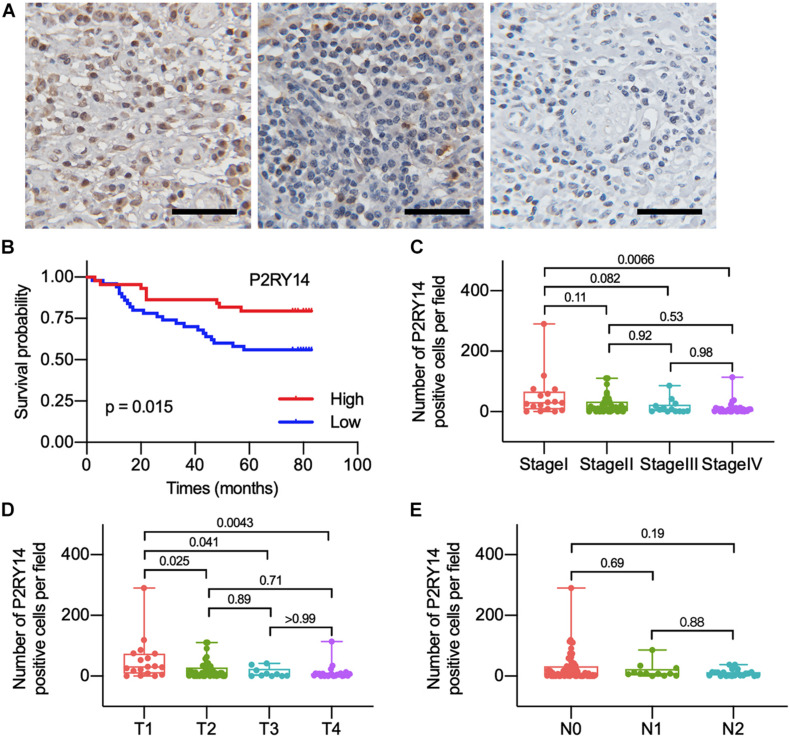
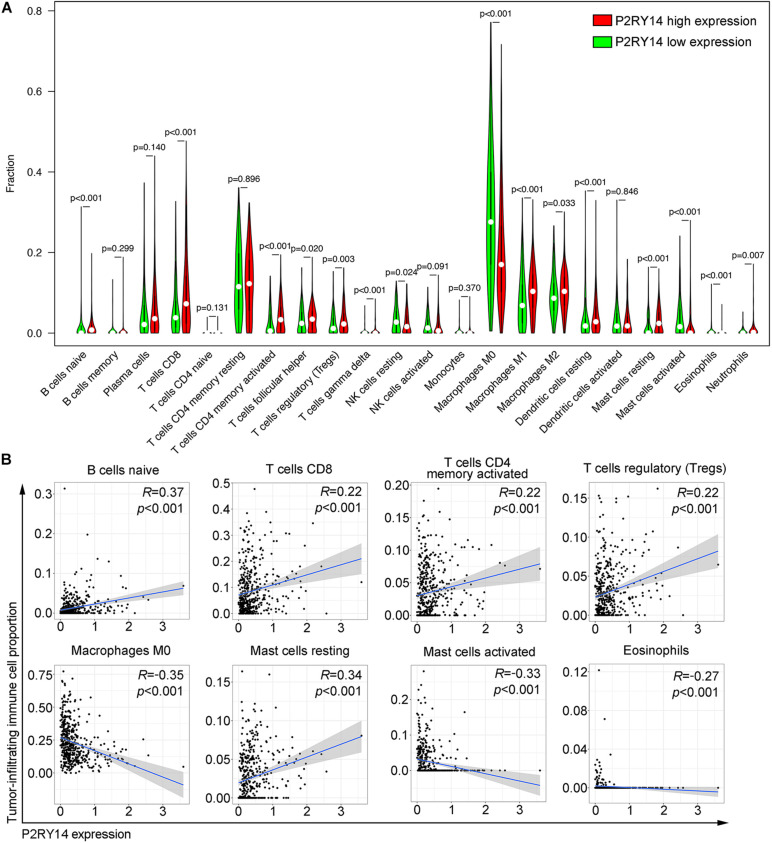
The tumor microenvironment (TME) has a crucial role in tumor development, progression, and treatment response. Yet, the exact interaction between cancer biology and the TME is not fully understood. The following study analyzed the correlation between immune/stromal/estimate scores and survival prognosis in head and neck squamous cell carcinoma (HNSC) using a bioinformatic method. As a result, a predictive biomarker, UDP-glucose-specific G(i) protein-coupled P2Y receptor (P2RY14), was discovered. The potential role of P2RY14-driven signaling pathways in the immune-remodeling of TME was then investigated. Briefly, low immune scores were associated with unfavorable prognosis and clinical-stage, larger tumor size, and the down-regulation of in HNSC patients. In addition, the survival analysis showed that HNSC patients with high expression had longer survival than patients with low expression from both TCGA databases and our own patients. We further discovered that is involved in the immune activity in the TME of HNSC; a downregulation of resulted in being an indicator for the conversion of TME status (from immune-dominant to metabolic-dominant status). The intersection analysis of genes co-expressed with indicated that the T-cell receptor signaling pathway and PD-L1 expression and PD-1 checkpoint pathway were candidate signaling pathways driven by the gene in HNSC. Further investigation of immune-associated signaling pathways regulated by may help HNSC patients gain higher immunotherapy benefits.
肿瘤微环境(TME)在肿瘤的发生、发展及治疗反应中起着关键作用。然而,癌症生物学与TME之间的确切相互作用尚未完全明晰。以下研究运用生物信息学方法分析了头颈部鳞状细胞癌(HNSC)中免疫/基质/估计评分与生存预后之间的相关性。结果,发现了一种预测性生物标志物,即UDP-葡萄糖特异性G(i)蛋白偶联P2Y受体(P2RY14)。随后研究了P2RY14驱动的信号通路在TME免疫重塑中的潜在作用。简而言之,低免疫评分与HNSC患者的不良预后、临床分期、更大的肿瘤大小以及[此处原文缺失相关基因]的下调相关。此外,生存分析表明,无论是来自TCGA数据库还是我们自己的患者,高表达的HNSC患者比低表达患者生存期更长。我们进一步发现[此处原文缺失相关基因]参与了HNSC的TME免疫活动;[此处原文缺失相关基因]的下调导致成为TME状态转换(从免疫主导状态转变为代谢主导状态)的一个指标。与[此处原文缺失相关基因]共表达的基因的交集分析表明,T细胞受体信号通路以及PD-L1表达和PD-1检查点通路是HNSC中由[此处原文缺失相关基因]驱动的候选信号通路。对由[此处原文缺失相关基因]调控的免疫相关信号通路的进一步研究可能有助于HNSC患者获得更高的免疫治疗益处。