Naik Bindu, Goyal S K, Tripathi Abhishek Dutt, Kumar Vijay
Department of Agricultural Engineering (Formely Farm Engineering), Institute of Agricultural Sciences, Banaras Hindu University, Varanasi, UP, 221005, India.
Centre of Food Science and Technology, Institute of Agricultural Sciences, Banaras Hindu University, Varanasi, UP, 221005, India.
J Genet Eng Biotechnol. 2021 Jul 29;19(1):110. doi: 10.1186/s43141-021-00208-0.
Pullulanases are the significant industrial group in the 13 glycosyl hydrolases category, known as the α-amylases family. There are very few reports on pullulanase from fungal sources. Based on the above research gap, the present study was undertaken to explore the endophytic fungi for their pullulanase-producing capabilities.
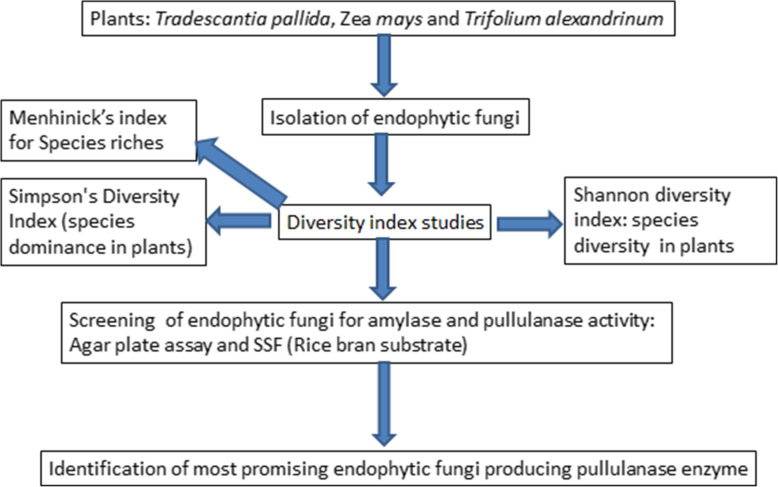
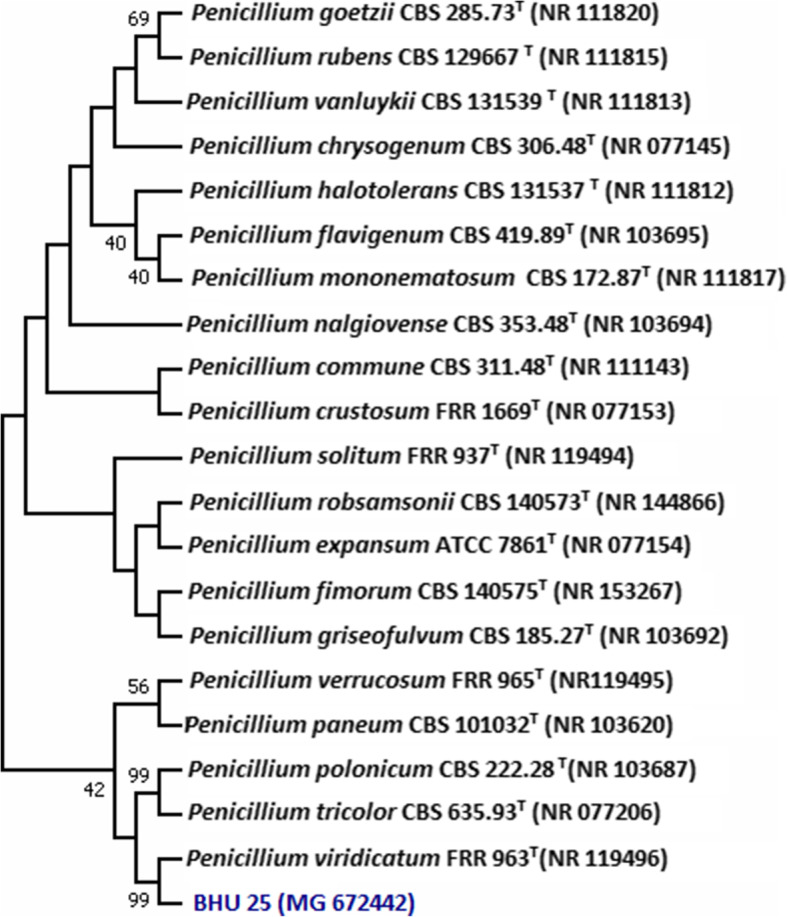
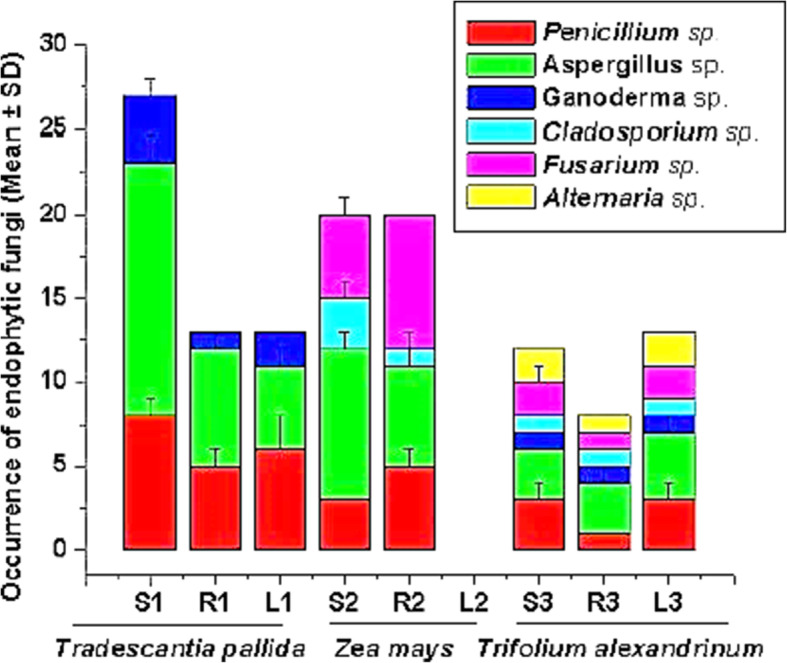
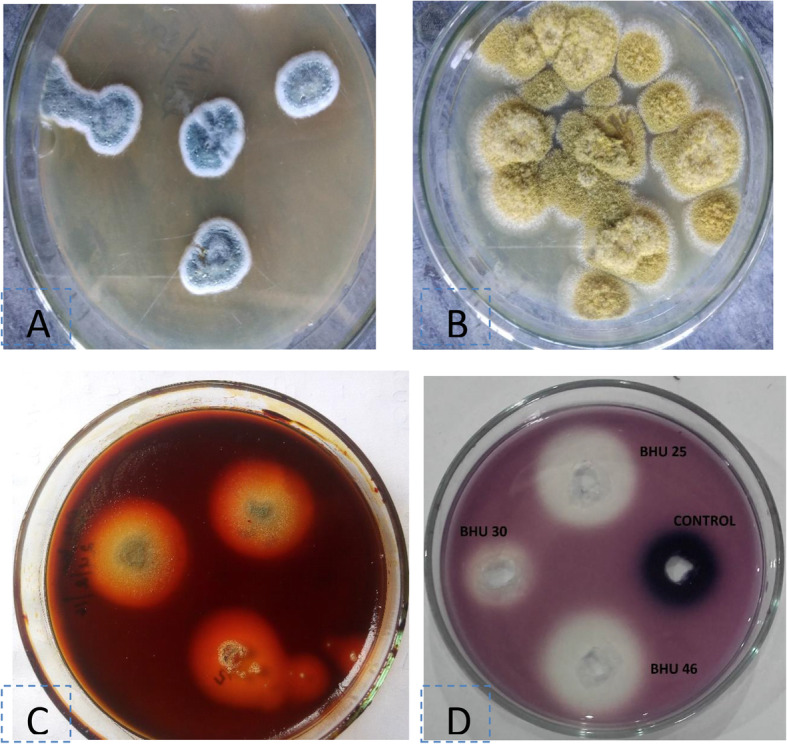
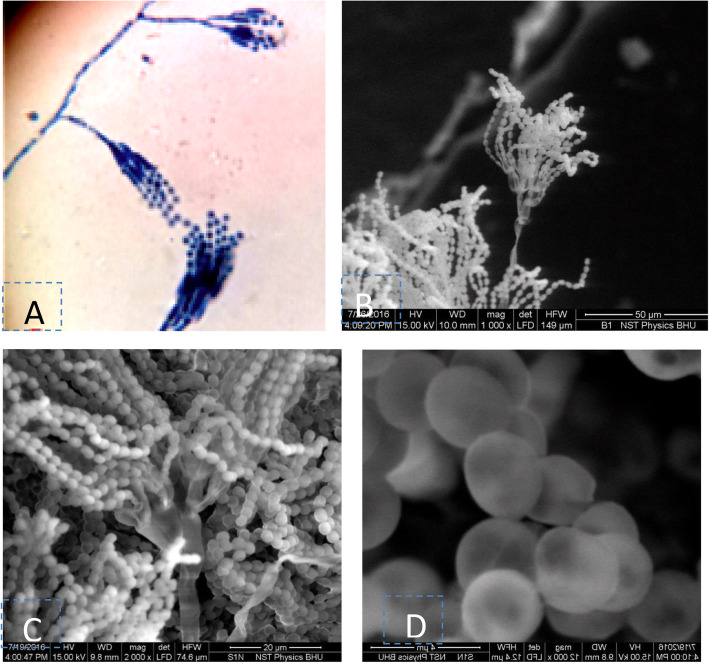
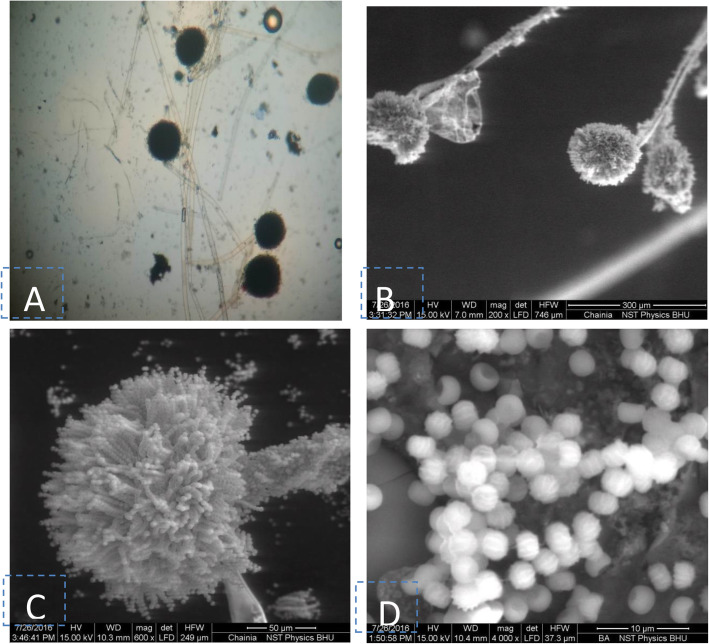
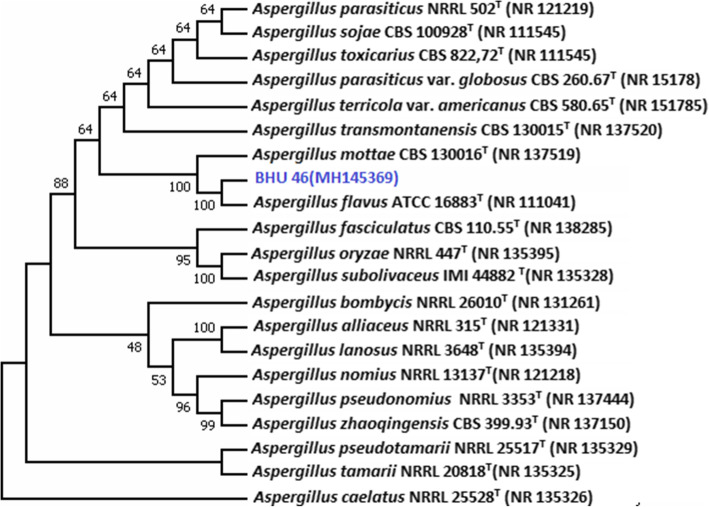
A total of 126 endophytes were isolated from Tradescantia pallida, Zea mays, and Trifolium alexandrinum. Aspergillus, Penicillium, and Ganoderma species recovered highest from the stem of Tradescantia palida. Fusarium was dominant in the stem and leaf of Zea mays. Penicillium, Aspergillus, Ganoderma, Cladosporium, Fusarium, and Alternaria were recovered from the Trifolium alexandrium. The Shannon index in Tradescantia pallida was highest in leaves while in Zea mays and Trifolium alexandrinum, it is highest in the stem. The Simpson's index is highest in the case of Zea mays stem and root. Species richness was indicated by Menhinick's index, and it was found that this value was highest in the roots of Trifolium alexandrinum. As per our knowledge, no comparative data is available on the endophytic diversity of the above plants taken for the study. Out of 126 endophytes, only 2.38% produced pullulanase while 7.94% produced amylase. The recovery of pullulanase-producing endophytic fungi was very less. But the importance of pullulanase is high as compared to amylase because it has both α-1,6 and α-1,4 hydrolyzing ability. Therefore, the most promising isolates were identified by ITS sequence analysis. Based on spore chain morphology, isolates BHU-25 and BHU-30 were identified as Penicillium sp. and Aspergillus species, respectively. This is the first report of pullulanase from endophytic Aspergillus and Penicillium.
Endophytes Aspergillus sp. and Penicillium sp. produce pullulanase enzyme. This is the first report of pullulanase from endophytic Aspergillus and Penicillium.
支链淀粉酶是13种糖基水解酶类别中的重要工业酶类,属于α-淀粉酶家族。关于真菌来源的支链淀粉酶的报道非常少。基于上述研究空白,本研究旨在探索内生真菌产生支链淀粉酶的能力。
从紫露草、玉米和埃及三叶草中总共分离出126种内生菌。曲霉属、青霉属和灵芝属的菌种在紫露草茎中回收率最高。镰刀菌在玉米的茎和叶中占主导地位。从埃及三叶草中分离出青霉属、曲霉属、灵芝属、枝孢属、镰刀菌属和链格孢属。紫露草的香农指数在叶片中最高,而在玉米和埃及三叶草中,茎中的香农指数最高。辛普森指数在玉米的茎和根中最高。物种丰富度由门希尼克指数表示,发现该值在埃及三叶草的根中最高。据我们所知,对于本研究中所采用的上述植物的内生菌多样性,尚无比较数据。在126种内生菌中,只有2.38%产生支链淀粉酶,而7.94%产生淀粉酶。产生支链淀粉酶的内生真菌的回收率非常低。但与淀粉酶相比,支链淀粉酶的重要性更高,因为它同时具有α-1,6和α-1,4水解能力。因此,通过ITS序列分析鉴定出最有前景的分离株。根据孢子链形态,分离株BHU-25和BHU-30分别被鉴定为青霉属和曲霉属。这是关于内生曲霉属和青霉属产生支链淀粉酶的首次报道。
内生曲霉属和青霉属产生支链淀粉酶。这是关于内生曲霉属和青霉属产生支链淀粉酶的首次报道。