Department of Internal Medicine, Division of Infectious Diseases, Washington University School of Medicine, Saint Louis, Missouri, USA.
Center for Neuroimmunology and Neuroinfectious Diseases, Washington University School of Medicine, Saint Louis, Missouri, USA.
Aging Cell. 2021 Aug;20(8):e13412. doi: 10.1111/acel.13412. Epub 2021 Jul 30.
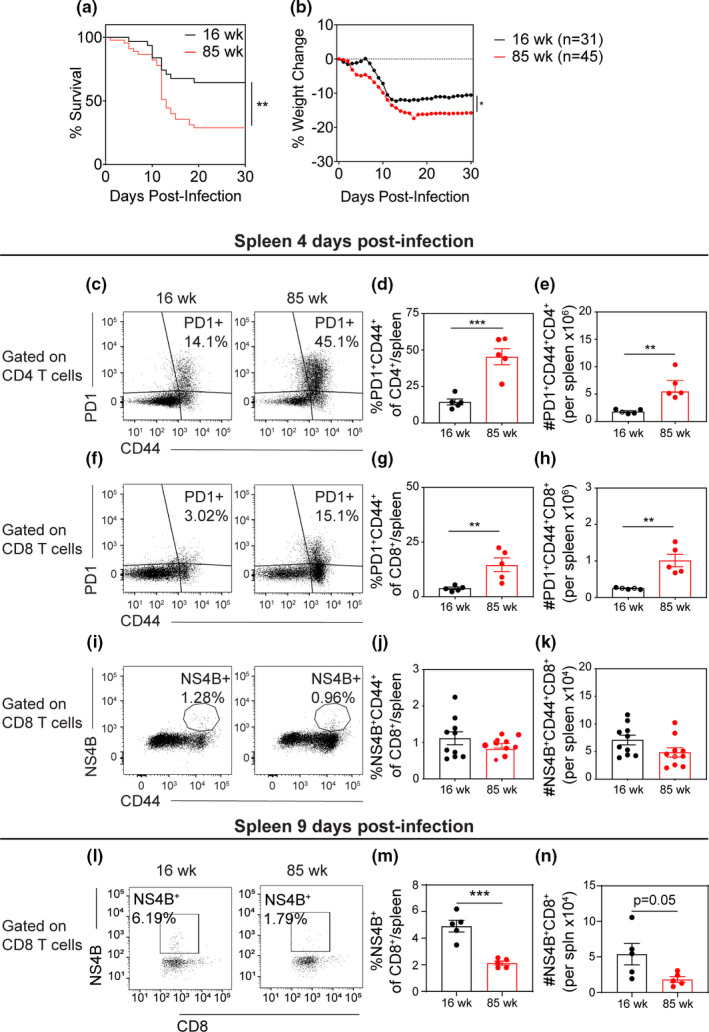
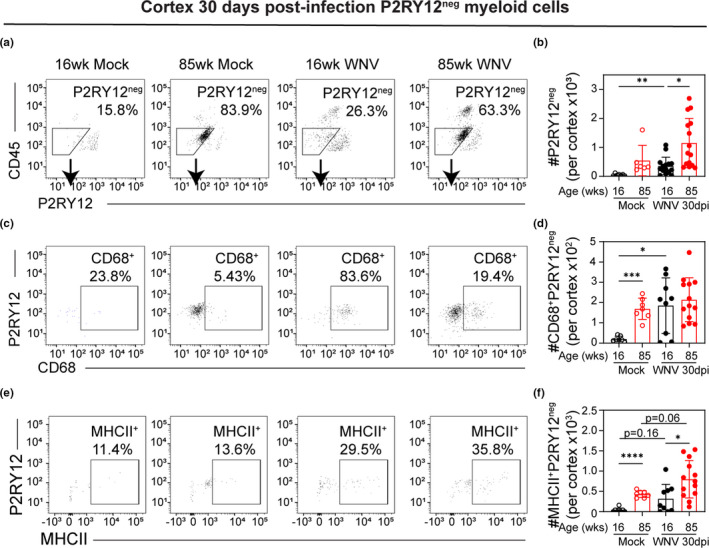
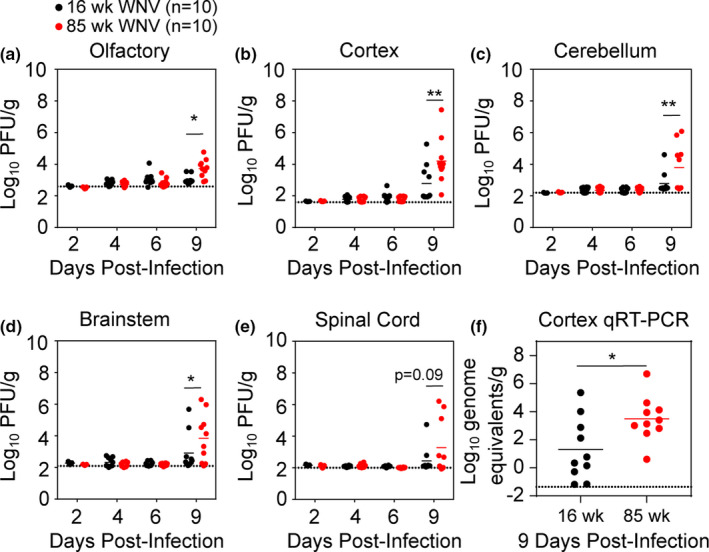
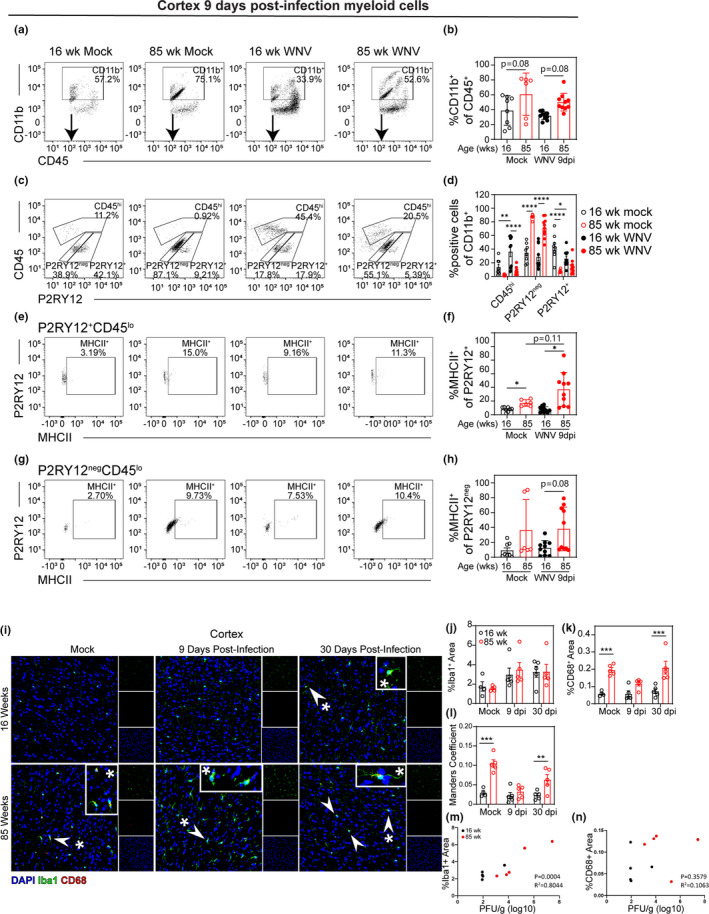
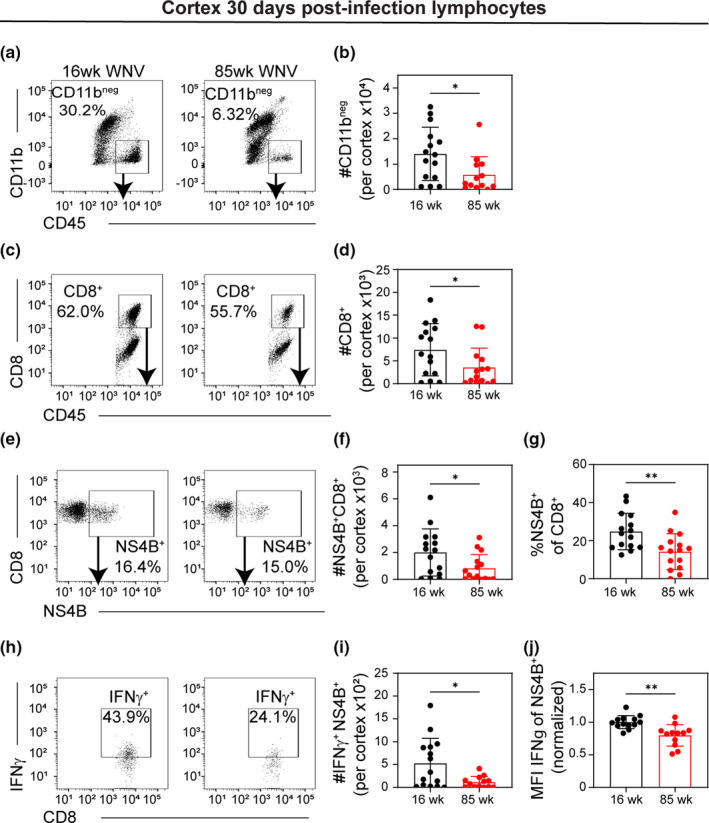
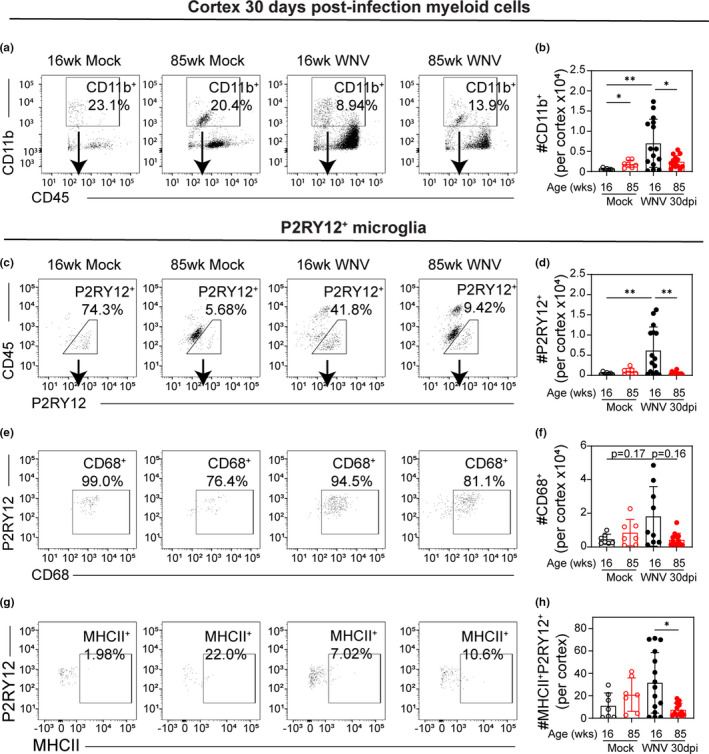
West Nile virus (WNV) is an emerging pathogen that causes disease syndromes ranging from a mild flu-like illness to encephalitis. While the incidence of WNV infection is fairly uniform across age groups, the risk of lethal encephalitis increases with advanced age. Prior studies have demonstrated age-related, functional immune deficits that limit systemic antiviral immunity and increase mortality; however, the effect of age on antiviral immune responses specifically within the central nervous system (CNS) is unknown. Here, we show that aged mice exhibit increased peripheral organ and CNS tissue viral burden, the latter of which is associated with alterations in activation of both myeloid and lymphoid cells compared with similarly infected younger animals. Aged mice exhibit lower MHCII expression by microglia, and higher levels of PD1 and lower levels of IFNγ expression by WNV-specific CD8 T cells in the CNS and CD8 CD45 cells. These data indicate that the aged CNS exhibits limited local reactivation of T cells during viral encephalitis, which may lead to reduced virologic control at this site.
西尼罗河病毒(WNV)是一种新兴的病原体,可引起从轻度流感样疾病到脑炎的多种疾病综合征。虽然 WNV 感染的发病率在各年龄段相当均匀,但致命性脑炎的风险随着年龄的增长而增加。先前的研究表明,年龄相关的功能性免疫缺陷会限制全身性抗病毒免疫并增加死亡率;然而,年龄对中枢神经系统(CNS)内抗病毒免疫反应的影响尚不清楚。在这里,我们表明老年小鼠表现出外周器官和中枢神经系统组织病毒负担增加,后者与与感染相似的年轻动物相比,髓样和淋巴样细胞的激活发生改变有关。老年小鼠的小胶质细胞 MHCII 表达降低,WNV 特异性 CD8 T 细胞和 CD8 CD45 细胞中的 PD1 水平升高,IFNγ 水平降低。这些数据表明,在病毒性脑炎期间,衰老的中枢神经系统表现出 T 细胞局部再激活受限,这可能导致该部位的病毒学控制降低。