Han Liang, Shen Pan, Yan Jiahui, Huang Yao, Ba Xin, Lin Weiji, Wang Hui, Huang Ying, Qin Kai, Wang Yu, Chen Zhe, Tu Shenghao
Department of Integrated Chinese Traditional and Western Medicine, Tongji Hospital, Tongji Medical College of Huazhong University of Science and Technology, Wuhan, China.
Rehabilitation & Sports Medicine Research Institute of Zhejiang Province, Zhejiang Provincial People's Hospital, People's Hospital of Hangzhou Medical College, Hangzhou, China.
Front Med (Lausanne). 2021 Jul 16;8:644724. doi: 10.3389/fmed.2021.644724. eCollection 2021.
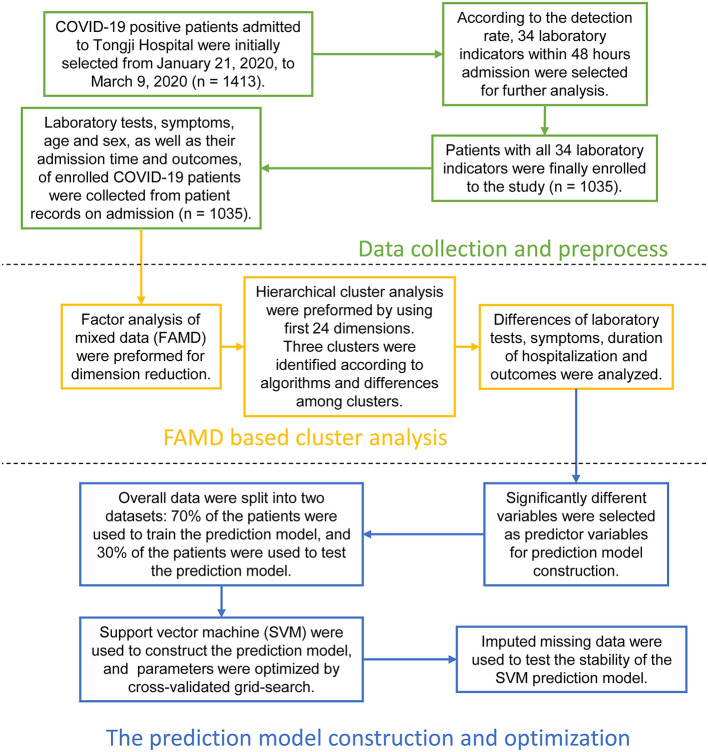
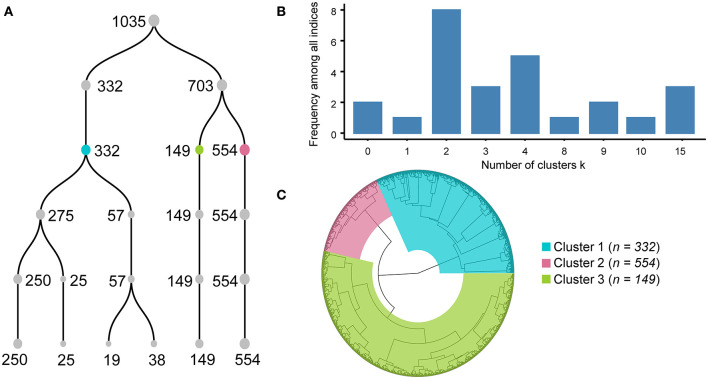
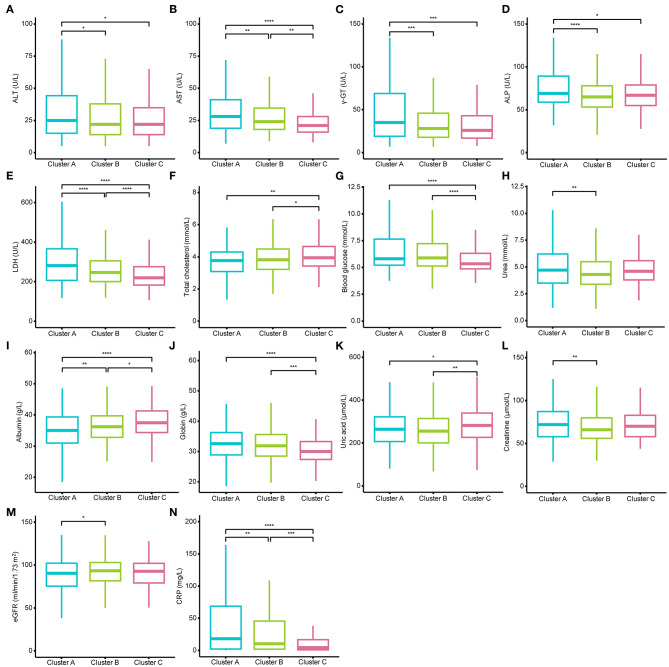
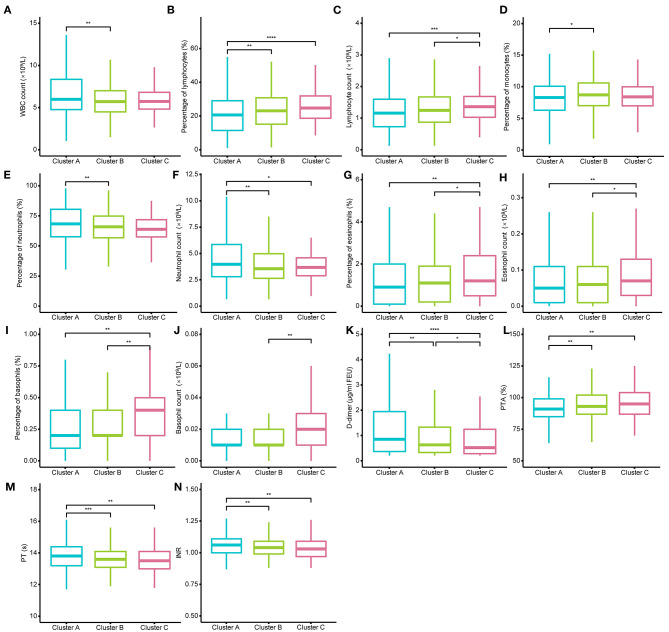
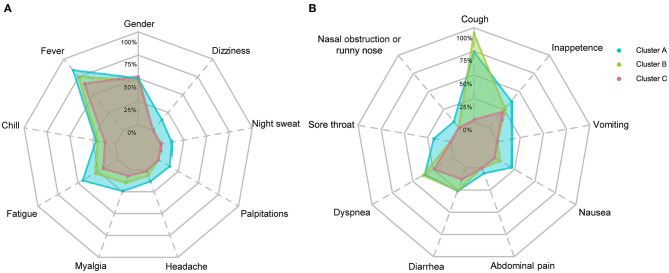
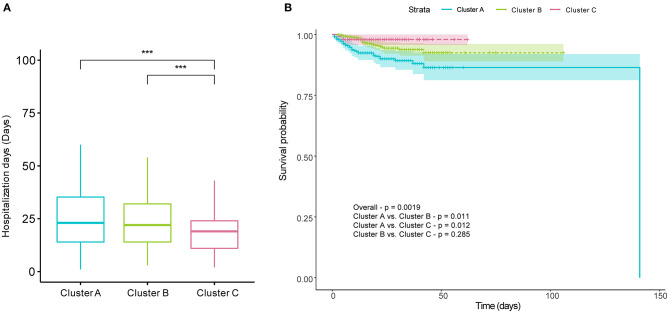
The COVID-19 outbreak has brought great challenges to healthcare resources around the world. Patients with COVID-19 exhibit a broad spectrum of clinical characteristics. In this study, the Factor Analysis of Mixed Data (FAMD)-based cluster analysis was applied to demographic information, laboratory indicators at the time of admission, and symptoms presented before admission. Three COVID-19 clusters with distinct clinical features were identified by FAMD-based cluster analysis. The FAMD-based cluster analysis results indicated that the symptoms of COVID-19 were roughly consistent with the laboratory findings of COVID-19 patients. Furthermore, symptoms for mild patients were atypical. Different hospital stay durations and survival differences among the three clusters were also found, and the more severe the clinical characteristics were, the worse the prognosis. Our aims were to describe COVID-19 clusters with different clinical characteristics, and a classifier model according to the results of FAMD-based cluster analysis was constructed to help provide better individualized treatments for numerous COVID-19 patients in the future.
新型冠状病毒肺炎(COVID-19)疫情给全球医疗资源带来了巨大挑战。COVID-19患者表现出广泛的临床特征。在本研究中,基于混合数据因子分析(FAMD)的聚类分析应用于人口统计学信息、入院时的实验室指标以及入院前出现的症状。通过基于FAMD的聚类分析确定了三个具有不同临床特征的COVID-19聚类。基于FAMD的聚类分析结果表明,COVID-19的症状与COVID-19患者的实验室检查结果大致一致。此外,轻症患者的症状不典型。还发现了三个聚类之间不同的住院时间和生存差异,临床特征越严重,预后越差。我们的目的是描述具有不同临床特征的COVID-19聚类,并根据基于FAMD的聚类分析结果构建分类模型,以帮助未来为众多COVID-19患者提供更好的个体化治疗。