Hu Xingshuo, Xie Fei, Wang Kaifei, Gu Hongjun, Mo Guoxin, Wen Ruoxuan, Zhao Ying, Yang Qingyun, Möller Knut, Zhao Zhanqi, Xie Lixin
Critical Care, College of Pulmonary and Critical Care Medicine, Chinese PLA General Hospital, Beijing, China.
Institute of Technical Medicine, Furtwangen University, Villingen-Schwenningen, Germany.
Front Med (Lausanne). 2021 Jul 14;8:663608. doi: 10.3389/fmed.2021.663608. eCollection 2021.
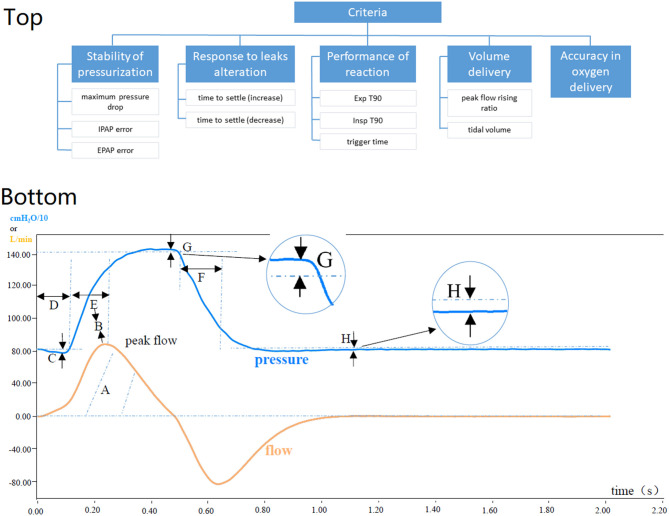
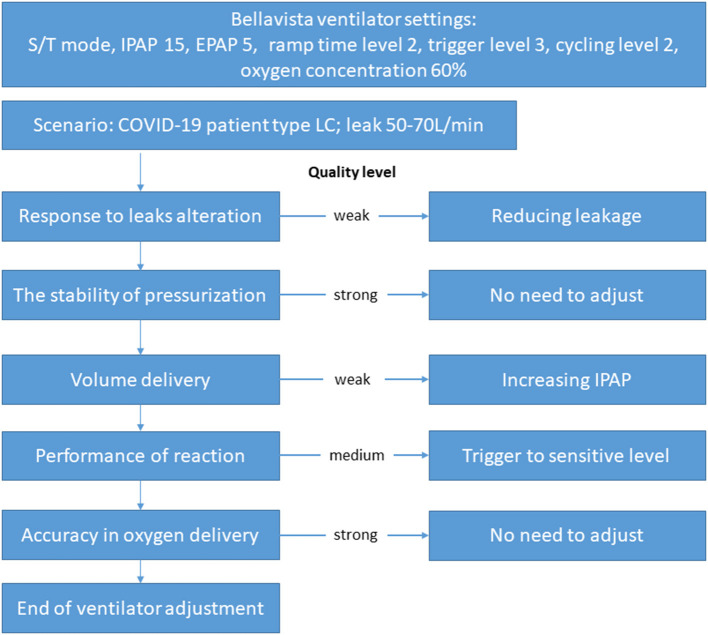
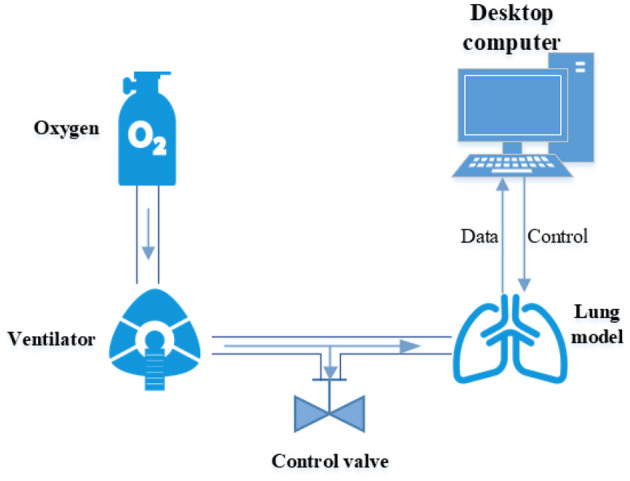
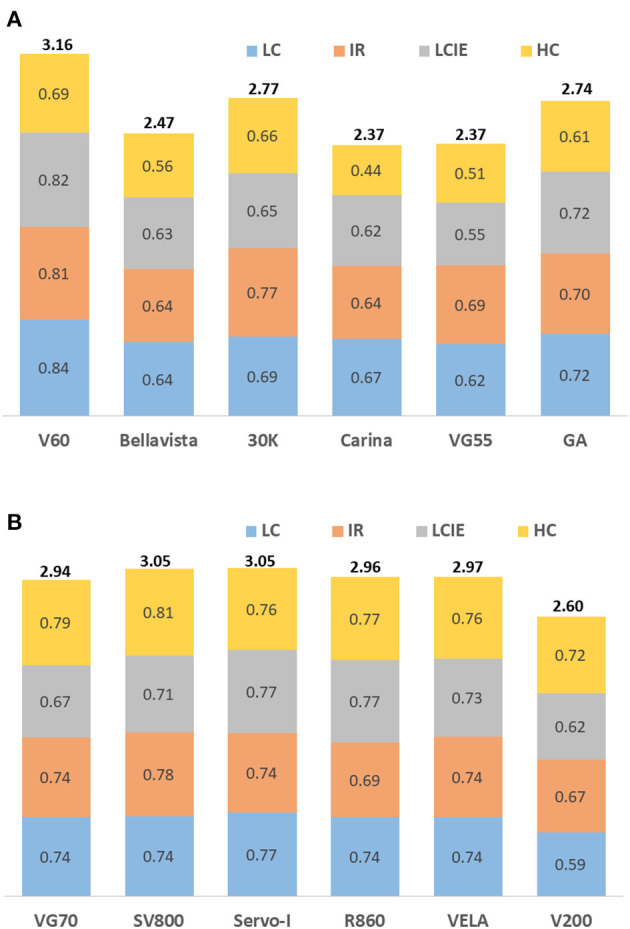
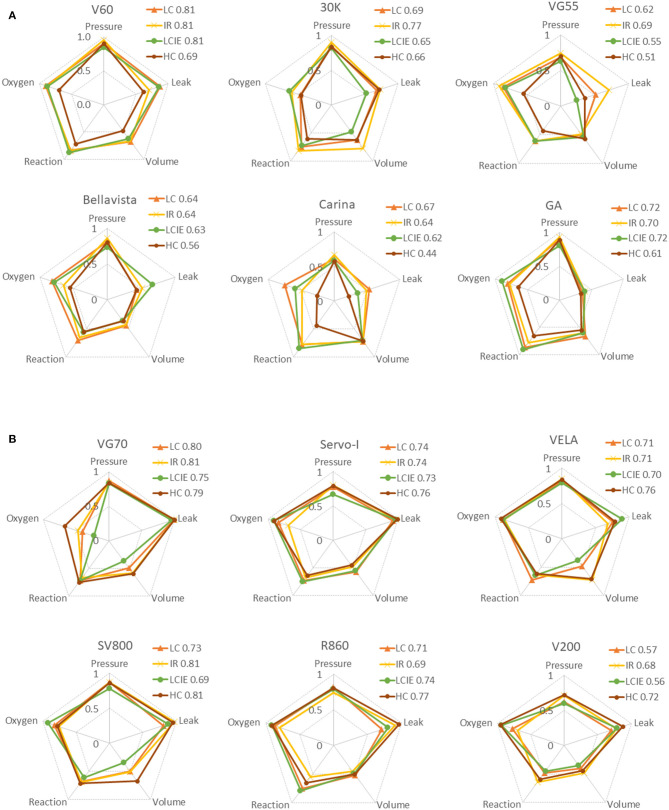
Ventilators in the intensive care units (ICU) are life-support devices that help physicians to gain additional time to cure the patients. The aim of the study was to establish a scoring system to evaluate the ventilator performance in the context of COVID-19. The scoring system was established by weighting the ventilator performance on five different aspects: the stability of pressurization, response to leaks alteration, performance of reaction, volume delivery, and accuracy in oxygen delivery. The weighting factors were determined with analytic hierarchy process (AHP). Survey was sent out to 66 clinical and mechanical experts. The scoring system was built based on 54 valid replies. A total of 12 commercially available ICU ventilators providing non-invasive ventilation were evaluated using the novel scoring system. A total of eight ICU ventilators with non-invasive ventilation mode and four dedicated non-invasive ventilators were tested according to the scoring system. Four COVID-19 phenotypes were simulated using the ASL5000 lung simulator, namely (1) increased airway resistance (IR) (10 cm HO/L/s), (2) low compliance (LC) (compliance of 20 ml/cmHO), (3) low compliance plus increased respiratory effort (LCIE) (respiratory rate of 40 and inspiratory effort of 10 cmHO), (4) high compliance (HC) (compliance of 50 ml/cmHO). All of the ventilators were set to three combinations of pressure support and positive end-expiratory pressure levels. The data were collected at baseline and at three customized leak levels. Significant inaccuracies and variations in performance between different non-invasive ventilators were observed, especially in the aspect of leaks alteration, oxygen and volume delivery. Some ventilators have stable performance in different simulated phenotypes whereas the others have over 10% scoring differences. It is feasible to use the proposed scoring system to evaluate the ventilator performance. In the COVID-19 pandemic, clinicians should be aware of possible strengths and weaknesses of ventilators.
重症监护病房(ICU)中的呼吸机是维持生命的设备,可帮助医生争取更多时间来治疗患者。本研究的目的是建立一个评分系统,以评估在2019冠状病毒病背景下的呼吸机性能。该评分系统通过对呼吸机性能的五个不同方面进行加权来建立:增压稳定性、对漏气变化的响应、反应性能、容积输送和氧气输送准确性。加权因子采用层次分析法(AHP)确定。向66位临床和机械专家发送了调查问卷。该评分系统基于54份有效回复构建。使用该新型评分系统对12台提供无创通气的市售ICU呼吸机进行了评估。根据评分系统对8台具有无创通气模式的ICU呼吸机和4台专用无创呼吸机进行了测试。使用ASL5000肺模拟器模拟了四种2019冠状病毒病表型,即(1)气道阻力增加(IR)(10 cm HO/L/s),(2)低顺应性(LC)(顺应性为20 ml/cmHO),(3)低顺应性加呼吸努力增加(LCIE)(呼吸频率为40次/分钟,吸气努力为10 cmHO),(4)高顺应性(HC)(顺应性为50 ml/cmHO)。所有呼吸机均设置为压力支持和呼气末正压水平的三种组合。在基线和三个定制的漏气水平下收集数据。观察到不同无创呼吸机之间存在显著的性能不准确和差异,尤其是在漏气变化、氧气和容积输送方面。一些呼吸机在不同模拟表型中性能稳定,而另一些呼吸机的评分差异超过10%。使用所提出的评分系统评估呼吸机性能是可行的。在2019冠状病毒病大流行期间,临床医生应了解呼吸机可能存在的优缺点。