Department of Biotechnology, Yonsei University, Seoul, Republic of Korea.
Department of Biochemistry, Yonsei University, Seoul, Republic of Korea.
Nat Commun. 2021 Aug 5;12(1):4730. doi: 10.1038/s41467-021-24775-5.
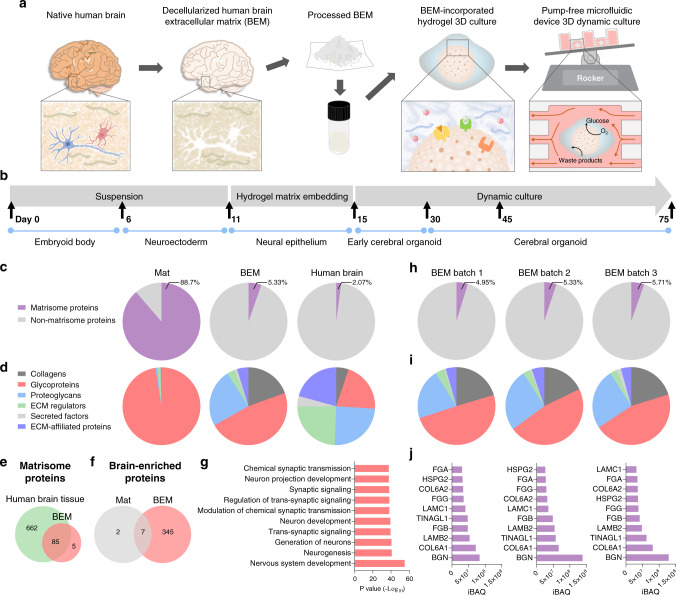
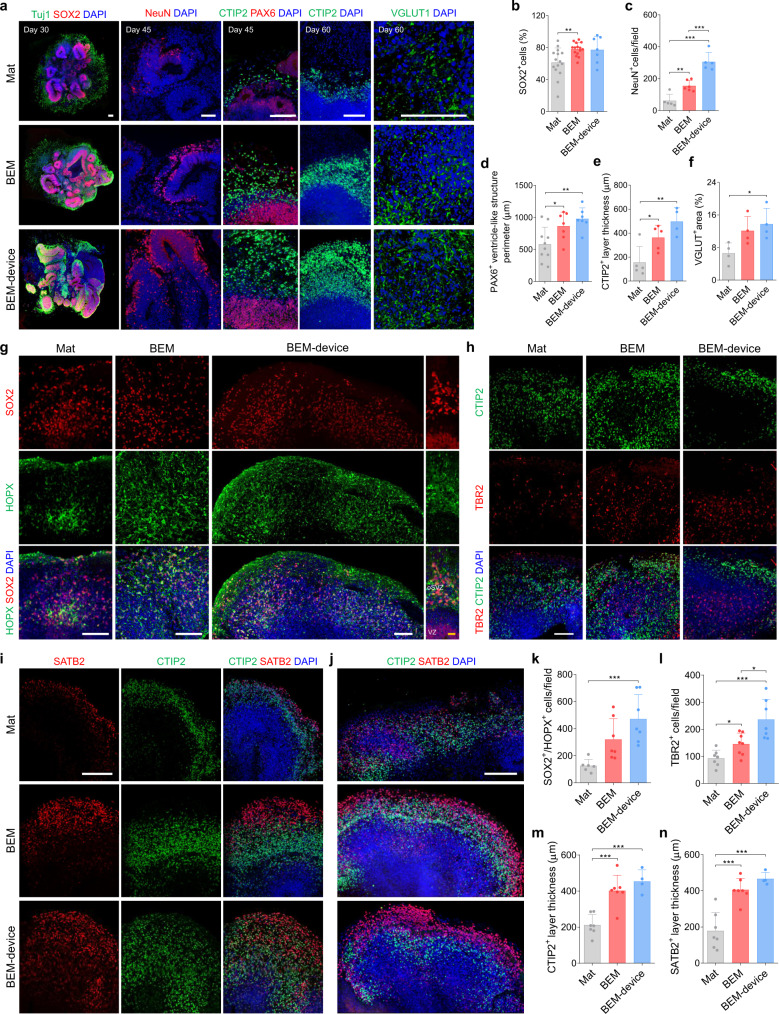
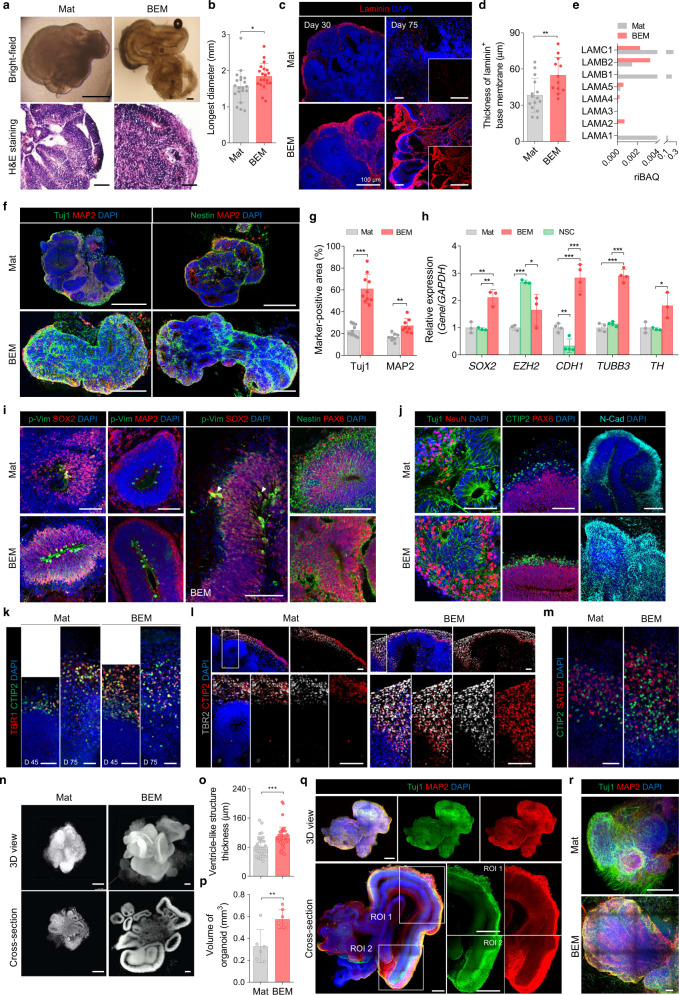
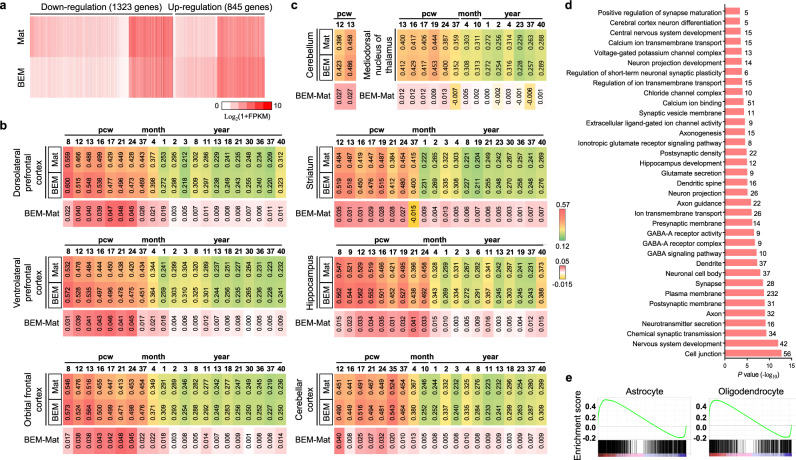
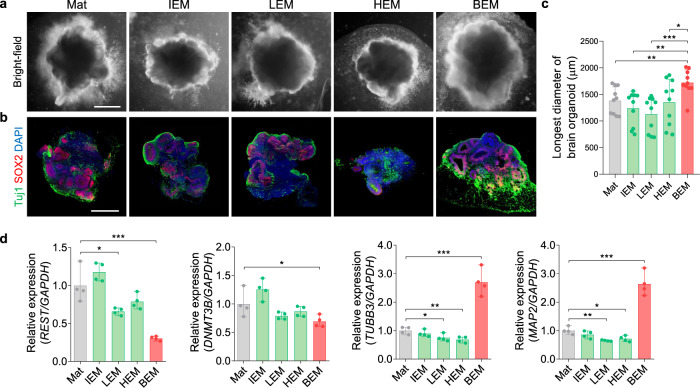
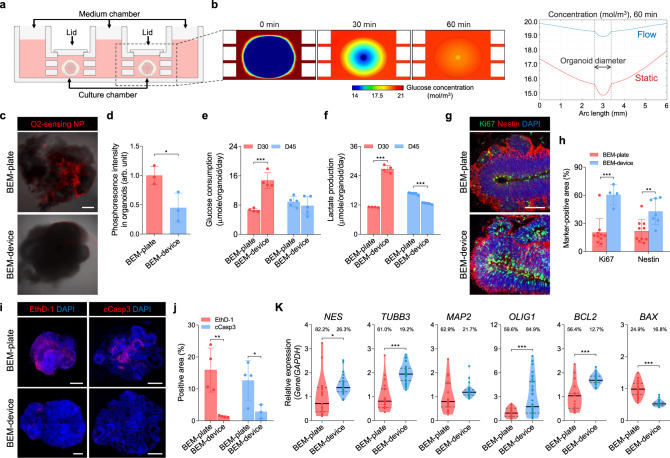
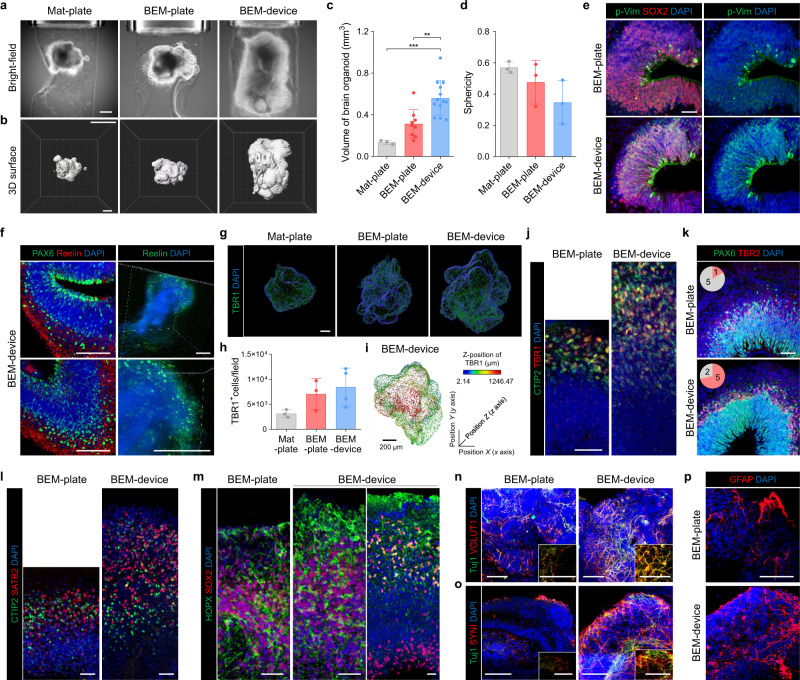
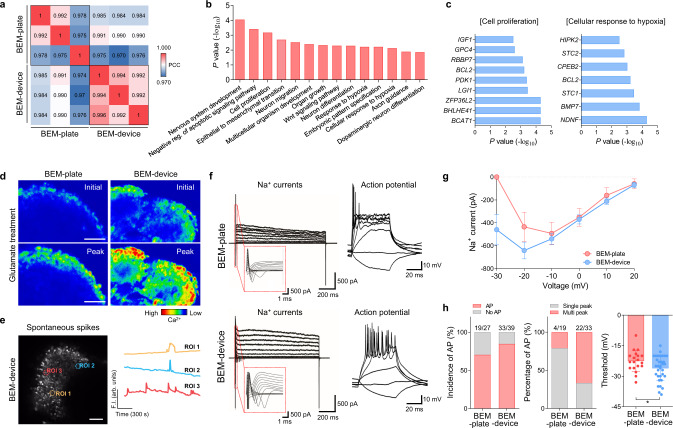
Brain organoids derived from human pluripotent stem cells provide a highly valuable in vitro model to recapitulate human brain development and neurological diseases. However, the current systems for brain organoid culture require further improvement for the reliable production of high-quality organoids. Here, we demonstrate two engineering elements to improve human brain organoid culture, (1) a human brain extracellular matrix to provide brain-specific cues and (2) a microfluidic device with periodic flow to improve the survival and reduce the variability of organoids. A three-dimensional culture modified with brain extracellular matrix significantly enhanced neurogenesis in developing brain organoids from human induced pluripotent stem cells. Cortical layer development, volumetric augmentation, and electrophysiological function of human brain organoids were further improved in a reproducible manner by dynamic culture in microfluidic chamber devices. Our engineering concept of reconstituting brain-mimetic microenvironments facilitates the development of a reliable culture platform for brain organoids, enabling effective modeling and drug development for human brain diseases.
由人类多能干细胞衍生的脑类器官为重现人类大脑发育和神经疾病提供了极具价值的体外模型。然而,当前的脑类器官培养系统需要进一步改进,以可靠地生成高质量的类器官。在这里,我们展示了两种改进人类脑类器官培养的工程要素,(1)人脑细胞外基质,提供大脑特异性线索,(2)微流控装置,具有周期性流动,以提高类器官的存活率并降低其变异性。经过改良的三维培养采用人脑细胞外基质,显著增强了人类诱导多能干细胞来源的发育中脑类器官的神经发生。通过在微流控室装置中进行动态培养,以可重复的方式进一步改善了脑类器官的皮质层发育、体积扩增和电生理功能。我们构建类脑微环境的工程概念,有助于开发可靠的脑类器官培养平台,从而有效模拟和开发人类脑部疾病的药物。