Division of Nephrology, Dialysis and Renal Transplantation, Fondazione IRCCS Cà Granda Ospedale Maggiore Policlinico, 20122 Milano, Italy.
Centro di Ricerche Biotecnologiche, Università Cattolica del Sacro Cuore, 26100 Cremona, Italy.
Toxins (Basel). 2021 Jul 8;13(7):472. doi: 10.3390/toxins13070472.
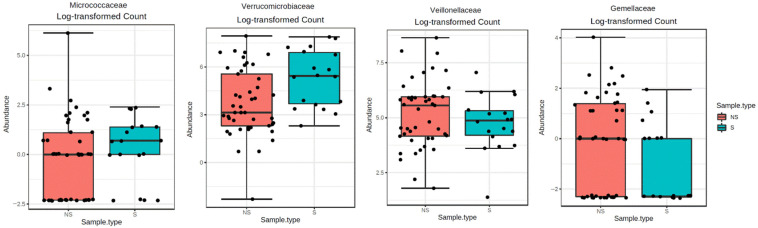
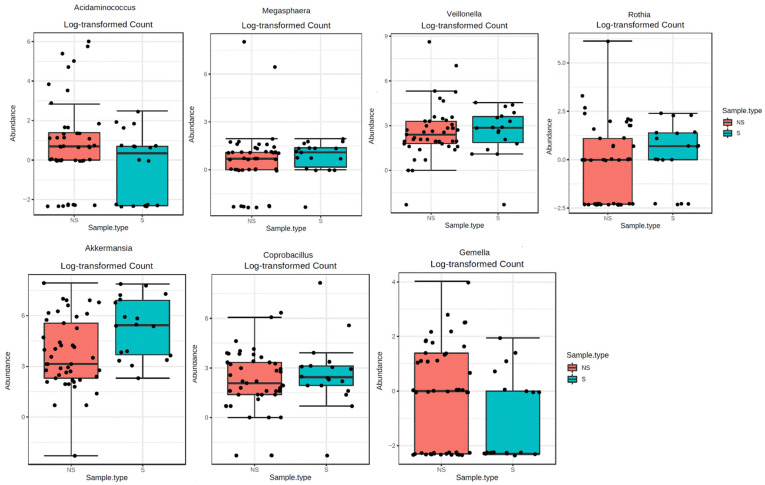
Sarcopenia is a prevalent condition in chronic kidney disease (CKD). We determined gut microbiota (gMB) composition in CKD patients with or without sarcopenia. Furthermore, we investigated whether in these patients, there was any association between gMB, uremic toxins, inflammation and oxidative stress. We analyzed gMB composition, uremic toxins (indoxyl sulphate and p-cresyl sulphate), inflammatory cytokines (interleukin 10, tumor necrosis factor α, interleukin 6, interleukin 17, interleukin 12 p70, monocyte chemoattractant protein-1 and fetuin-A) and oxidative stress (malondialdehyde) of 64 elderly CKD patients (10 < eGFR < 45 mL/min/1.73 m, not on dialysis) categorized as sarcopenic and not-sarcopenic. Sarcopenia was defined according to European Working Group on Sarcopenia in Older People 2 criteria. Sarcopenic patients had a greater abundance of the and families and of , , , and genera. They had a lower abundance of the and families and of and genera. GMB was associated with uremic toxins, inflammatory cytokines and MDA. However, uremic toxins, inflammatory cytokines and MDA were not different in sarcopenic compared with not-sarcopenic individuals, except for interleukin 10, which was higher in not-sarcopenic patients. In older CKD patients, gMB was different in sarcopenic than in not-sarcopenic ones. Several bacterial families and genera were associated with uremic toxins and inflammatory cytokines, although none of these latter substantially different in sarcopenic versus not-sarcopenic patients.
肌肉减少症是慢性肾脏病(CKD)的一种常见病症。我们确定了伴有或不伴有肌肉减少症的 CKD 患者的肠道微生物群(gMB)组成。此外,我们还研究了这些患者的 gMB、尿毒症毒素、炎症和氧化应激之间是否存在任何关联。我们分析了 64 名老年 CKD 患者(10 < eGFR < 45 mL/min/1.73 m,未接受透析)的肠道微生物群组成、尿毒症毒素(吲哚硫酸酯和对甲酚硫酸酯)、炎症细胞因子(白细胞介素 10、肿瘤坏死因子-α、白细胞介素 6、白细胞介素 17、白细胞介素 12 p70、单核细胞趋化蛋白-1 和胎球蛋白-A)和氧化应激(丙二醛),这些患者根据欧洲老年人肌肉减少症工作组 2 标准分为肌肉减少症和非肌肉减少症。肌肉减少症患者的 和 科和 、 、 、 和 属的丰度更高。他们的 和 科和 、 和 属的丰度较低。gMB 与尿毒症毒素、炎症细胞因子和 MDA 相关。然而,与非肌肉减少症患者相比,肌肉减少症患者的尿毒症毒素、炎症细胞因子和 MDA 没有差异,除了白细胞介素 10,非肌肉减少症患者的白细胞介素 10 水平更高。在老年 CKD 患者中,与非肌肉减少症患者相比,肌肉减少症患者的 gMB 不同。尽管在肌肉减少症患者与非肌肉减少症患者之间,没有一个炎症细胞因子的水平有显著差异,但有几个细菌家族和属与尿毒症毒素和炎症细胞因子相关。