Department for Psychotherapy and Biopsychosocial Health, Danube University Krems, 3500 Krems, Austria.
Int J Environ Res Public Health. 2021 Aug 3;18(15):8218. doi: 10.3390/ijerph18158218.
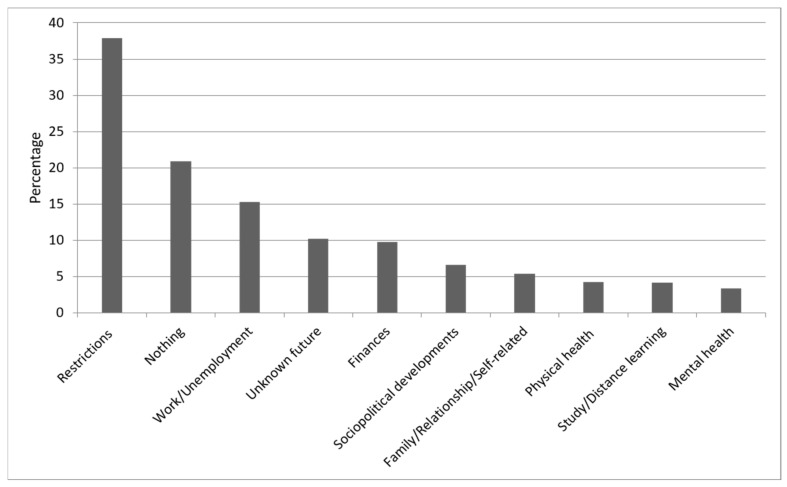
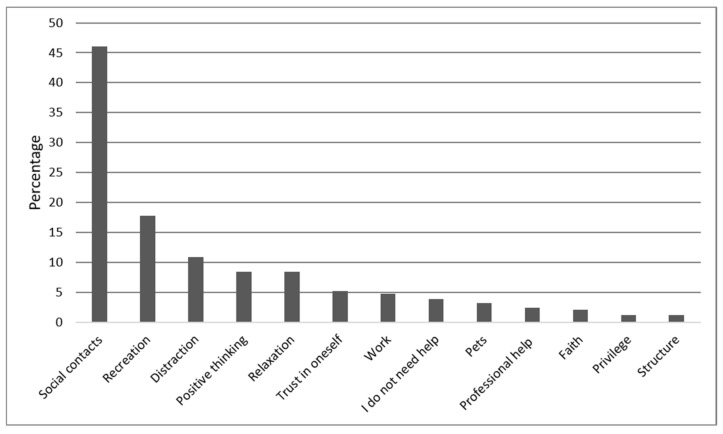
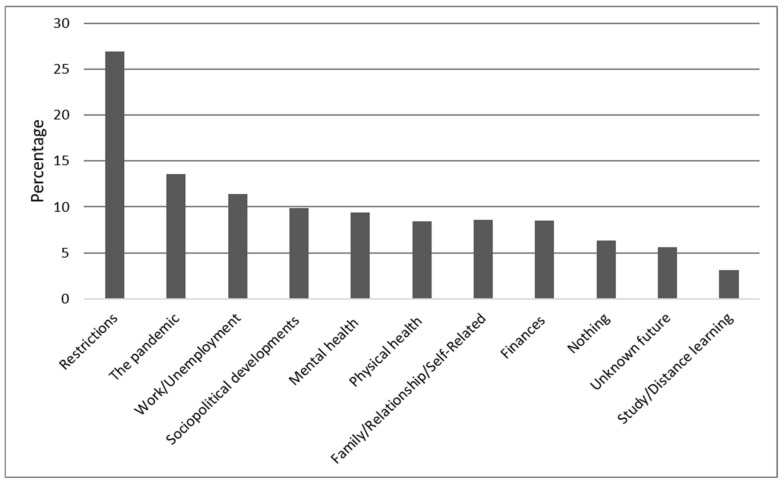
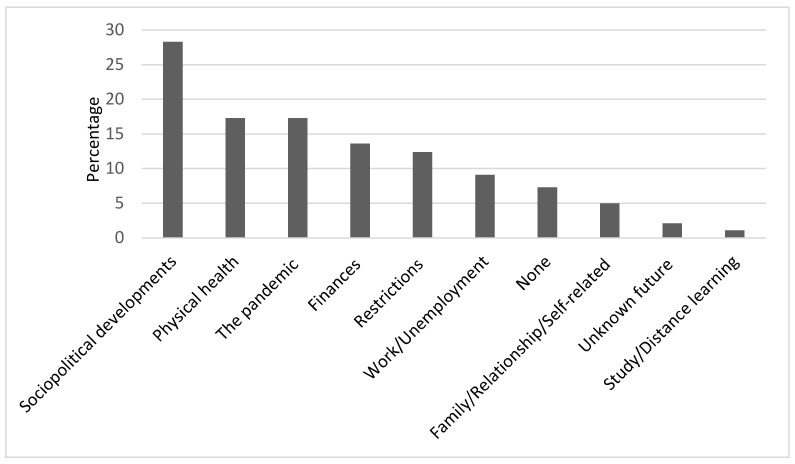
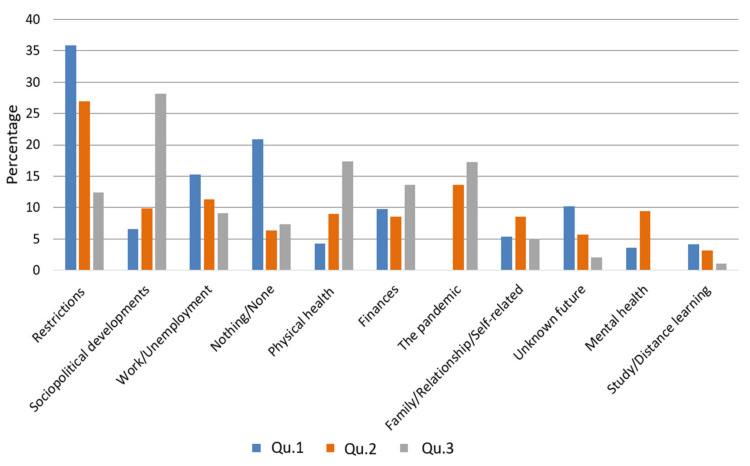
The COVID-19 pandemic and subsequent governmental restrictions have had a major impact on the daily lives of Austrians and negatively affected their mental health. A representative sample of N = 1505 individuals was recruited via Qualtrics to participate in an online survey between 23 December 2020 and 4 January 2021. A qualitative study design was used to determine the problem areas that emerged since the beginning of the pandemic (question 1), the factors that were the source of the greatest current concern (question 2), the biggest worries when thinking about the future (question 3), and what the most important source of support (question 4) during the pandemic was. The written responses were analyzed using conventional content analysis following a framework for qualitative research and reported in the form of descriptive statistics. Restrictions imposed by the government, sociopolitical developments, work- and health-related issues, and economic disruptions were identified as being the greatest concerns. Conversely, social contacts within and outside the family were the most important source of support, followed by recreational activities and distraction. Greater consideration should be given to psychosocial factors in future decisions to contain the pandemic. More detailed qualitative research, in particular, to collect the personal experience of more vulnerable groups such as young people, women, and the unemployed, is needed.
新冠疫情大流行及其随后的政府限制措施对奥地利人的日常生活产生了重大影响,并对他们的心理健康产生了负面影响。通过 Qualtrics 招募了一个有代表性的 N = 1505 人的样本,以参与 2020 年 12 月 23 日至 2021 年 1 月 4 日期间的在线调查。采用定性研究设计来确定自疫情开始以来出现的问题领域(问题 1)、当前最大关注源的因素(问题 2)、对未来的最大担忧(问题 3),以及疫情期间最重要的支持来源(问题 4)。使用常规内容分析对书面答复进行分析,遵循定性研究框架,并以描述性统计的形式报告。被确定为最大关注点的是政府实施的限制、社会政治发展、与工作和健康相关的问题以及经济混乱。相反,家庭内外的社会联系是最重要的支持来源,其次是娱乐活动和消遣。在未来控制大流行的决策中,应更多地考虑社会心理因素。需要进行更详细的定性研究,特别是收集年轻人、妇女和失业者等弱势群体的个人经验。