
从治疗因素到创造性艺术疗法中的改变机制:一项范围综述。
From Therapeutic Factors to Mechanisms of Change in the Creative Arts Therapies: A Scoping Review.
作者信息
de Witte Martina, Orkibi Hod, Zarate Rebecca, Karkou Vicky, Sajnani Nisha, Malhotra Bani, Ho Rainbow Tin Hung, Kaimal Girija, Baker Felicity A, Koch Sabine C
机构信息
Research Institute of Child Development and Education, University of Amsterdam, Amsterdam, Netherlands.
Kennisontwikkeling Vaktherapieën (KenVaK) Research Centre for the Arts Therapies, Heerlen, Netherlands.
出版信息
Front Psychol. 2021 Jul 15;12:678397. doi: 10.3389/fpsyg.2021.678397. eCollection 2021.
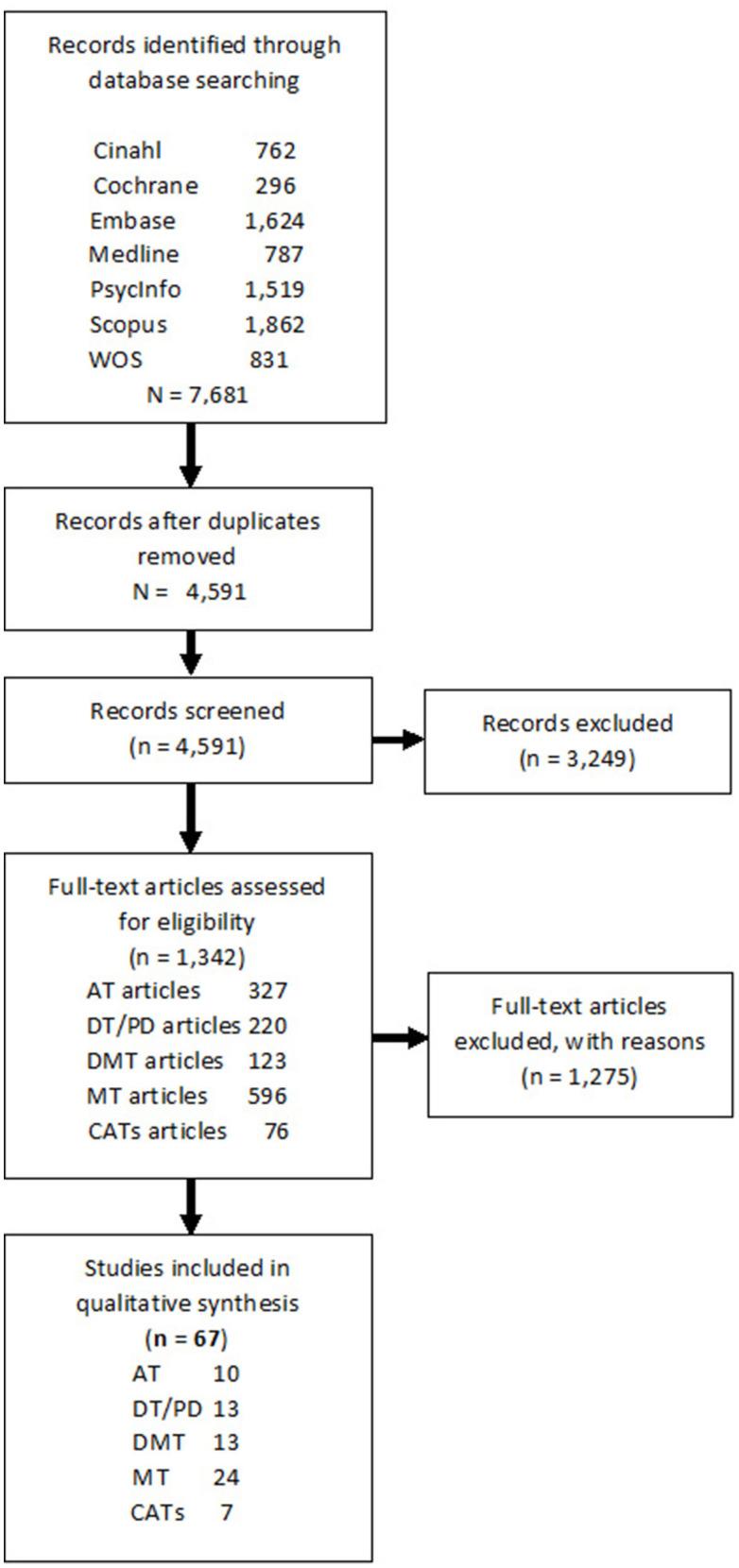
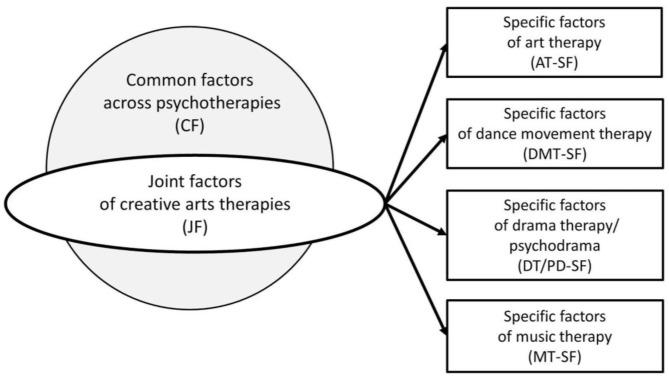
Empirical studies in the creative arts therapies (CATs; i.e., art therapy, dance/movement therapy, drama therapy, music therapy, psychodrama, and poetry/bibliotherapy) have grown rapidly in the last 10 years, documenting their positive impact on a wide range of psychological and physiological outcomes (e.g., stress, trauma, depression, anxiety, and pain). However, it remains unclear and the CATs have positive effects, and which therapeutic factors account for these changes. Research that specifically focuses on the therapeutic factors and/or mechanisms of change in CATs is only beginning to emerge. To gain more insight into how and why the CATs influence outcomes, we conducted a scoping review ( = 67) to pinpoint therapeutic factors specific to each CATs discipline, joint factors of CATs, and more generic common factors across all psychotherapy approaches. This review therefore provides an overview of empirical CATs studies dealing with therapeutic factors and/or mechanisms of change, and a detailed analysis of these therapeutic factors which are grouped into domains. A framework of 19 domains of CATs therapeutic factors is proposed, of which the three domains are composed solely of factors unique to the CATs: "embodiment," "concretization," and "symbolism and metaphors." The terminology used in change process research is clarified, and the implications for future research, clinical practice, and CATs education are discussed.
在过去十年中,创造性艺术疗法(CATs,即艺术疗法、舞蹈/运动疗法、戏剧疗法、音乐疗法、心理剧以及诗歌/阅读疗法)的实证研究迅速发展,记录了它们对广泛的心理和生理结果(如压力、创伤、抑郁、焦虑和疼痛)的积极影响。然而,目前尚不清楚CATs是否具有积极效果,以及哪些治疗因素导致了这些变化。专门关注CATs治疗因素和/或变化机制的研究才刚刚开始出现。为了更深入地了解CATs如何以及为何影响治疗结果,我们进行了一项范围综述(n = 67),以确定每种CATs学科特有的治疗因素、CATs的共同因素以及所有心理治疗方法中更普遍的共同因素。因此,本综述概述了关于治疗因素和/或变化机制的CATs实证研究,并对这些治疗因素进行了详细分析,这些因素被归为不同领域。我们提出了一个包含19个CATs治疗因素领域的框架,其中三个领域仅由CATs特有的因素组成:“体现”、“具体化”以及“象征和隐喻”。我们阐明了变化过程研究中使用的术语,并讨论了对未来研究、临床实践和CATs教育的启示。


 Zotero 插件