Research Institute of Social Development, Southwestern University of Finance and Economics, Chengdu, China.
Graduate School of Information Sciences, Tohoku University, Sendai, Japan.
PLoS One. 2021 Aug 9;16(8):e0254988. doi: 10.1371/journal.pone.0254988. eCollection 2021.
During uncertainties associated with the COVID-19 pandemic, effectively improving people's health literacy is more important than ever. Drawing knowledge maps of health literacy research through data mining and visualized measurement technology helps systematically present the research status and development trends in global academic circles.
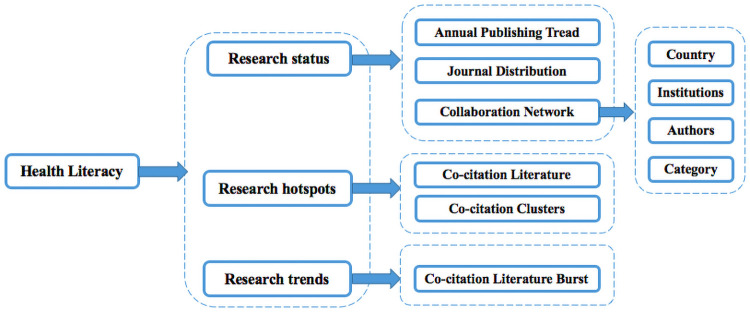
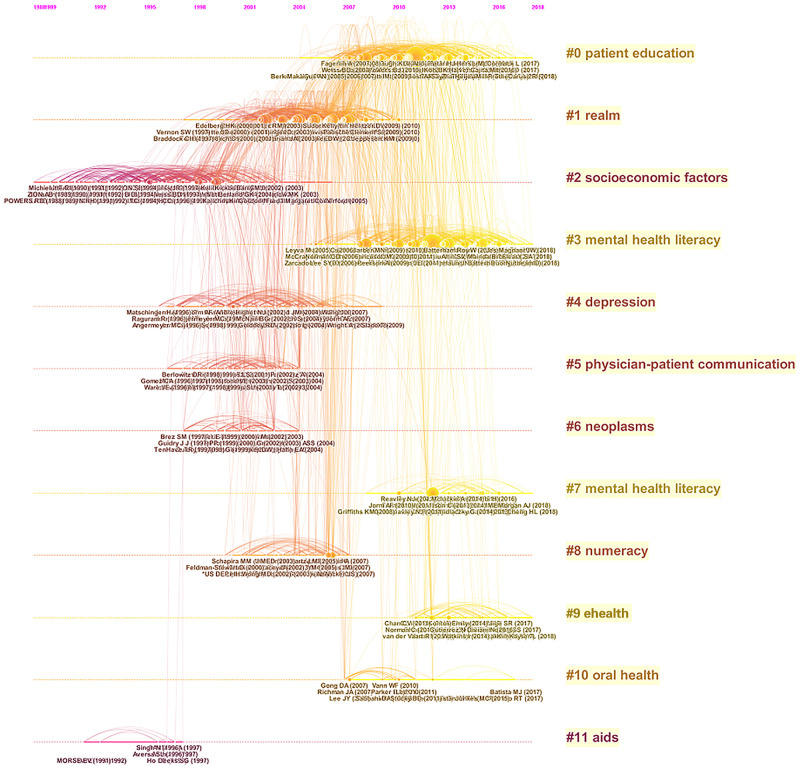
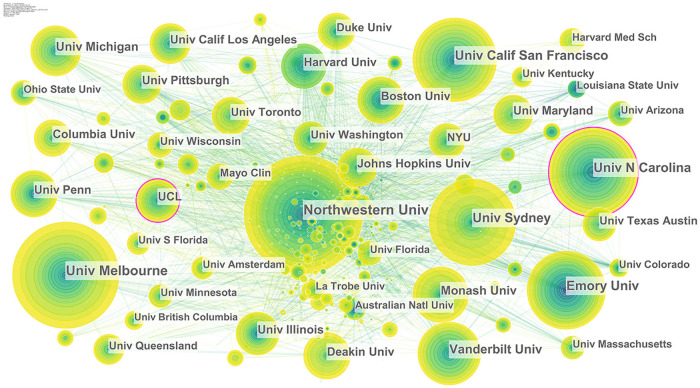
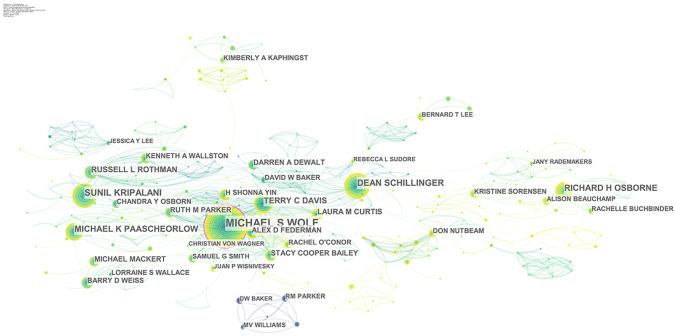
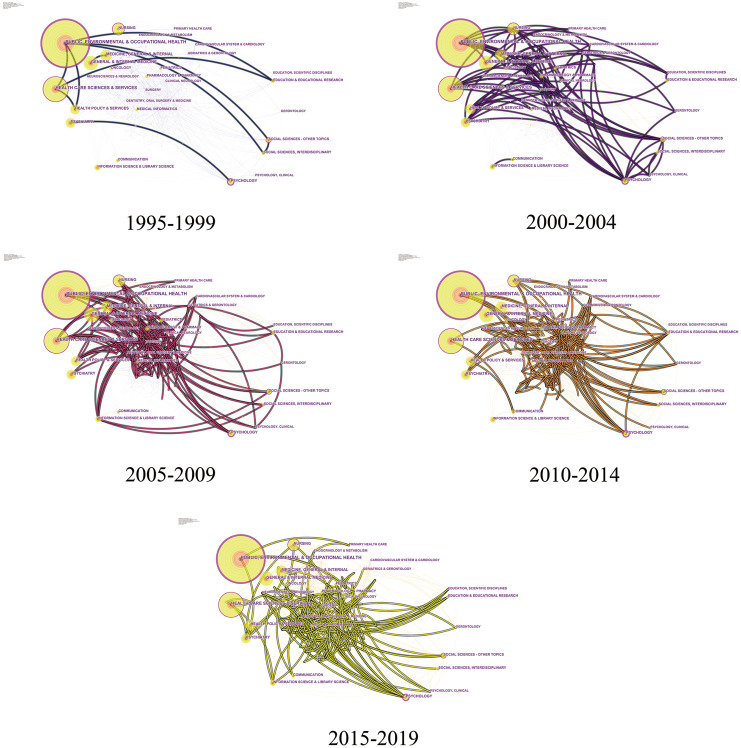
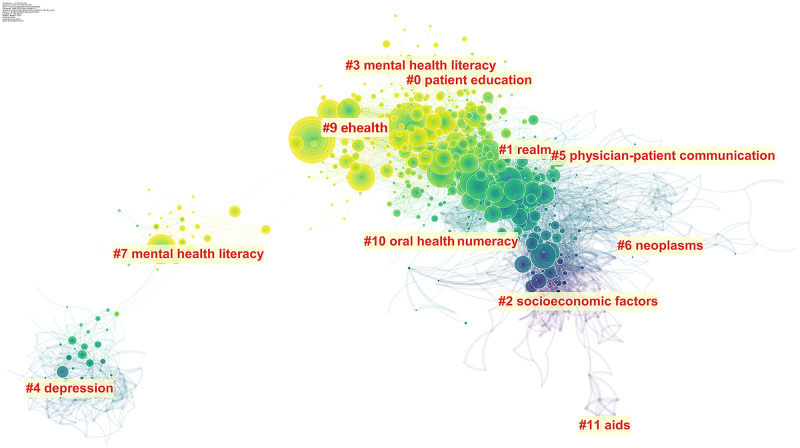
This paper uses CiteSpace to carry out a metric analysis of 9,492 health literacy papers included in Web of Science through mapping knowledge domains. First, based on the production theory of scientific knowledge and the data mining of citations, the main bodies (country, institution and author) that produce health literacy knowledge as well as their mutual cooperation (collaboration network) are both clarified. Additionally, based on the quantitative framework of cocitation analysis, this paper introduces the interdisciplinary features, development trends and hot topics of the field. Finally, by using burst detection technology in the literature, it further reveals the research frontiers of health literacy.
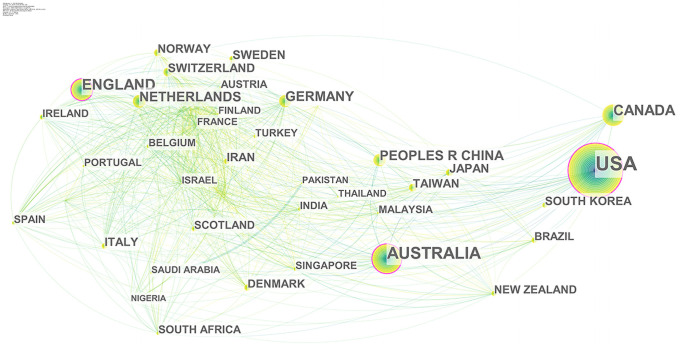
The results of the BC measures of the global health literacy research collaboration network show that the United States, Australia and the United Kingdom are the major forces in the current international collaboration network on health literacy. There are still relatively very few transnational collaborations between Eastern and Western research institutions. Collaborations in public environmental occupational health, health care science services, nursing and health policy services have been active in the past five years. Research topics in health literacy research evolve over time, mental health has been the most active research field in recent years.
A systematic approach is needed to address the challenges of health literacy, and the network framework of cooperation on health literacy at regional, national and global levels should be strengthened to further promote the application of health literacy research. In the future, we anticipate that this research field will expand in two directions, namely, mental health literacy and eHealth literacy, both of which are closely linked to social development and issues. The results of this study provide references for future applied research in health literacy.
在与 COVID-19 大流行相关的不确定性期间,有效提高人们的健康素养比以往任何时候都更加重要。通过数据挖掘和可视化测量技术绘制健康素养研究知识图谱,有助于系统呈现全球学术界的研究现状和发展趋势。
本文运用 CiteSpace 对 Web of Science 中收录的 9492 篇健康素养文献进行计量分析,通过绘制知识图谱进行共现分析。首先,基于科学知识生产理论和引文数据挖掘,厘清了作为健康素养知识生产者的主体(国家、机构和作者)及其相互合作(合作网络)。其次,基于共被引分析的定量框架,介绍了该领域的跨学科特征、发展趋势和热点主题。最后,通过文献的突现检测技术,进一步揭示健康素养的研究前沿。
全球健康素养研究合作网络的 BC 测度结果表明,美国、澳大利亚和英国是当前国际健康素养合作网络中的主要力量。东西方研究机构之间仍然很少有跨国合作。公共环境卫生职业健康、医疗保健科学服务、护理和卫生政策服务方面的合作在过去五年中一直很活跃。健康素养研究的研究主题随着时间的推移而演变,心理健康一直是近年来最活跃的研究领域。
需要采取系统的方法来应对健康素养的挑战,应加强健康素养在区域、国家和全球层面的合作网络框架,以进一步促进健康素养研究的应用。未来,我们预计这个研究领域将在两个方向上扩展,即心理健康素养和电子健康素养,这两个方向都与社会发展和问题密切相关。本研究结果为未来健康素养的应用研究提供了参考。