Indian Institute of Technology, Roorkee, India.
National Institute of Technology, Delhi, India.
J Biomed Inform. 2021 Sep;121:103887. doi: 10.1016/j.jbi.2021.103887. Epub 2021 Aug 15.
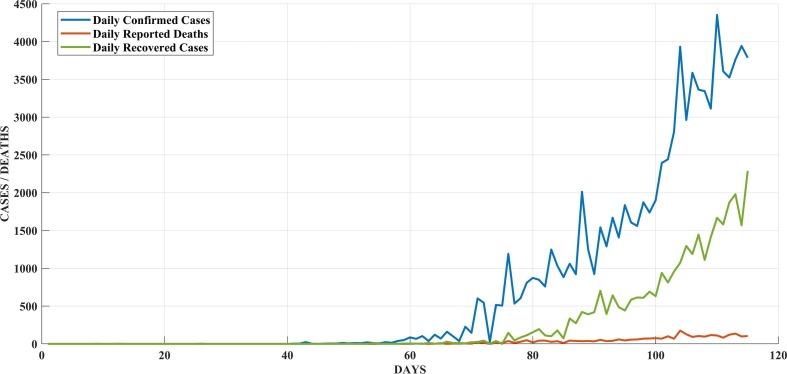
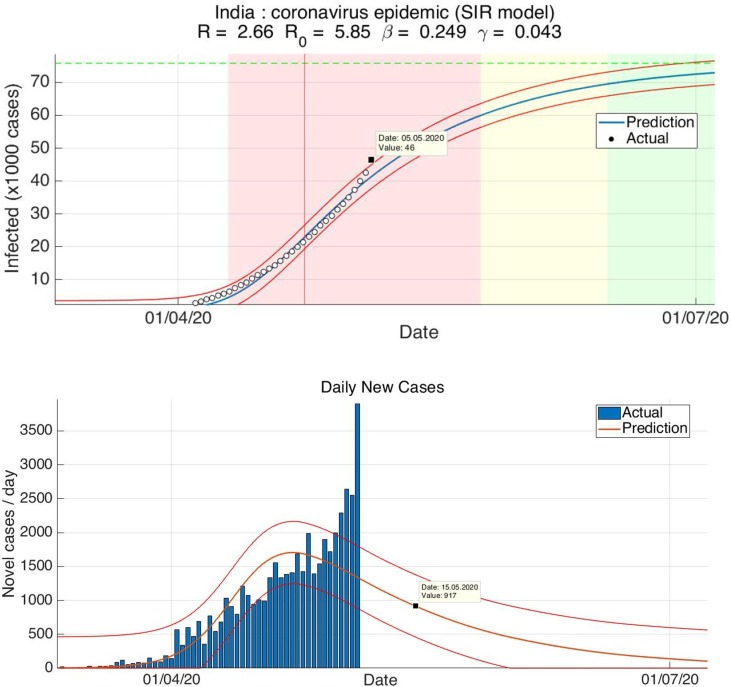
Time-series forecasting has a critical role during pandemics as it provides essential information that can lead to abstaining from the spread of the disease. The novel coronavirus disease, COVID-19, is spreading rapidly all over the world. The countries with dense populations, in particular, such as India, await imminent risk in tackling the epidemic. Different forecasting models are being used to predict future cases of COVID-19. The predicament for most of them is that they are not able to capture both the linear and nonlinear features of the data solely.
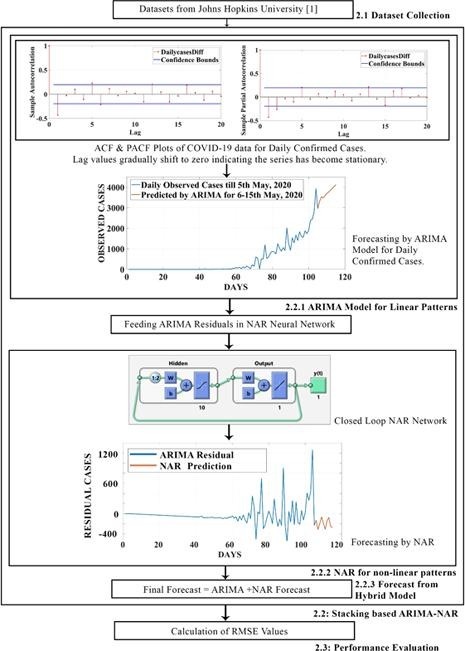
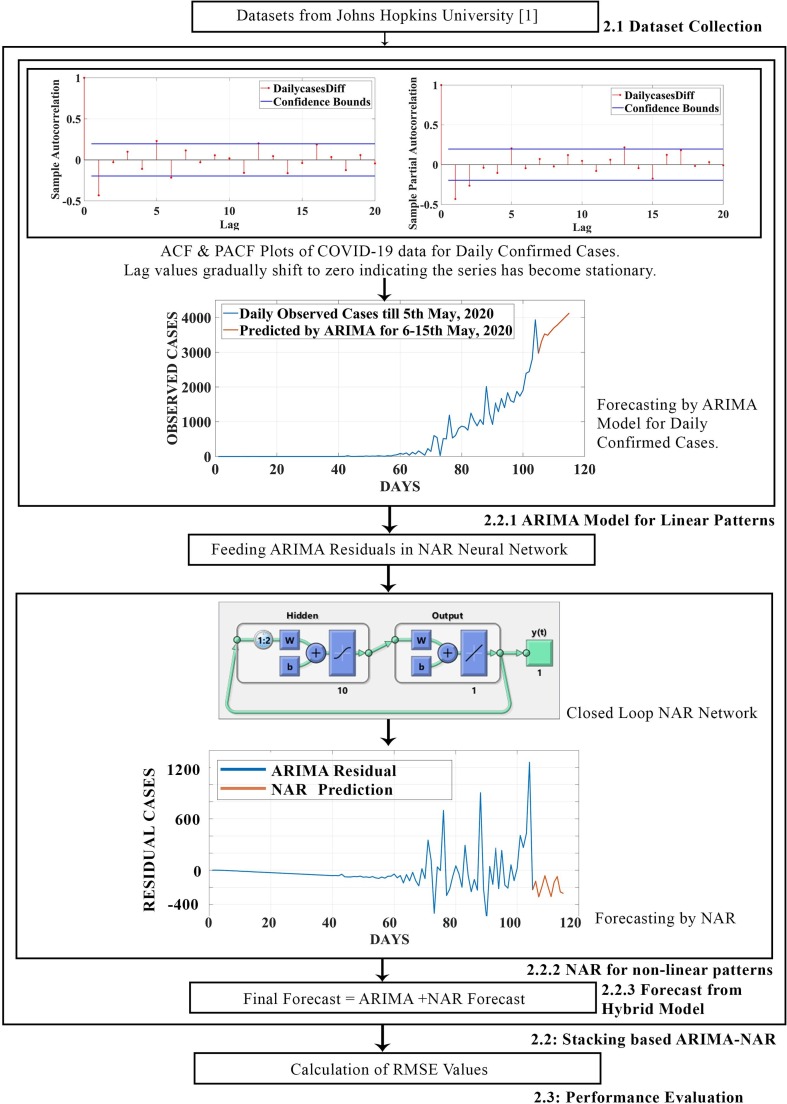
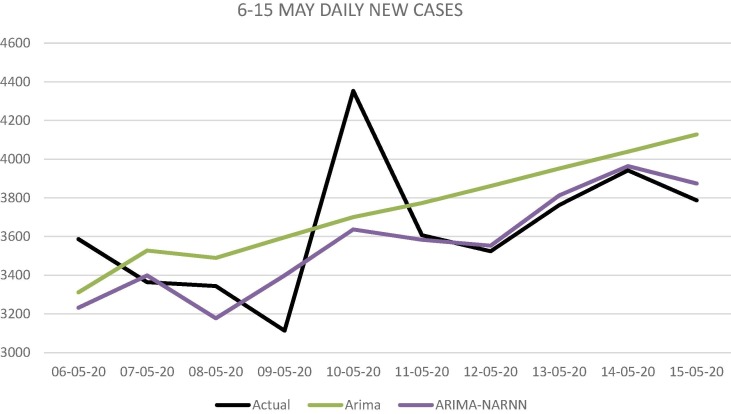
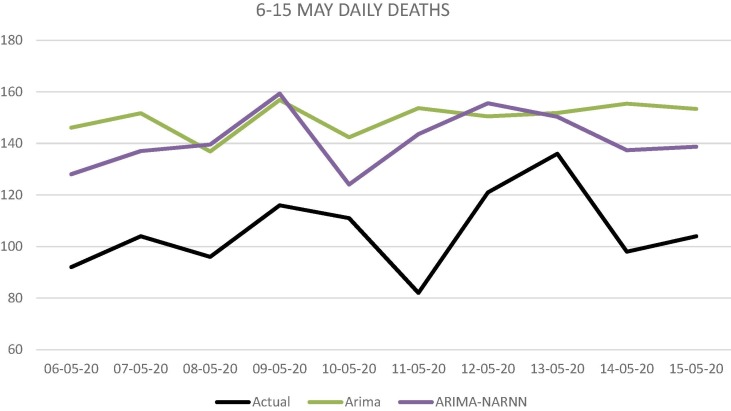
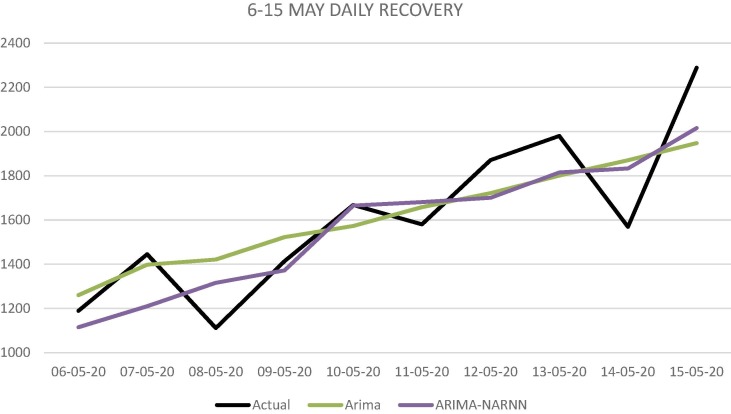
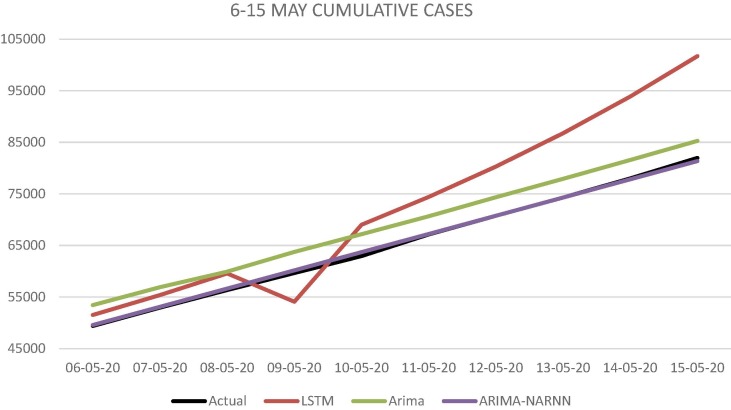
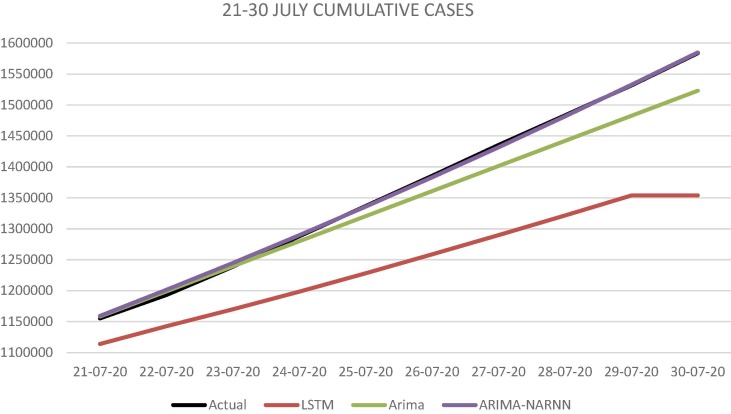
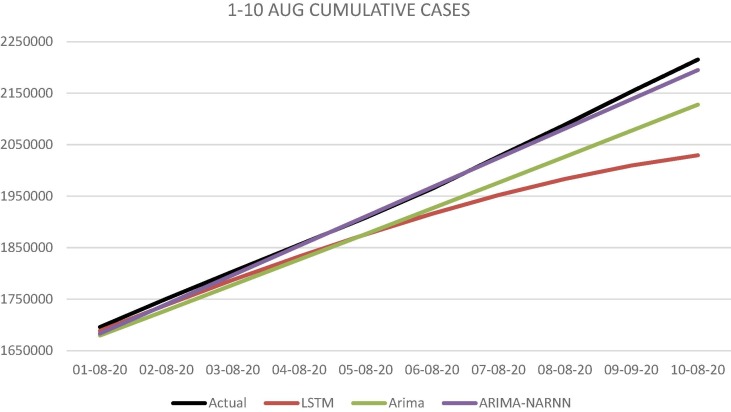
We propose an ensemble model integrating an autoregressive integrated moving average model (ARIMA) and a nonlinear autoregressive neural network (NAR). ARIMA models are used to extract the linear correlations and the NAR neural network for modeling the residuals of ARIMA containing nonlinear components of the data. Comparison: Single ARIMA model, ARIMA-NAR model and few other existing models which have been applied on the COVID-19 data in different countries are compared based on performance evaluation parameters.
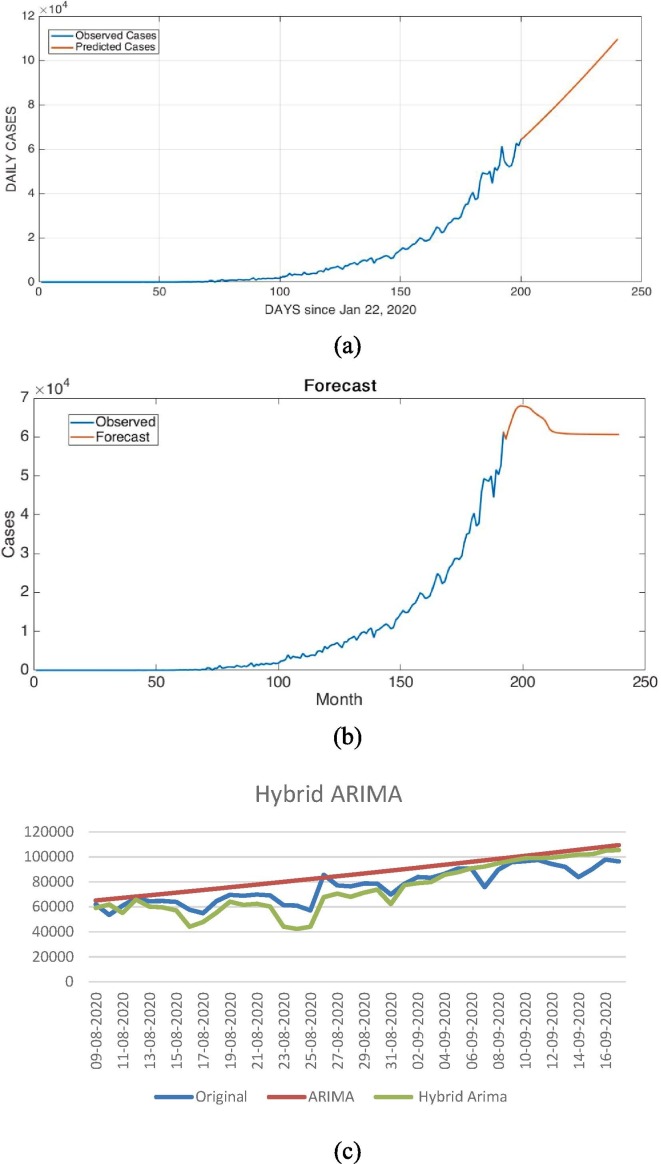
The hybrid combination displayed significant reduction in RMSE (16.23%), MAE (37.89%) and MAPE (39.53%) values when compared with single ARIMA model for daily observed cases. Similar results with reduced error percentages were found for daily reported deaths and cases of recovery as well. RMSE value of our hybrid model was lesser in comparison to other models used for forecasting COVID-19 in different countries.
Results suggested the effectiveness of the new hybrid model over a single ARIMA model in capturing the linear as well as nonlinear patterns of the COVID-19 data.
时间序列预测在大流行期间具有重要作用,因为它提供了可以避免疾病传播的重要信息。新型冠状病毒疾病(COVID-19)正在全球迅速传播。人口密集的国家,特别是印度,即将面临处理疫情的巨大风险。不同的预测模型被用于预测 COVID-19 的未来病例。它们大多数的困境在于它们无法单独捕捉数据的线性和非线性特征。
我们提出了一个集成模型,该模型集成了自回归综合移动平均模型(ARIMA)和非线性自回归神经网络(NAR)。ARIMA 模型用于提取线性相关性,而 NAR 神经网络用于对包含数据非线性成分的 ARIMA 残差进行建模。比较:基于性能评估参数,将单个 ARIMA 模型、ARIMA-NAR 模型和其他几个已应用于不同国家 COVID-19 数据的现有模型进行比较。
与单个 ARIMA 模型相比,混合模型在每日观察病例中显著降低了 RMSE(16.23%)、MAE(37.89%)和 MAPE(39.53%)值。对于每日报告的死亡和康复病例,也发现了类似的误差百分比降低的结果。与用于预测不同国家 COVID-19 的其他模型相比,我们的混合模型的 RMSE 值更小。
结果表明,新的混合模型在捕捉 COVID-19 数据的线性和非线性模式方面比单个 ARIMA 模型更有效。