IEEE J Biomed Health Inform. 2021 Nov;25(11):4152-4162. doi: 10.1109/JBHI.2021.3106341. Epub 2021 Nov 5.
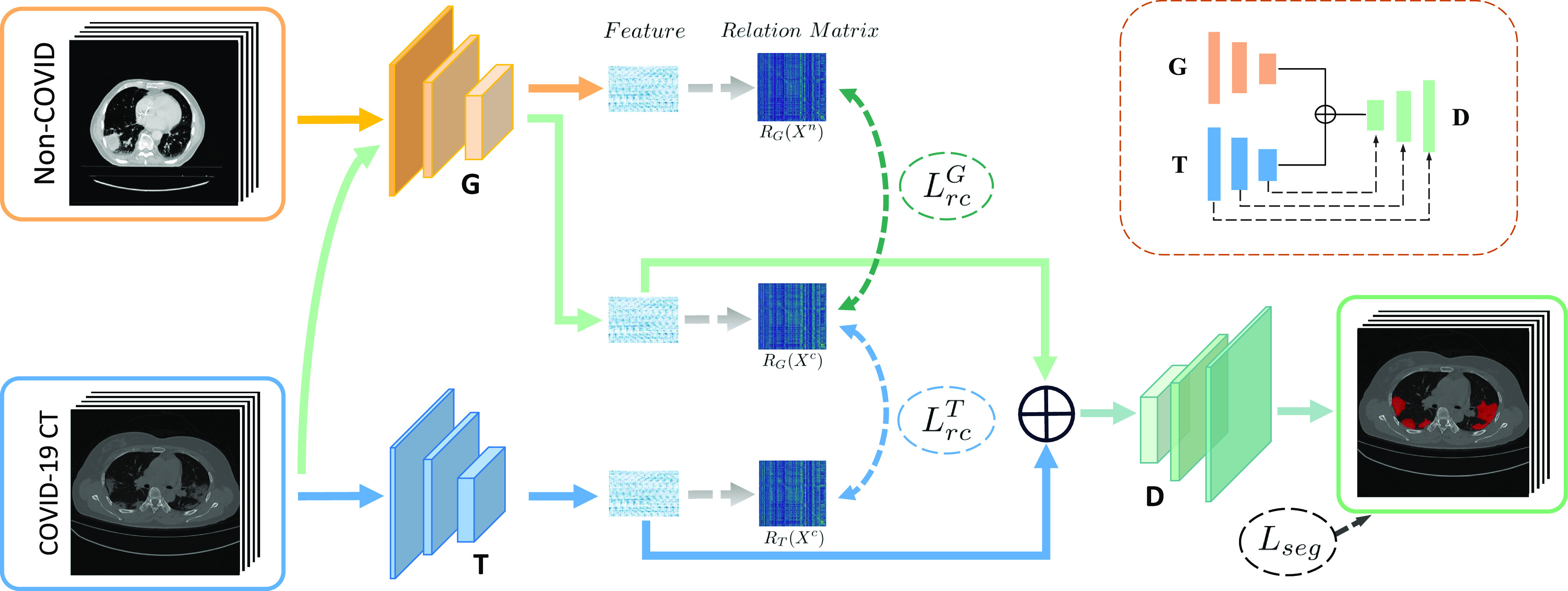
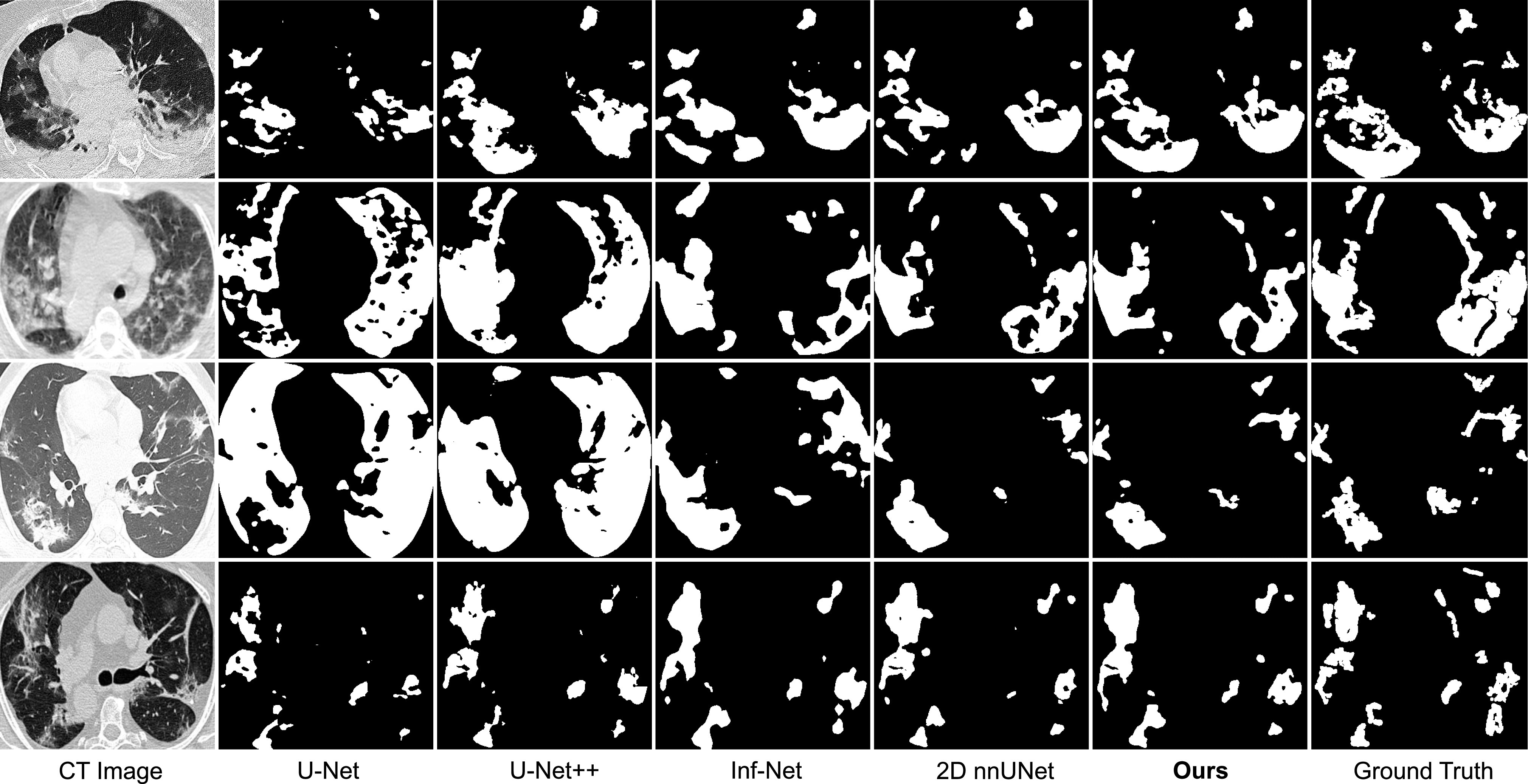
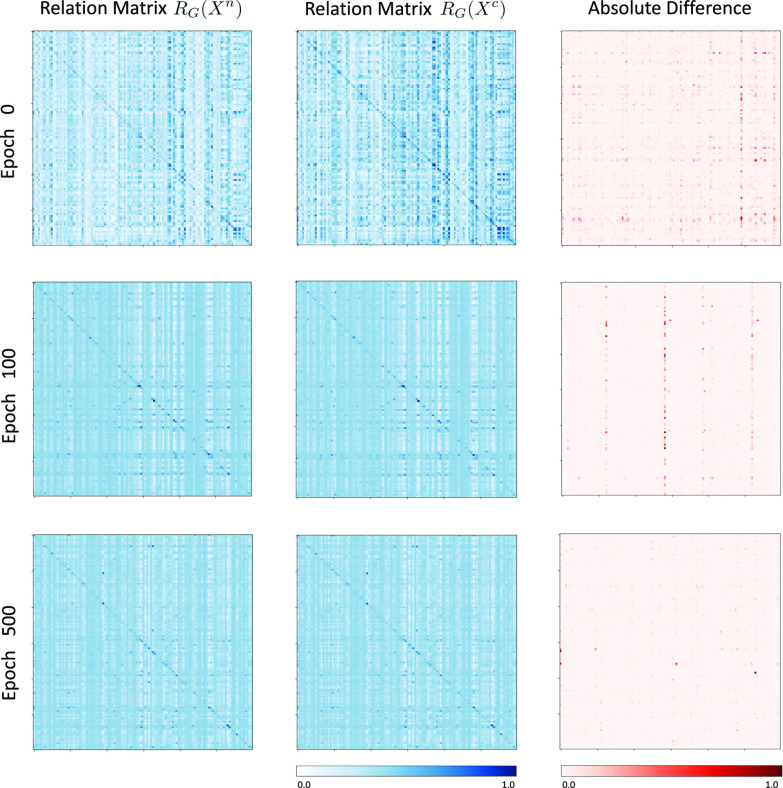
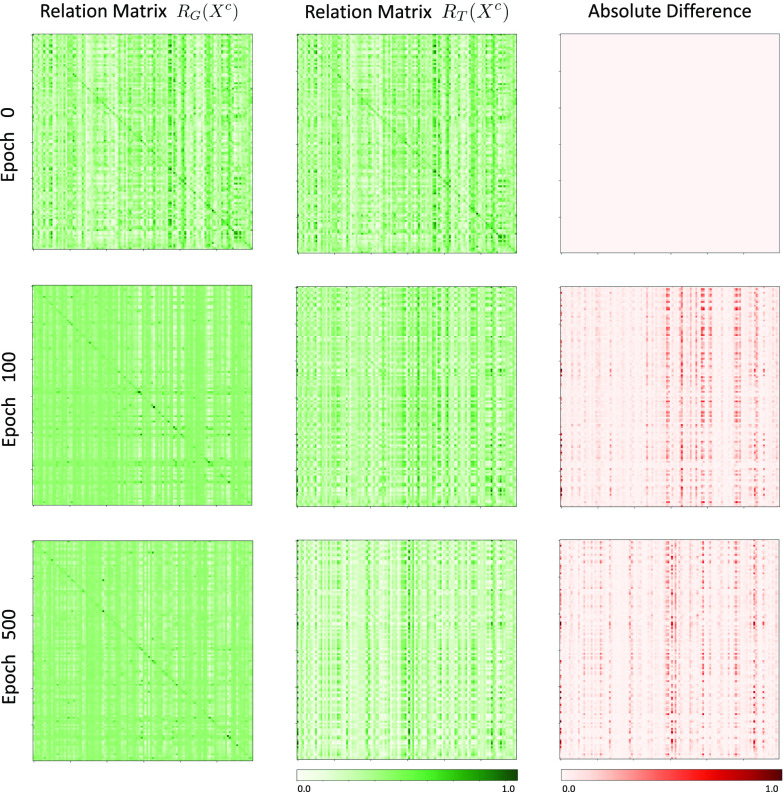
The novel Coronavirus disease (COVID-19) is a highly contagious virus and has spread all over the world, posing an extremely serious threat to all countries. Automatic lung infection segmentation from computed tomography (CT) plays an important role in the quantitative analysis of COVID-19. However, the major challenge lies in the inadequacy of annotated COVID-19 datasets. Currently, there are several public non-COVID lung lesion segmentation datasets, providing the potential for generalizing useful information to the related COVID-19 segmentation task. In this paper, we propose a novel relation-driven collaborative learning model to exploit shared knowledge from non-COVID lesions for annotation-efficient COVID-19 CT lung infection segmentation. The model consists of a general encoder to capture general lung lesion features based on multiple non-COVID lesions, and a target encoder to focus on task-specific features based on COVID-19 infections. We develop a collaborative learning scheme to regularize feature-level relation consistency of given input and encourage the model to learn more general and discriminative representation of COVID-19 infections. Extensive experiments demonstrate that trained with limited COVID-19 data, exploiting shared knowledge from non-COVID lesions can further improve state-of-the-art performance with up to 3.0% in dice similarity coefficient and 4.2% in normalized surface dice. In addition, experimental results on large scale 2D dataset with CT slices show that our method significantly outperforms cutting-edge segmentation methods metrics. Our method promotes new insights into annotation-efficient deep learning and illustrates strong potential for real-world applications in the global fight against COVID-19 in the absence of sufficient high-quality annotations.
新型冠状病毒病(COVID-19)是一种高传染性病毒,已在全球范围内传播,对所有国家构成极其严重的威胁。从计算机断层扫描(CT)自动进行肺部感染分割在 COVID-19 的定量分析中起着重要作用。然而,主要的挑战在于 COVID-19 标注数据集的不足。目前,有几个公开的非 COVID 肺部病变分割数据集,为将有用信息推广到相关 COVID-19 分割任务提供了潜力。在本文中,我们提出了一种新颖的关系驱动协作学习模型,以利用非 COVID 病变中的共享知识进行高效标注 COVID-19 CT 肺部感染分割。该模型由一个通用编码器组成,该编码器基于多个非 COVID 病变来捕获一般的肺部病变特征,以及一个目标编码器,该编码器基于 COVID-19 感染来关注特定于任务的特征。我们开发了一种协作学习方案来正则化给定输入的特征级关系一致性,并鼓励模型学习更通用和有区别的 COVID-19 感染表示。广泛的实验表明,用有限的 COVID-19 数据进行训练,利用非 COVID 病变中的共享知识可以进一步提高最先进的性能,在骰子相似系数上提高高达 3.0%,在归一化表面骰子上提高 4.2%。此外,在具有 CT 切片的大规模 2D 数据集上的实验结果表明,我们的方法在缺乏足够高质量标注的情况下,在全球抗击 COVID-19 的实际应用中具有明显的优势,明显优于最先进的分割方法。我们的方法为高效标注的深度学习提供了新的见解,并展示了在全球抗击 COVID-19 中实际应用的巨大潜力。