Benito-Murcia María, Bartolomé Carolina, Maside Xulio, Bernal José, Bernal José Luis, Del Nozal María Jesús, Meana Aránzazu, Botías Cristina, Martín-Hernández Raquel, Higes Mariano
Centro de Investigación Apícola y Agroambiental (CIAPA), Laboratorio de Patología Apícola, Instituto Regional de Investigación y Desarrollo Agroalimentario y Forestal (IRIAF), 19180 Marchamalo, Spain.
Grupo de Medicina Xenómica, CIMUS (Instituto de Investigación de Santiago De Compostela), Universidad de Santiago de Compostela, 15782 Santiago de Compostela, Spain.
Insects. 2021 Aug 14;12(8):731. doi: 10.3390/insects12080731.
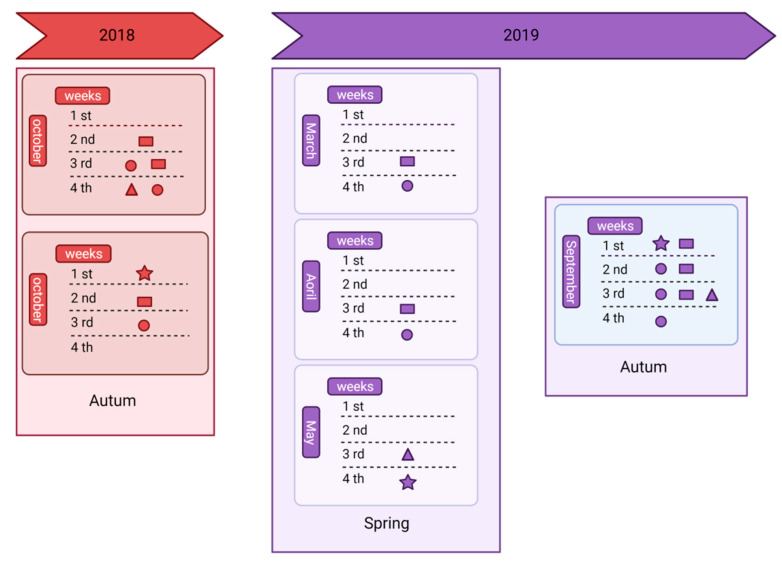
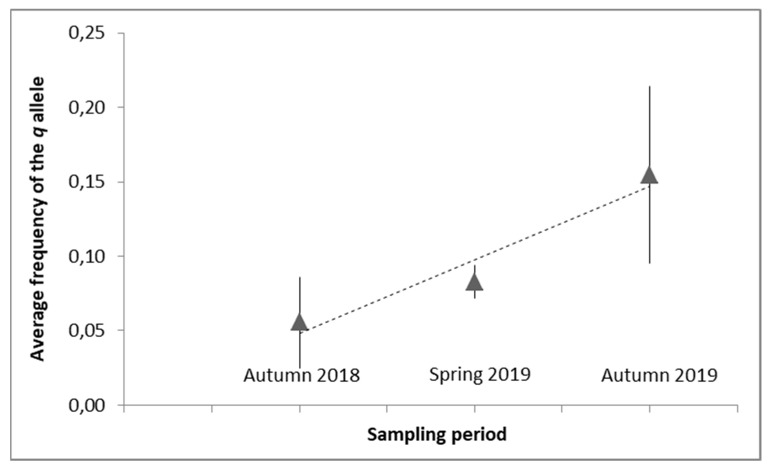
is considered one of the most devastating parasites of the honey bee, , and a major problem for the beekeeping industry. Currently, the main method to control mites is the application of drugs that contain different acaricides as active ingredients. The pyrethroid tau-fluvalinate is one of the acaricides most widely used in beekeeping due to its efficacy and low toxicity to bees. However, the intensive and repetitive application of this compound produces a selective pressure that, when maintained over time, contributes to the emergence of resistant mites in the honey bee colonies, compromising the acaricidal treatments efficacy. Here we studied the presence of tau-fluvalinate residues in hives and the evolution of genetic resistance to this acaricide in mites from honey bee colonies that received no pyrethroid treatment in the previous four years. Our data revealed the widespread and persistent tau-fluvalinate contamination of beeswax and beebread in hives, an overall increase of the pyrethroid resistance allele frequency and a generalized excess of resistant mites relative to Hardy-Weinberg equilibrium expectations. These results suggest that tau-fluvalinate contamination in the hives may seriously compromise the efficacy of pyrethroid-based mite control methods.
被认为是蜜蜂最具毁灭性的寄生虫之一,也是养蜂业的一个主要问题。目前,控制螨的主要方法是使用含有不同杀螨剂作为活性成分的药物。拟除虫菊酯氟胺氰菊酯是养蜂业中使用最广泛的杀螨剂之一,因其对蜜蜂有效且毒性低。然而,这种化合物的密集和重复使用会产生一种选择压力,随着时间的推移,这种压力会导致蜜蜂蜂群中出现抗药性螨,从而损害杀螨处理的效果。在这里,我们研究了蜂箱中氟胺氰菊酯残留的存在情况,以及来自过去四年未接受拟除虫菊酯处理的蜜蜂蜂群的螨对这种杀螨剂的遗传抗性演变。我们的数据显示,蜂箱中的蜂蜡和蜂粮中广泛存在且持续存在氟胺氰菊酯污染,拟除虫菊酯抗性等位基因频率总体增加,相对于哈迪-温伯格平衡预期,抗性螨普遍过量。这些结果表明,蜂箱中的氟胺氰菊酯污染可能会严重损害基于拟除虫菊酯的螨控制方法的效果。