Faculty of Electronics and Information Technology, Institute of Control and Computation Engineering, Warsaw University of Technology, Nowowiejska 15/19, 00-665 Warsaw, Poland.
Sensors (Basel). 2021 Aug 20;21(16):5625. doi: 10.3390/s21165625.
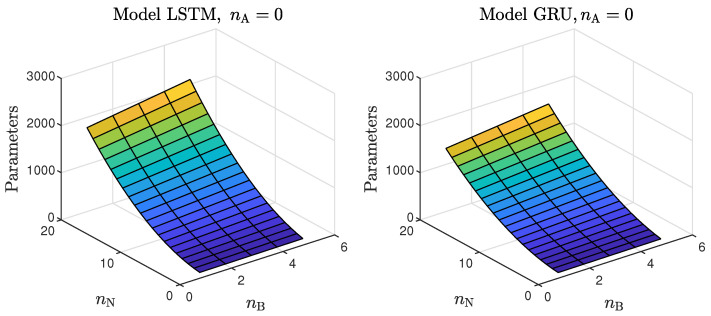
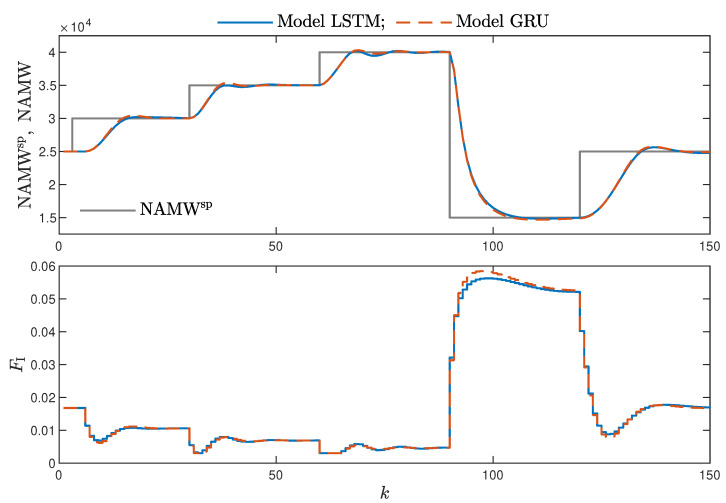
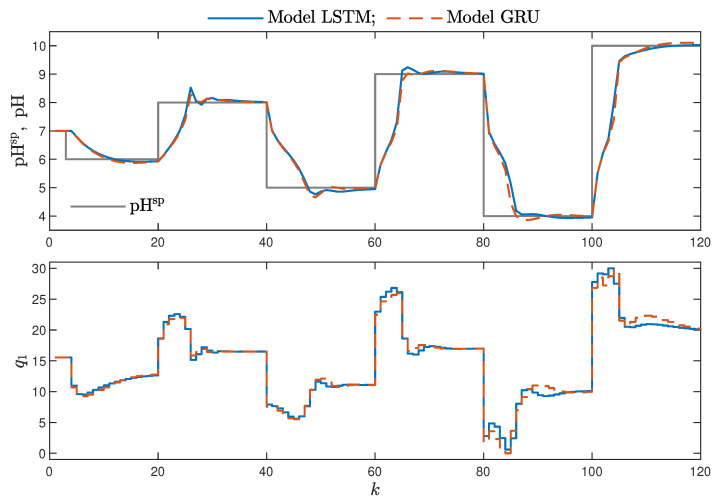
This work thoroughly compares the efficiency of Long Short-Term Memory Networks (LSTMs) and Gated Recurrent Unit (GRU) neural networks as models of the dynamical processes used in Model Predictive Control (MPC). Two simulated industrial processes were considered: a polymerisation reactor and a neutralisation (pH) process. First, MPC prediction equations for both types of models were derived. Next, the efficiency of the LSTM and GRU models was compared for a number of model configurations. The influence of the order of dynamics and the number of neurons on the model accuracy was analysed. Finally, the efficiency of the considered models when used in MPC was assessed. The influence of the model structure on different control quality indicators and the calculation time was discussed. It was found that the GRU network, although it had a lower number of parameters than the LSTM one, may be successfully used in MPC without any significant deterioration of control quality.
这项工作彻底比较了长短期记忆网络(LSTM)和门控循环单元(GRU)神经网络作为模型预测控制(MPC)中使用的动态过程的效率。考虑了两个模拟工业过程:聚合反应器和中和(pH)过程。首先,为这两种类型的模型推导出了 MPC 预测方程。接下来,比较了 LSTM 和 GRU 模型在多种模型配置下的效率。分析了动力学阶数和神经元数量对模型精度的影响。最后,评估了在 MPC 中使用所考虑模型的效率。讨论了模型结构对不同控制质量指标和计算时间的影响。结果发现,虽然 GRU 网络的参数数量比 LSTM 网络少,但在不显著降低控制质量的情况下,它可以成功地用于 MPC。