• 文献检索
  • 文档翻译
  • 深度研究
  • 学术资讯
  • Suppr Zotero 插件Zotero 插件
  • 邀请有礼
  • 套餐&价格
  • 历史记录
应用&插件
Suppr Zotero 插件Zotero 插件浏览器插件Mac 客户端Windows 客户端微信小程序
定价
高级版会员购买积分包购买API积分包
服务
文献检索文档翻译深度研究API 文档MCP 服务
关于我们
关于 Suppr公司介绍联系我们用户协议隐私条款
关注我们

Suppr 超能文献

核心技术专利:CN118964589B侵权必究
粤ICP备2023148730 号-1Suppr @ 2026

文献检索

告别复杂PubMed语法,用中文像聊天一样搜索,搜遍4000万医学文献。AI智能推荐,让科研检索更轻松。

立即免费搜索

文件翻译

保留排版,准确专业,支持PDF/Word/PPT等文件格式,支持 12+语言互译。

免费翻译文档

深度研究

AI帮你快速写综述,25分钟生成高质量综述,智能提取关键信息,辅助科研写作。

立即免费体验

世界卫生组织非洲区域国家 COVID-19 疫情的预测因素。

Predictors of COVID-19 epidemics in countries of the World Health Organization African Region.

机构信息

Usher Institute, University of Edinburgh, Edinburgh, United Kingdom.

WHO Regional Office for Africa, Brazzaville, Republic of Congo.

出版信息

Nat Med. 2021 Nov;27(11):2041-2047. doi: 10.1038/s41591-021-01491-7. Epub 2021 Sep 3.

DOI:10.1038/s41591-021-01491-7
PMID:34480125
原文链接:https://pmc.ncbi.nlm.nih.gov/articles/PMC8604723/
Abstract

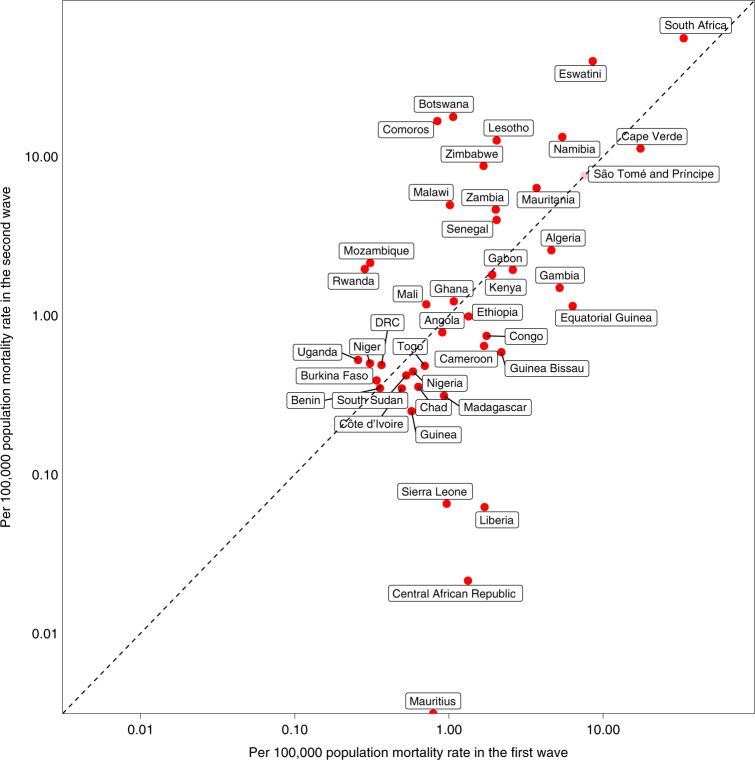
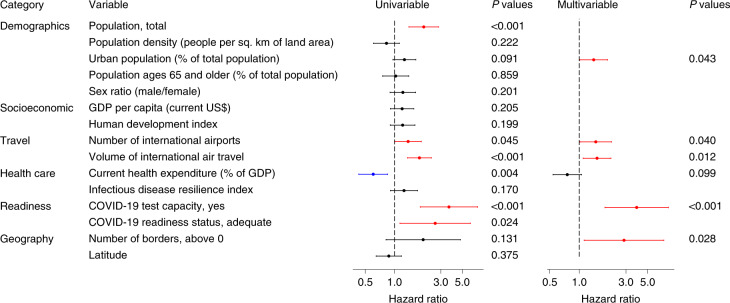
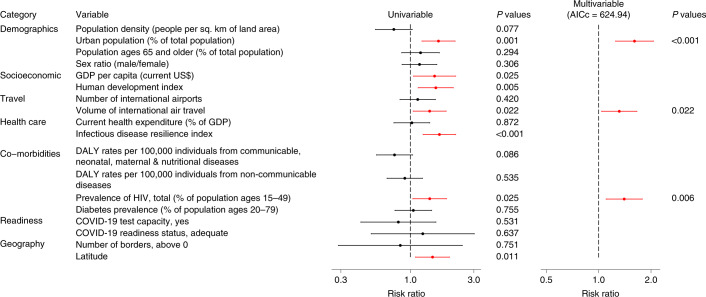
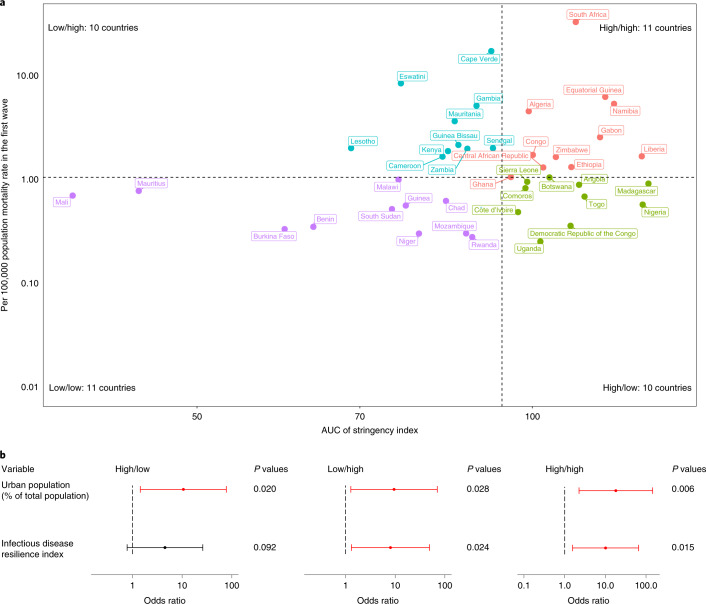
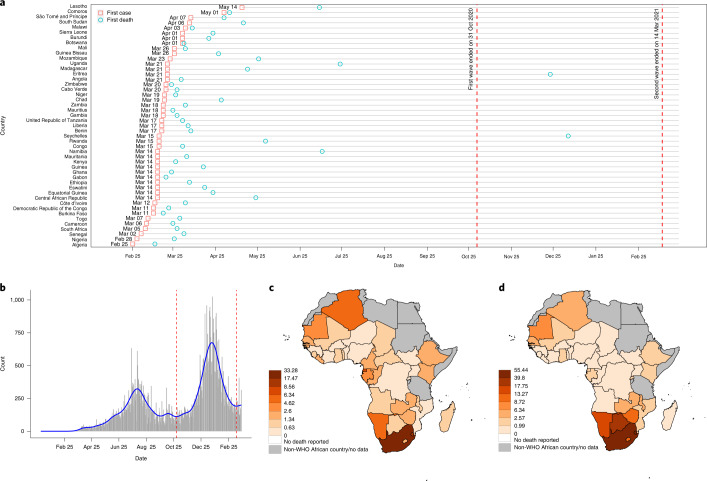
Countries of the World Health Organization (WHO) African Region have experienced a wide range of coronavirus disease 2019 (COVID-19) epidemics. This study aimed to identify predictors of the timing of the first COVID-19 case and the per capita mortality in WHO African Region countries during the first and second pandemic waves and to test for associations with the preparedness of health systems and government pandemic responses. Using a region-wide, country-based observational study, we found that the first case was detected earlier in countries with more urban populations, higher international connectivity and greater COVID-19 test capacity but later in island nations. Predictors of a high first wave per capita mortality rate included a more urban population, higher pre-pandemic international connectivity and a higher prevalence of HIV. Countries rated as better prepared and having more resilient health systems were worst affected by the disease, the imposition of restrictions or both, making any benefit of more stringent countermeasures difficult to detect. Predictors for the second wave were similar to the first. Second wave per capita mortality could be predicted from that of the first wave. The COVID-19 pandemic highlights unanticipated vulnerabilities to infectious disease in Africa that should be taken into account in future pandemic preparedness planning.

摘要

世界卫生组织(WHO)非洲区域的国家经历了范围广泛的 2019 年冠状病毒病(COVID-19)疫情。本研究旨在确定在第一波和第二波大流行期间,预测 WHO 非洲区域国家中首例 COVID-19 病例和人均死亡率的因素,并检验其与卫生系统准备情况和政府大流行应对措施的关联。通过一项基于区域和国家的观察性研究,我们发现,人口城市化程度较高、国际连通性较高、COVID-19 检测能力较强的国家更早地发现首例病例,但岛国则较晚。首例病例人均死亡率较高的预测因素包括人口城市化程度较高、大流行前国际连通性较高以及艾滋病毒流行率较高。被评为准备更充分和卫生系统更具弹性的国家受到的疾病影响最大,包括实施限制措施或两者兼而有之,因此很难发现更严格的应对措施带来的任何好处。第二波的预测因素与第一波相似。可以根据第一波来预测第二波的人均死亡率。COVID-19 大流行凸显了非洲对传染病的意外脆弱性,这在未来的大流行防范规划中应加以考虑。
https://cdn.ncbi.nlm.nih.gov/pmc/blobs/e087/8604723/e9ead263373c/41591_2021_1491_Fig14_ESM.jpg
https://cdn.ncbi.nlm.nih.gov/pmc/blobs/e087/8604723/ba0fc84d2059/41591_2021_1491_Fig1_HTML.jpg
https://cdn.ncbi.nlm.nih.gov/pmc/blobs/e087/8604723/deec4176641c/41591_2021_1491_Fig2_HTML.jpg
https://cdn.ncbi.nlm.nih.gov/pmc/blobs/e087/8604723/fd37f2cb81cb/41591_2021_1491_Fig3_HTML.jpg
https://cdn.ncbi.nlm.nih.gov/pmc/blobs/e087/8604723/36256a0f9a35/41591_2021_1491_Fig4_HTML.jpg
https://cdn.ncbi.nlm.nih.gov/pmc/blobs/e087/8604723/e69f38088863/41591_2021_1491_Fig5_HTML.jpg
https://cdn.ncbi.nlm.nih.gov/pmc/blobs/e087/8604723/4275e3b3c411/41591_2021_1491_Fig6_ESM.jpg
https://cdn.ncbi.nlm.nih.gov/pmc/blobs/e087/8604723/dc6c7d1ac935/41591_2021_1491_Fig7_ESM.jpg
https://cdn.ncbi.nlm.nih.gov/pmc/blobs/e087/8604723/8dd466266600/41591_2021_1491_Fig8_ESM.jpg
https://cdn.ncbi.nlm.nih.gov/pmc/blobs/e087/8604723/60763e6e2ca0/41591_2021_1491_Fig9_ESM.jpg
https://cdn.ncbi.nlm.nih.gov/pmc/blobs/e087/8604723/4c4e797cce0a/41591_2021_1491_Fig10_ESM.jpg
https://cdn.ncbi.nlm.nih.gov/pmc/blobs/e087/8604723/221e3ccc1a9e/41591_2021_1491_Fig11_ESM.jpg
https://cdn.ncbi.nlm.nih.gov/pmc/blobs/e087/8604723/45d59bfa9311/41591_2021_1491_Fig12_ESM.jpg
https://cdn.ncbi.nlm.nih.gov/pmc/blobs/e087/8604723/22f8c6fd4b8f/41591_2021_1491_Fig13_ESM.jpg
https://cdn.ncbi.nlm.nih.gov/pmc/blobs/e087/8604723/e9ead263373c/41591_2021_1491_Fig14_ESM.jpg
https://cdn.ncbi.nlm.nih.gov/pmc/blobs/e087/8604723/ba0fc84d2059/41591_2021_1491_Fig1_HTML.jpg
https://cdn.ncbi.nlm.nih.gov/pmc/blobs/e087/8604723/deec4176641c/41591_2021_1491_Fig2_HTML.jpg
https://cdn.ncbi.nlm.nih.gov/pmc/blobs/e087/8604723/fd37f2cb81cb/41591_2021_1491_Fig3_HTML.jpg
https://cdn.ncbi.nlm.nih.gov/pmc/blobs/e087/8604723/36256a0f9a35/41591_2021_1491_Fig4_HTML.jpg
https://cdn.ncbi.nlm.nih.gov/pmc/blobs/e087/8604723/e69f38088863/41591_2021_1491_Fig5_HTML.jpg
https://cdn.ncbi.nlm.nih.gov/pmc/blobs/e087/8604723/4275e3b3c411/41591_2021_1491_Fig6_ESM.jpg
https://cdn.ncbi.nlm.nih.gov/pmc/blobs/e087/8604723/dc6c7d1ac935/41591_2021_1491_Fig7_ESM.jpg
https://cdn.ncbi.nlm.nih.gov/pmc/blobs/e087/8604723/8dd466266600/41591_2021_1491_Fig8_ESM.jpg
https://cdn.ncbi.nlm.nih.gov/pmc/blobs/e087/8604723/60763e6e2ca0/41591_2021_1491_Fig9_ESM.jpg
https://cdn.ncbi.nlm.nih.gov/pmc/blobs/e087/8604723/4c4e797cce0a/41591_2021_1491_Fig10_ESM.jpg
https://cdn.ncbi.nlm.nih.gov/pmc/blobs/e087/8604723/221e3ccc1a9e/41591_2021_1491_Fig11_ESM.jpg
https://cdn.ncbi.nlm.nih.gov/pmc/blobs/e087/8604723/45d59bfa9311/41591_2021_1491_Fig12_ESM.jpg
https://cdn.ncbi.nlm.nih.gov/pmc/blobs/e087/8604723/22f8c6fd4b8f/41591_2021_1491_Fig13_ESM.jpg
https://cdn.ncbi.nlm.nih.gov/pmc/blobs/e087/8604723/e9ead263373c/41591_2021_1491_Fig14_ESM.jpg

相似文献

1
Predictors of COVID-19 epidemics in countries of the World Health Organization African Region.世界卫生组织非洲区域国家 COVID-19 疫情的预测因素。
Nat Med. 2021 Nov;27(11):2041-2047. doi: 10.1038/s41591-021-01491-7. Epub 2021 Sep 3.
2
Spatiotemporal prevalence of COVID-19 and SARS-CoV-2 variants in Africa.非洲新冠病毒病(COVID-19)及严重急性呼吸综合征冠状病毒2(SARS-CoV-2)变体的时空流行情况
Front Public Health. 2025 Feb 20;13:1526727. doi: 10.3389/fpubh.2025.1526727. eCollection 2025.
3
The first and second waves of the COVID-19 pandemic in Africa: a cross-sectional study.非洲的 COVID-19 大流行的第一波和第二波:一项横断面研究。
Lancet. 2021 Apr 3;397(10281):1265-1275. doi: 10.1016/S0140-6736(21)00632-2. Epub 2021 Mar 24.
4
Global age-sex-specific mortality, life expectancy, and population estimates in 204 countries and territories and 811 subnational locations, 1950-2021, and the impact of the COVID-19 pandemic: a comprehensive demographic analysis for the Global Burden of Disease Study 2021.204 个国家和地区及 811 个次国家级行政单位 1950 年至 2021 年的全球年龄、性别特异性死亡率、预期寿命和人口估计,以及 COVID-19 大流行的影响:2021 年全球疾病负担研究的综合人口分析。
Lancet. 2024 May 18;403(10440):1989-2056. doi: 10.1016/S0140-6736(24)00476-8. Epub 2024 Mar 11.
5
The COVID-19 pandemic in the WHO African region: the first year (February 2020 to February 2021).世卫组织非洲区域的 COVID-19 大流行:第一年(2020 年 2 月至 2021 年 2 月)。
Epidemiol Infect. 2021 Nov 4;149:e263. doi: 10.1017/S0950268821002429.
6
Country-level determinants of the severity of the first global wave of the COVID-19 pandemic: an ecological study.国家层面因素对 COVID-19 大流行首个全球浪潮严重程度的影响:一项生态学研究。
BMJ Open. 2021 Feb 3;11(2):e042034. doi: 10.1136/bmjopen-2020-042034.
7
Response strategies for COVID-19 epidemics in African settings: a mathematical modelling study.非洲环境下应对 COVID-19 疫情的策略:一项数学建模研究。
BMC Med. 2020 Oct 14;18(1):324. doi: 10.1186/s12916-020-01789-2.
8
Pandemic preparedness and COVID-19: an exploratory analysis of infection and fatality rates, and contextual factors associated with preparedness in 177 countries, from Jan 1, 2020, to Sept 30, 2021.大流行防范与新冠疫情:对2020年1月1日至2021年9月30日期间177个国家的感染率、死亡率以及与防范相关的背景因素进行的探索性分析。
Lancet. 2022 Apr 16;399(10334):1489-1512. doi: 10.1016/S0140-6736(22)00172-6. Epub 2022 Feb 1.
9
A Spatial Analysis of COVID-19 in African Countries: Evaluating the Effects of Socio-Economic Vulnerabilities and Neighbouring.非洲国家新冠肺炎的空间分析:评估社会经济脆弱性和邻国的影响
Int J Environ Res Public Health. 2021 Oct 14;18(20):10783. doi: 10.3390/ijerph182010783.
10
A SARS-CoV-2 Surveillance System in Sub-Saharan Africa: Modeling Study for Persistence and Transmission to Inform Policy.撒哈拉以南非洲的新冠病毒监测系统:关于持续存在和传播以指导政策的建模研究
J Med Internet Res. 2020 Nov 19;22(11):e24248. doi: 10.2196/24248.

引用本文的文献

1
Compact highly sensitive photothermal RT-LAMP chip for simultaneous multidisease detection.用于同时多重疾病检测的紧凑高灵敏度光热 RT-LAMP 芯片。
Sci Adv. 2024 Nov 15;10(46):eadq2899. doi: 10.1126/sciadv.adq2899. Epub 2024 Nov 13.
2
Coronavirus disease-19 vaccine uptake, willingness for vaccination, and associated Factors among chronic follow patients attending in the two comprehensive specialized hospitals of Bahir Dar, Ethiopia.在埃塞俄比亚巴希尔达尔的两家综合专科医院就诊的慢性病患者中,对新型冠状病毒疾病-19 疫苗的接种率、接种意愿及其相关因素。
BMC Infect Dis. 2024 Sep 13;24(1):976. doi: 10.1186/s12879-024-09882-0.
3

本文引用的文献

1
Socioeconomic status determines COVID-19 incidence and related mortality in Santiago, Chile.社会经济地位决定智利圣地亚哥的 COVID-19 发病率和相关死亡率。
Science. 2021 May 28;372(6545). doi: 10.1126/science.abg5298. Epub 2021 Apr 27.
2
The first and second waves of the COVID-19 pandemic in Africa: a cross-sectional study.非洲的 COVID-19 大流行的第一波和第二波:一项横断面研究。
Lancet. 2021 Apr 3;397(10281):1265-1275. doi: 10.1016/S0140-6736(21)00632-2. Epub 2021 Mar 24.
3
Epidemiology and outcomes of COVID-19 in HIV-infected individuals: a systematic review and meta-analysis.
Healthcare system resilience and adaptability to pandemic disruptions in the United States.
美国医疗体系对疫情干扰的恢复力和适应力。
Nat Med. 2024 Aug;30(8):2311-2319. doi: 10.1038/s41591-024-03103-6. Epub 2024 Jul 2.
4
A Digital Mask-Voiceprint System for Postpandemic Surveillance and Tracing Based on the STRONG Strategy.基于 STRONG 策略的后疫情监测和追踪数字口罩-声纹系统。
J Med Internet Res. 2023 Nov 6;25:e44795. doi: 10.2196/44795.
5
COVID-19 pandemic and socio-environmental inequality: A narrative review.2019冠状病毒病大流行与社会环境不平等:一项叙述性综述
Health Sci Rep. 2023 Jun 27;6(6):e1372. doi: 10.1002/hsr2.1372. eCollection 2023 Jun.
6
COVID-19-related adolescent mortality and morbidity in nineteen European countries.19 个欧洲国家与 COVID-19 相关的青少年死亡率和发病率。
Eur J Pediatr. 2023 Sep;182(9):3997-4005. doi: 10.1007/s00431-023-05068-z. Epub 2023 Jun 29.
7
Country-level predictors of COVID-19 mortality.国家层面预测 COVID-19 死亡率的因素。
Sci Rep. 2023 Jun 7;13(1):9263. doi: 10.1038/s41598-023-36449-x.
8
An assessment of the relationship between national rates of Covid-19 incidence and mortality as reported to an international comparison database: An ecological study.一项针对向国际比较数据库报告的新冠病毒感染发病率和死亡率的国家数据之间关系的评估:一项生态学研究。
Health Sci Rep. 2023 May 27;6(5):e1306. doi: 10.1002/hsr2.1306. eCollection 2023 May.
9
A Review of the Machine Learning Algorithms for Covid-19 Case Analysis.用于新冠病例分析的机器学习算法综述
IEEE Trans Artif Intell. 2022 Jan 11;4(1):44-59. doi: 10.1109/TAI.2022.3142241. eCollection 2023 Feb.
10
Conflicting COVID-19 excess mortality estimates.相互矛盾的新冠疫情超额死亡率估计值。
Lancet. 2023 Feb 11;401(10375):431. doi: 10.1016/S0140-6736(23)00112-5.
HIV 感染者中 COVID-19 的流行病学和结局:系统评价和荟萃分析。
Sci Rep. 2021 Mar 18;11(1):6283. doi: 10.1038/s41598-021-85359-3.
4
A global panel database of pandemic policies (Oxford COVID-19 Government Response Tracker).一个全球性的大流行病政策面板数据库(牛津 COVID-19 政府应对追踪器)。
Nat Hum Behav. 2021 Apr;5(4):529-538. doi: 10.1038/s41562-021-01079-8. Epub 2021 Mar 8.
5
Reduction in mobility and COVID-19 transmission.减少流动性和 COVID-19 的传播。
Nat Commun. 2021 Feb 17;12(1):1090. doi: 10.1038/s41467-021-21358-2.
6
Country-level determinants of the severity of the first global wave of the COVID-19 pandemic: an ecological study.国家层面因素对 COVID-19 大流行首个全球浪潮严重程度的影响:一项生态学研究。
BMJ Open. 2021 Feb 3;11(2):e042034. doi: 10.1136/bmjopen-2020-042034.
7
Variation in SARS-CoV-2 outbreaks across sub-Saharan Africa.撒哈拉以南非洲地区的 SARS-CoV-2 疫情爆发情况存在差异。
Nat Med. 2021 Mar;27(3):447-453. doi: 10.1038/s41591-021-01234-8. Epub 2021 Feb 2.
8
Demographic and public health characteristics explain large part of variability in COVID-19 mortality across countries.人口统计学和公共卫生特征解释了 COVID-19 死亡率在各国之间存在巨大差异的很大一部分原因。
Eur J Public Health. 2021 Feb 1;31(1):12-16. doi: 10.1093/eurpub/ckaa226.
9
Health-system equity, egalitarian democracy and COVID-19 outcomes: An empirical analysis.卫生系统公平、平等民主与 COVID-19 结果:一项实证分析。
Scand J Public Health. 2021 Feb;49(1):104-113. doi: 10.1177/1403494820982106. Epub 2021 Jan 9.
10
What are SARS-CoV-2 genomes from the WHO Africa region member states telling us?来自世界卫生组织非洲区域成员国的新冠病毒基因组告诉了我们什么?
BMJ Glob Health. 2021 Jan;6(1). doi: 10.1136/bmjgh-2020-004408.