Department of Biological Engineering, Massachusetts Institute of Technology, Cambridge, Massachusetts 02139, United States.
Department of Chemical Engineering, Massachusetts Institute of Technology, Cambridge, Massachusetts 02139, United States.
ACS Nano. 2021 Sep 28;15(9):14316-14322. doi: 10.1021/acsnano.1c03158. Epub 2021 Sep 7.
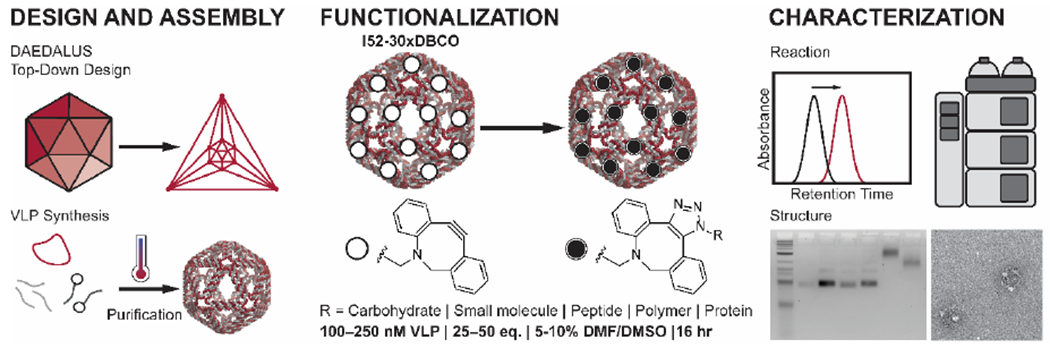
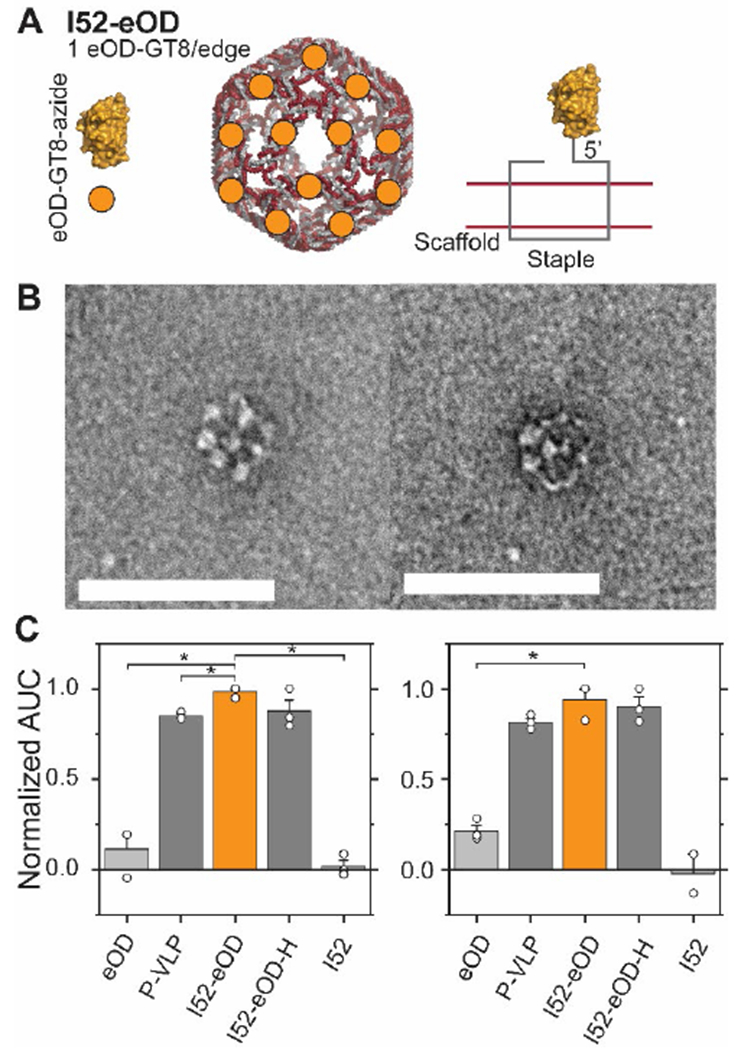
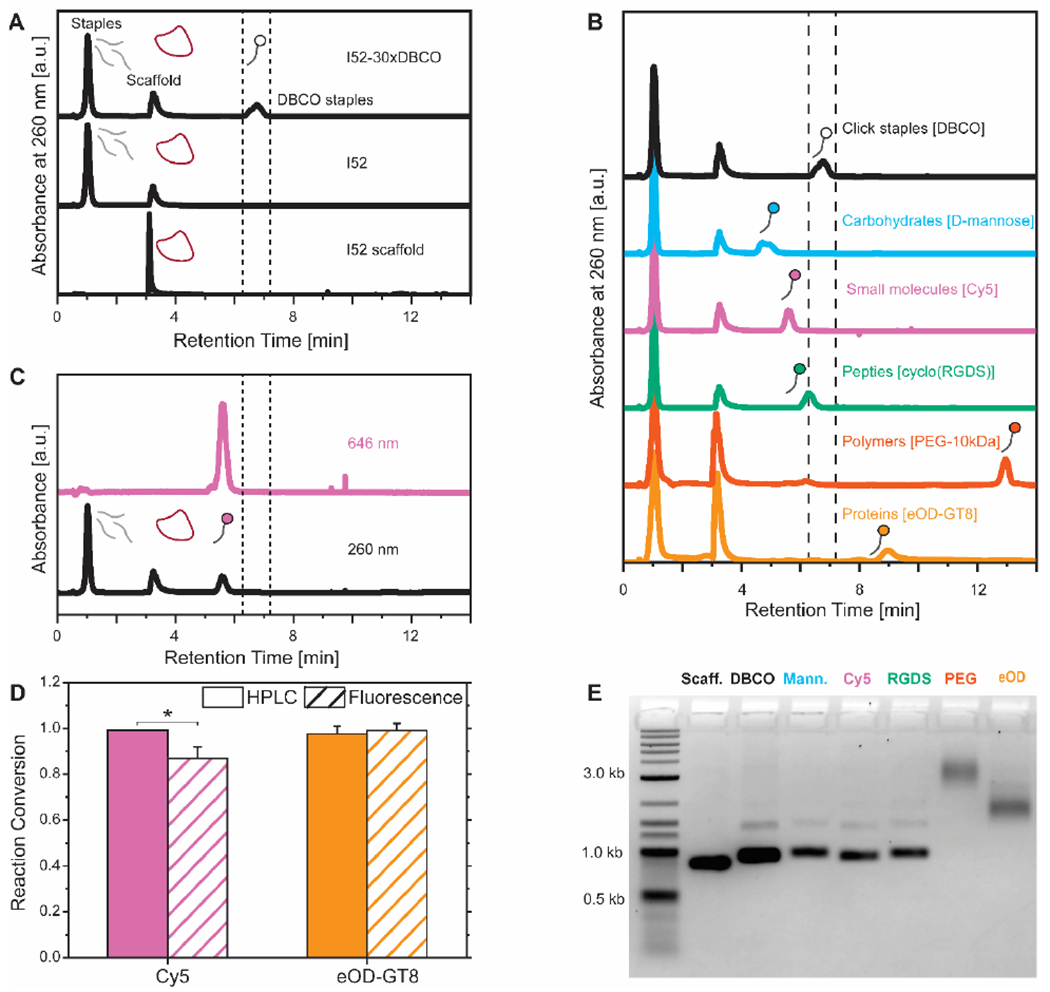
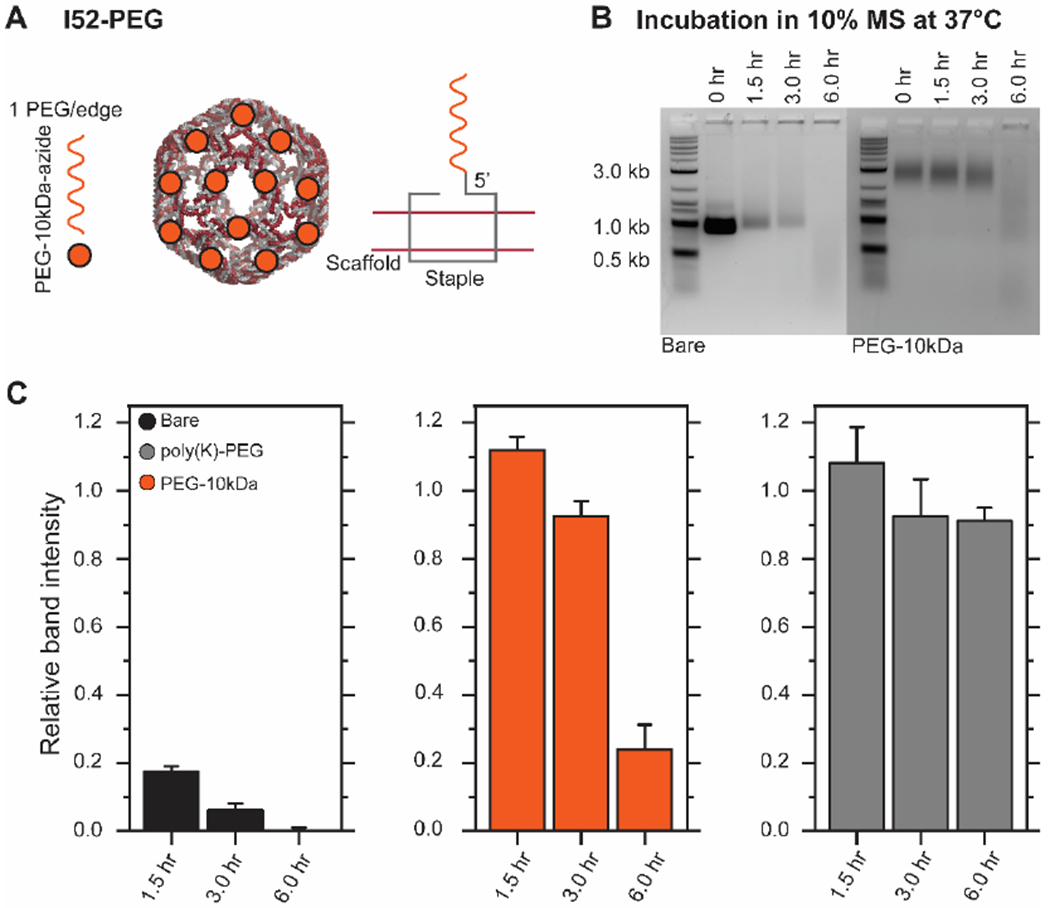
DNA origami is a powerful nanomaterial for biomedical applications due in part to its capacity for programmable, site-specific functionalization. To realize these applications, scalable and efficient conjugation protocols are needed for diverse moieties ranging from small molecules to biomacromolecules. Currently, there are no facile and general methods for covalent modification and label-free quantification of reaction conversion. Here, we investigate the postassembly functionalization of DNA origami and the subsequent high-performance liquid chromatography-based characterization of these nanomaterials. Following this approach, we developed a versatile DNA origami functionalization and characterization platform. We observed quantitative conversion using widely accessible click chemistry for carbohydrates, small molecules, peptides, polymers, and proteins. This platform should provide broader access to covalently functionalized DNA origami, as illustrated here by PEGylation for passivation and HIV antigen decoration to construct virus-like particle vaccines.
DNA 折纸术是一种强大的纳米材料,可用于生物医学应用,部分原因是其具有可编程、定点功能化的能力。为了实现这些应用,需要可扩展且高效的偶联协议,用于各种不同的部分,从小分子到大分子。目前,对于共价修饰和无标记的反应转化率定量,还没有简单通用的方法。在这里,我们研究了 DNA 折纸术的后组装功能化,以及随后基于高效液相色谱的这些纳米材料的表征。通过这种方法,我们开发了一种通用的 DNA 折纸术功能化和表征平台。我们使用广泛使用的点击化学对碳水化合物、小分子、肽、聚合物和蛋白质进行了定量转化。该平台应提供更广泛的方法来获得共价功能化的 DNA 折纸术,如这里通过聚乙二醇化进行钝化和 HIV 抗原修饰来构建病毒样颗粒疫苗。