G0 Cell Unit, Okinawa Institute of Science and Technology Graduate University, Okinawa 904-0495, Japan.
Geriatric Unit, Graduate School of Medicine, Kyoto University, Kyoto 606-8507, Japan.
Proc Natl Acad Sci U S A. 2021 Sep 14;118(37). doi: 10.1073/pnas.2022857118.
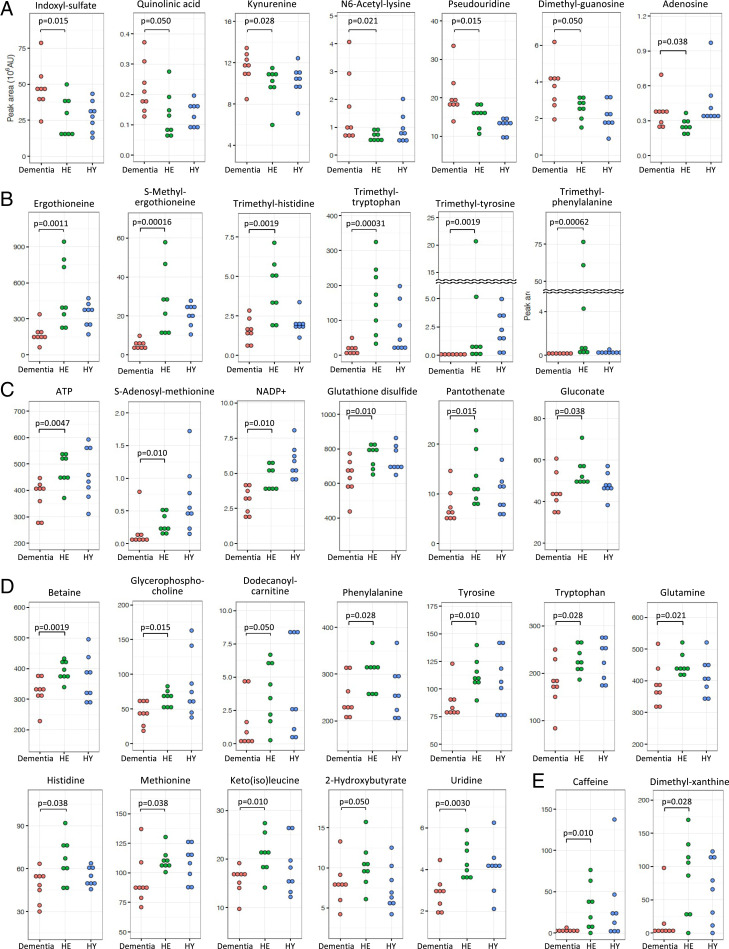
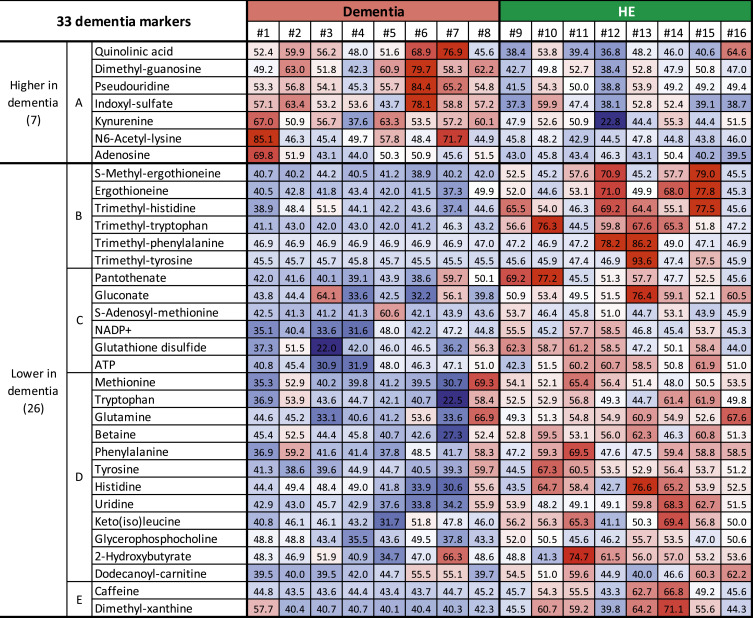
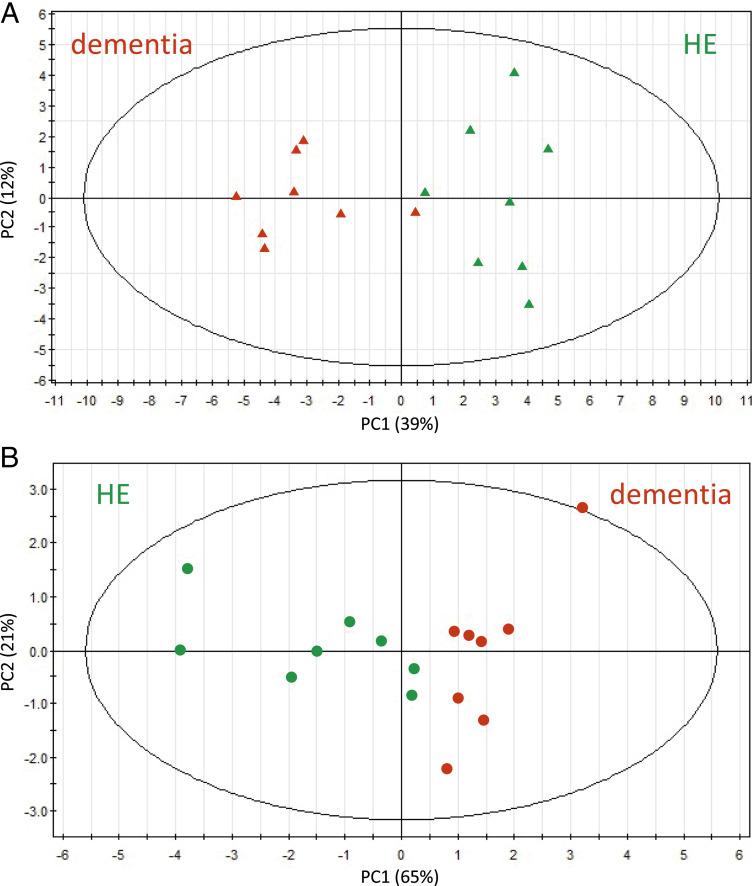
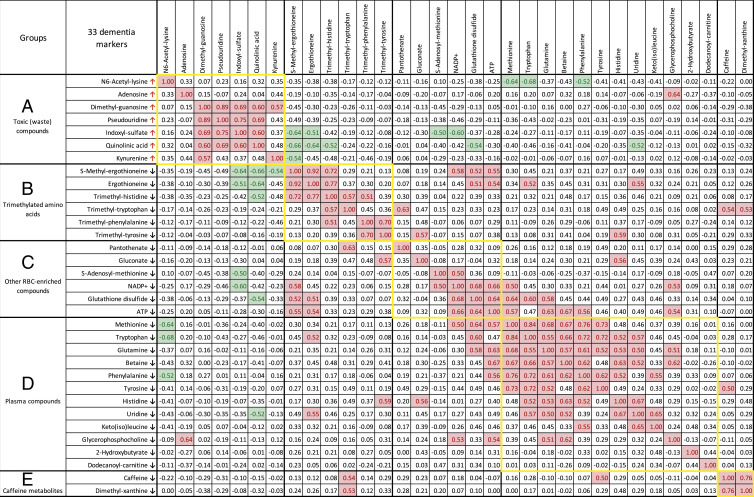
Dementia is caused by factors that damage neurons. We quantified small molecular markers in whole blood of dementia patients, using nontargeted liquid chromatography-mass spectroscopy (LC-MS). Thirty-three metabolites, classified into five groups (A to E), differed significantly in dementia patients, compared with healthy elderly subjects. Seven A metabolites present in plasma, including quinolinic acid, kynurenine, and indoxyl-sulfate, increased. Possibly they act as neurotoxins in the central nervous system (CNS). The remaining 26 compounds (B to E) decreased, possibly causing a loss of support or protection of the brain in dementia. Six B metabolites, normally enriched in red blood cells (RBCs), all contain trimethylated ammonium moieties. These metabolites include ergothioneine and structurally related compounds that have scarcely been investigated as dementia markers, validating the examination of RBC metabolites. Ergothioneine, a potent antioxidant, is significantly decreased in various cognition-related disorders, such as mild cognitive impairment and frailty. C compounds also include some oxidoreductants and are normally abundant in RBCs (NADP, glutathione, adenosine triphosphate, pantothenate, -adenosyl-methionine, and gluconate). Their decreased levels in dementia patients may also contribute to depressed brain function. Twelve D metabolites contains plasma compounds, such as amino acids, glycerophosphocholine, dodecanoyl-carnitine, and 2-hydroxybutyrate, which normally protect the brain, but their diminution in dementia may reduce that protection. Seven D compounds have been identified previously as dementia markers. B to E compounds may be critical to maintain the CNS by acting directly or indirectly. How RBC metabolites act in the CNS and why they diminish significantly in dementia remain to be determined.
痴呆症是由损伤神经元的因素引起的。我们使用非靶向液相色谱-质谱(LC-MS)定量了痴呆症患者全血中的小分子标志物。与健康老年人相比,33 种代谢物分为五个组(A 到 E),在痴呆症患者中差异显著。七种存在于血浆中的 A 代谢物增加,包括喹啉酸、犬尿氨酸和吲哚硫酸酯。它们可能在中枢神经系统(CNS)中充当神经毒素。其余 26 种化合物(B 到 E)减少,可能导致大脑在痴呆症中失去支持或保护。六种 B 代谢物,通常富含于红细胞(RBC)中,都含有三甲铵基团。这些代谢物包括麦角硫因和结构相关的化合物,它们作为痴呆症标志物几乎没有被研究过,验证了 RBC 代谢物的检查。麦角硫因是一种有效的抗氧化剂,在各种与认知相关的疾病中显著减少,如轻度认知障碍和虚弱。C 类化合物还包括一些氧化还原酶,通常在 RBC 中含量丰富(NADP、谷胱甘肽、三磷酸腺苷、泛酸、腺苷甲硫氨酸和葡萄糖酸盐)。它们在痴呆症患者中的水平降低也可能导致大脑功能下降。十二种 D 代谢物包含血浆化合物,如氨基酸、甘油磷酸胆碱、十二烷酰肉碱和 2-羟基丁酸,它们通常能保护大脑,但在痴呆症中它们的减少可能会降低这种保护作用。七种 D 化合物以前被确定为痴呆症标志物。B 到 E 类化合物可能通过直接或间接作用对维持中枢神经系统至关重要。RBC 代谢物如何在中枢神经系统中发挥作用,以及为什么它们在痴呆症中显著减少,仍有待确定。