Chivenge Pauline, Saito Kazuki, Bunquin Michelle Anne, Sharma Sheetal, Dobermann Achim
International Rice Research Institute (IRRI), DAPO Box 7777, Metro Manila, 1301, Philippines.
Current Address: African Plant Nutrition Institute, UM6P Experimental Farm, Benguérir, 41350, Morocco.
Glob Food Sec. 2021 Sep;30:100570. doi: 10.1016/j.gfs.2021.100570.
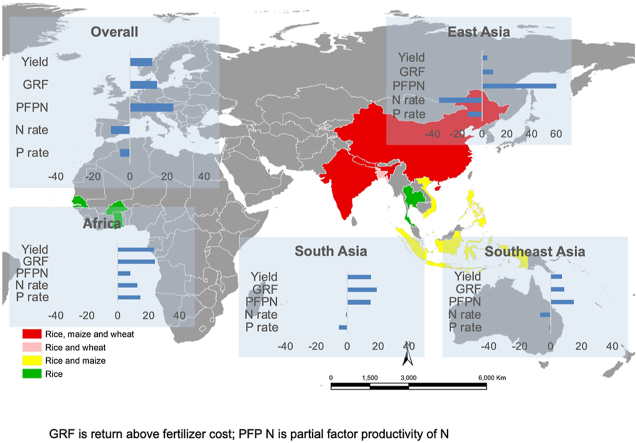
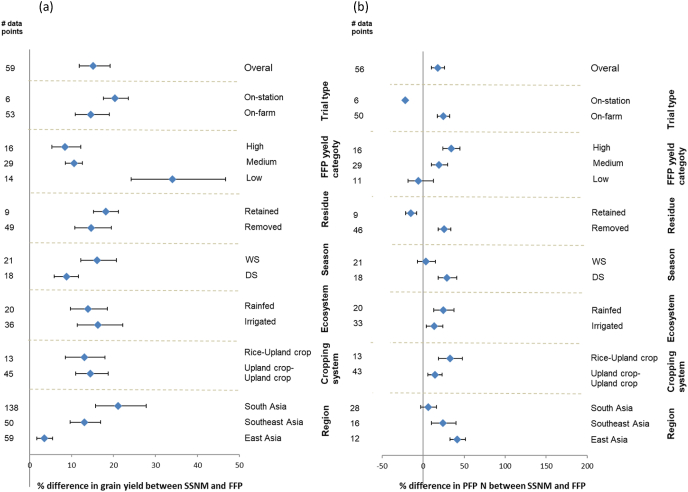
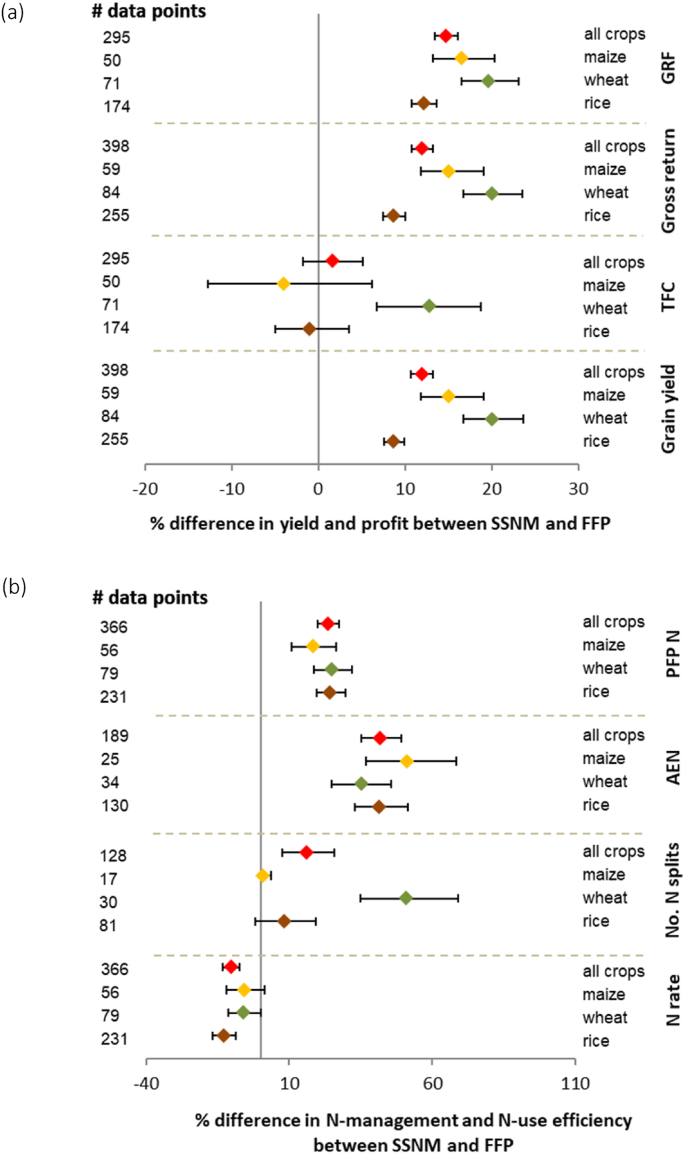
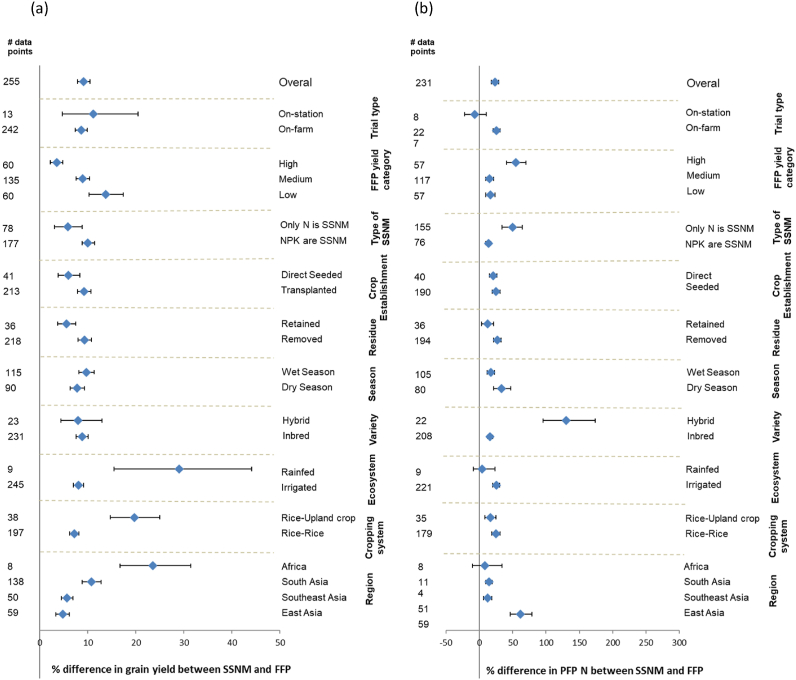
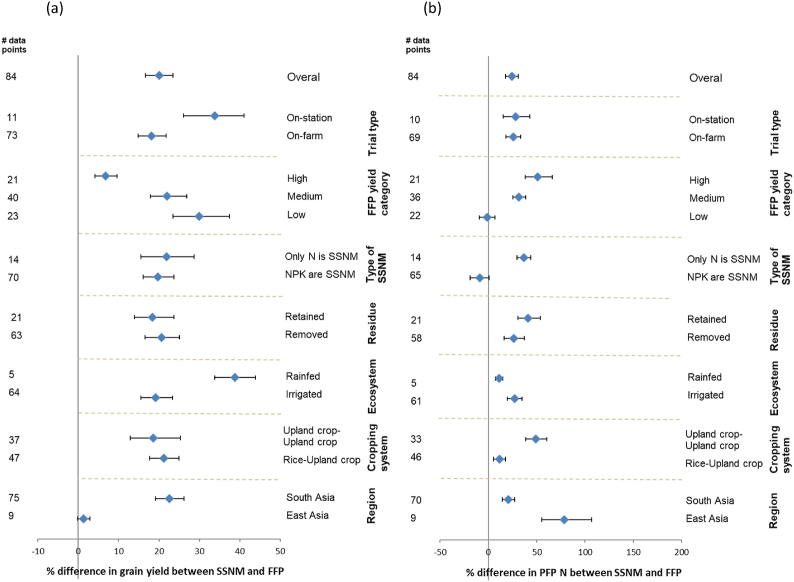
Plant nutrition plays a central role in the global challenges to produce sufficient and nutritious food, lessen rural poverty, and reducing the environmental footprint of farming. Site-specific nutrient management (SSNM) provides field-specific solutions for smallholder farmers, potentially creating co-benefits of increased productivity and sustainability. Here we perform the first meta-analysis comparing SSNM with farmers' fertilizer practice for maize, rice and wheat using 61 published papers across 11 countries. Relative to the farmer practice, across all crops SSNM increased grain yield by 12% and profitability by 15% with 10% less fertilizer nitrogen applied, thereby improving nitrogen use efficiency and reducing nitrogen pollution to the environment. Delivering it to millions of smallholder farmers requires use of digital decision support tools, but also policy incentives, links with financial and input supply services, and enhancing public-private partnerships.
植物营养在应对全球挑战方面发挥着核心作用,这些挑战包括生产足够且营养丰富的食物、减轻农村贫困以及减少农业的环境足迹。特定地点养分管理(SSNM)为小农户提供田间特定的解决方案,有可能产生提高生产力和可持续性的协同效益。在此,我们进行了首次荟萃分析,使用来自11个国家的61篇已发表论文,比较了SSNM与农民在玉米、水稻和小麦种植上的施肥做法。相对于农民的做法,在所有作物上,SSNM使谷物产量提高了12%,盈利能力提高了15%,同时减少了10%的氮肥施用量,从而提高了氮素利用效率并减少了对环境的氮污染。将其推广到数百万小农户需要使用数字决策支持工具,还需要政策激励、与金融和投入供应服务建立联系以及加强公私伙伴关系。