Intractable Disease Research Center, Juntendo University School of Medicine, Tokyo 113-8421, Japan.
Department of Biochemistry and Biophysics, Graduate School of Medical and Dental Sciences, Tokyo Medical and Dental University (TMDU), Tokyo 1130-8510, Japan.
Cells. 2021 Sep 21;10(9):2499. doi: 10.3390/cells10092499.
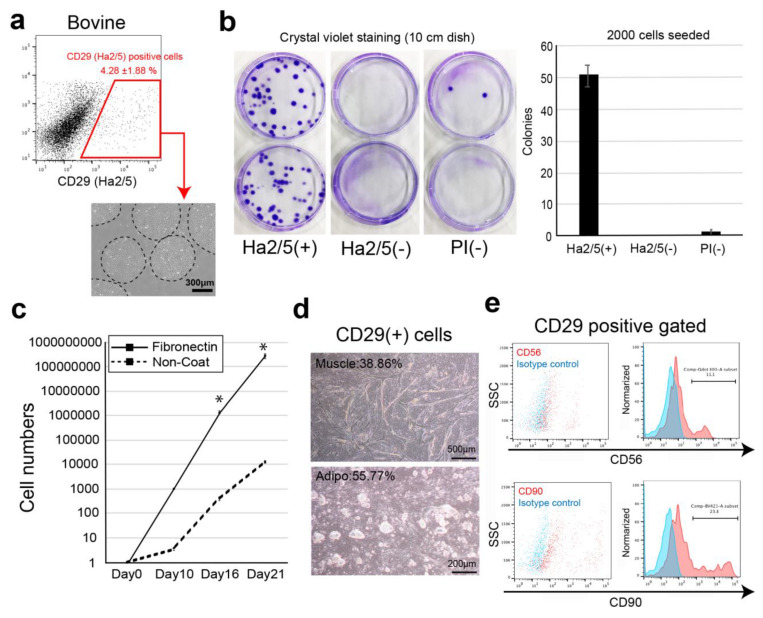
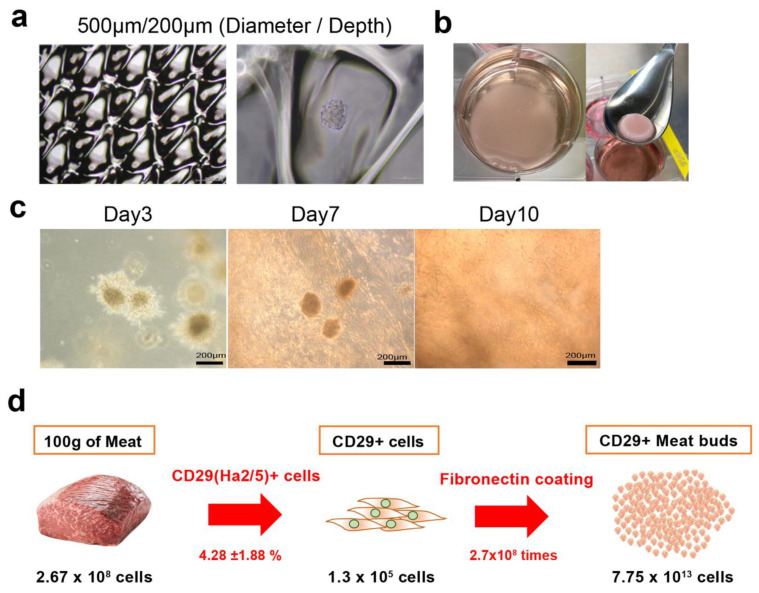
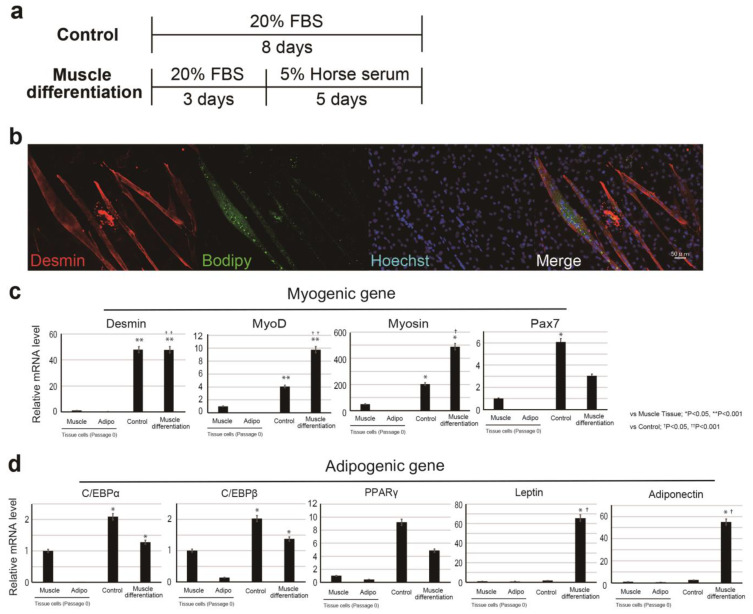
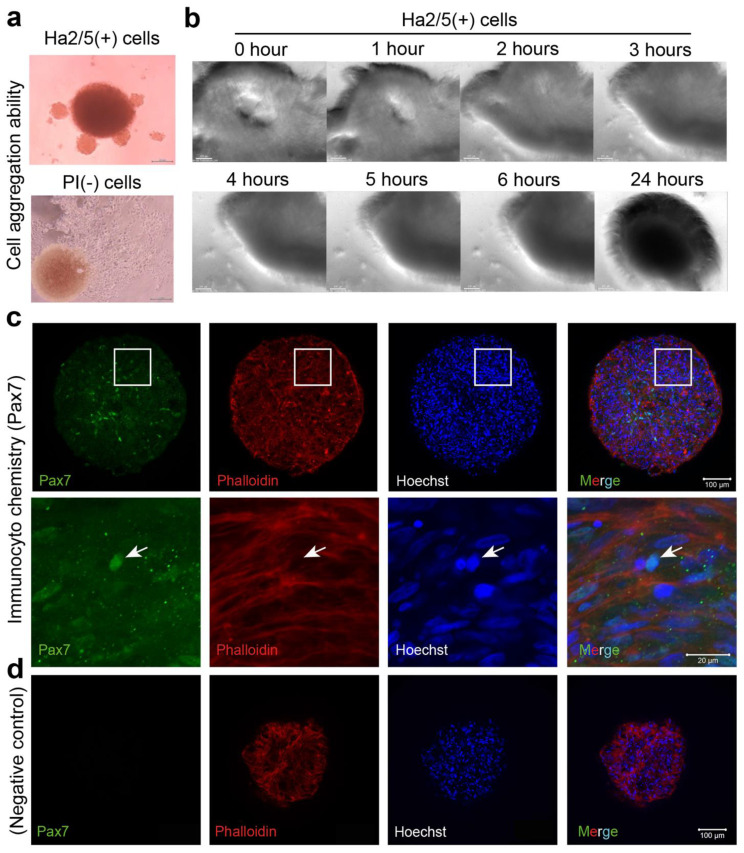
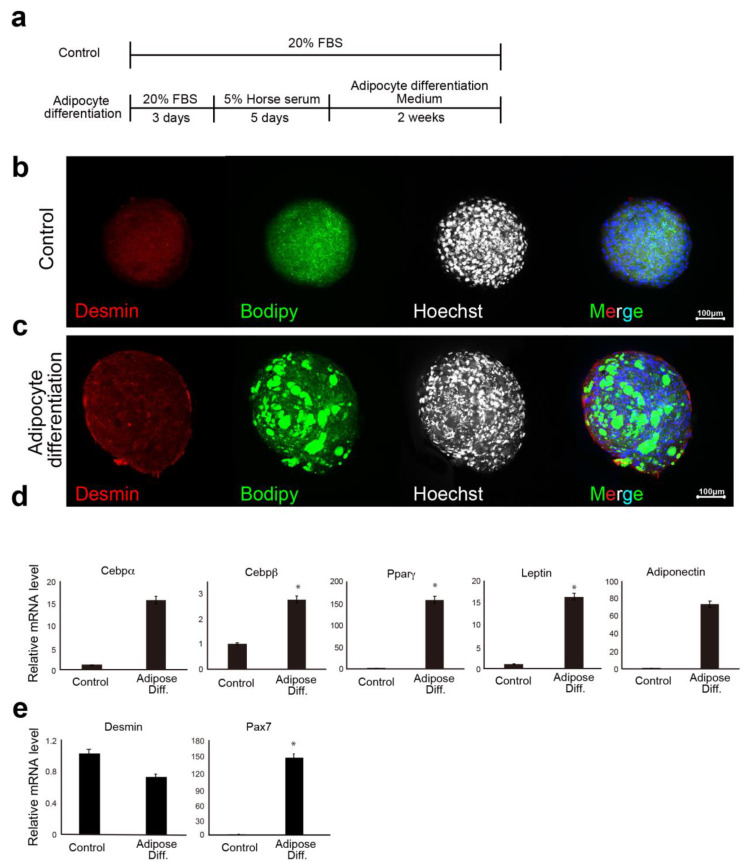
The current process of meat production using livestock has significant effects on the global environment, including high emissions of greenhouse gases. In recent years, cultured meat has attracted attention as a way to acquire animal proteins. However, the lack of markers that isolate proliferating cells from bovine tissues and the complex structure of the meat make it difficult to culture meat in a dish. In this study, we screened 246 cell-surface antibodies by fluorescence-activated cell sorting for their capacity to form colonies and their suitability to construct spheroid "meat buds". CD29+ cells (Ha2/5 clone) have a high potency to form colonies and efficiently proliferate on fibronectin-coated dishes. Furthermore, the meat buds created from CD29+ cells could differentiate into muscle and adipose cells in a three-dimensional structure. The meat buds embedded in the collagen gel proliferated in the matrix and formed large aggregates. Approximately 10 trillion cells can theoretically be obtained from 100 g of bovine tissue by culturing and amplifying them using these methods. The CD29+ cell characteristics of bovine tissue provide insights into the production of meat alternatives in vitro.
目前使用牲畜进行肉类生产的过程对全球环境有重大影响,包括大量温室气体的排放。近年来,培养肉作为获取动物蛋白质的一种方式引起了人们的关注。然而,由于缺乏可以将增殖细胞从牛组织中分离出来的标记物,以及肉质结构复杂,在培养皿中培养肉变得困难。在这项研究中,我们通过荧光激活细胞分选筛选了 246 种细胞表面抗体,以评估它们形成集落的能力和构建球体“肉芽”的适宜性。CD29+ 细胞(Ha2/5 克隆)具有形成集落的高潜能,并且在纤维连接蛋白包被的培养皿上能高效增殖。此外,由 CD29+ 细胞形成的肉芽可以在三维结构中分化为肌肉和脂肪细胞。嵌入胶原凝胶中的肉芽在基质中增殖并形成大的聚集物。通过使用这些方法培养和扩增,理论上可以从 100 克牛组织中获得约 10 万亿个细胞。牛组织的 CD29+ 细胞特性为体外生产肉类替代品提供了思路。