Molecular Modeling Section (MMS), Department of Pharmaceutical and Pharmacological Sciences, University of Padova, Via Marzolo 5, 35131 Padova, Italy.
Department of Chemical and Pharmaceutical Sciences, University of Trieste, Via Licio Giorgeri 1, 34127 Trieste, Italy.
Int J Mol Sci. 2021 Sep 9;22(18):9741. doi: 10.3390/ijms22189741.
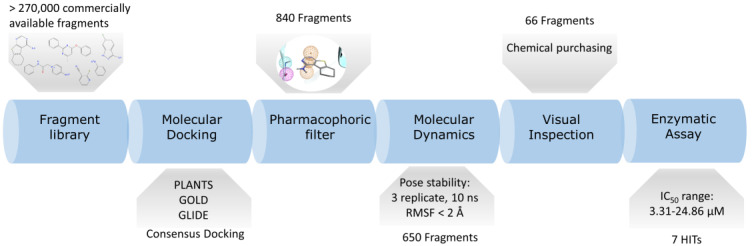
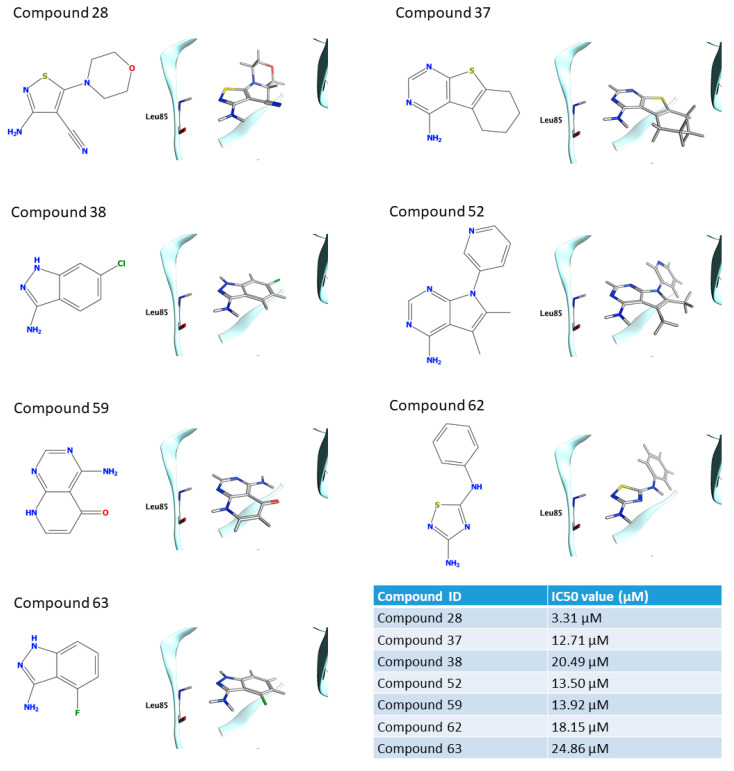
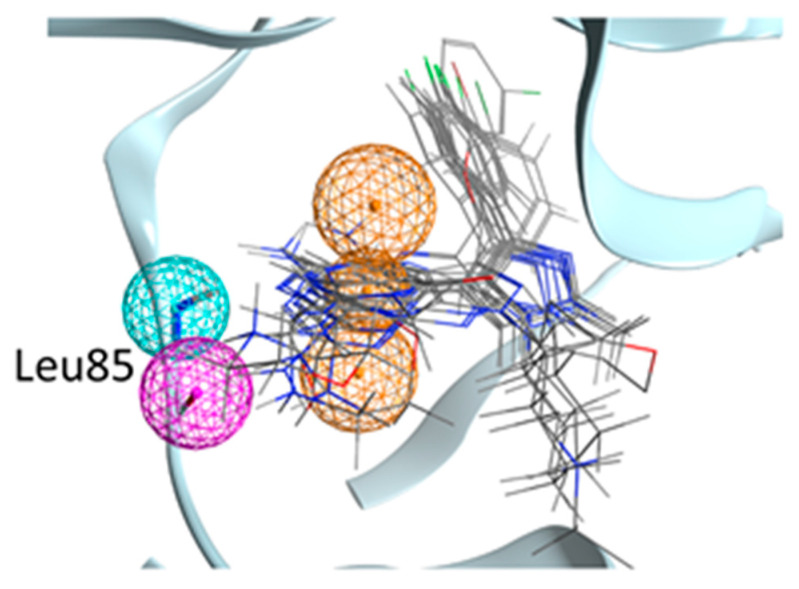
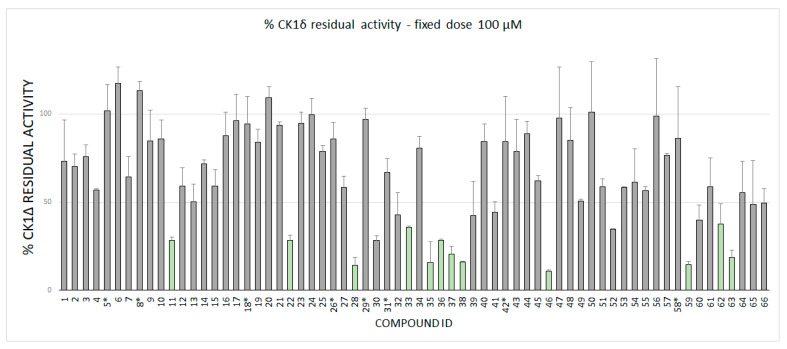
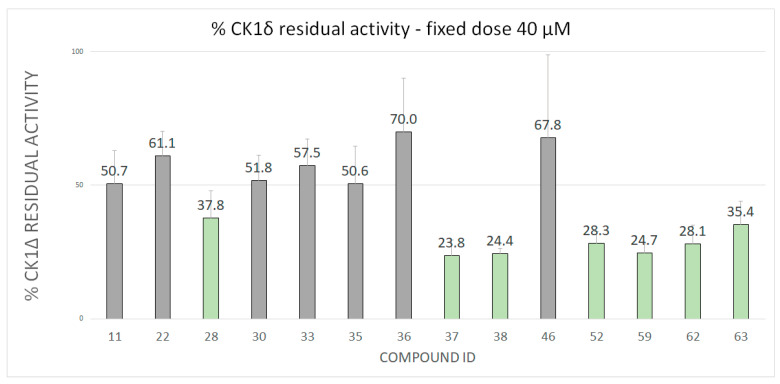
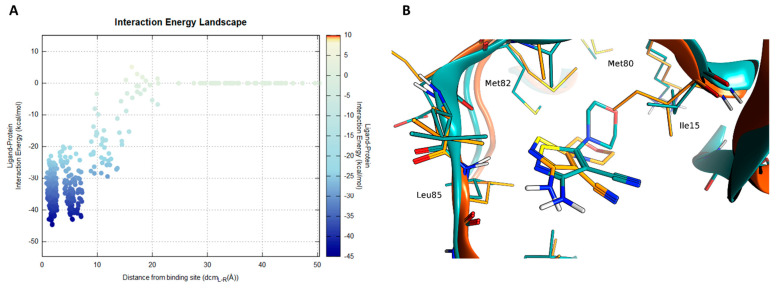
Fragment-Based Drug Discovery (FBDD) has become, in recent years, a consolidated approach in the drug discovery process, leading to several drug candidates under investigation in clinical trials and some approved drugs. Among these successful applications of the FBDD approach, kinases represent a class of targets where this strategy has demonstrated its real potential with the approved kinase inhibitor Vemurafenib. In the Kinase family, protein kinase CK1 isoform δ (CK1δ) has become a promising target in the treatment of different neurodegenerative diseases such as Alzheimer's disease, Parkinson's disease, and amyotrophic lateral sclerosis. In the present work, we set up and applied a computational workflow for the identification of putative fragment binders in large virtual databases. To validate the method, the selected compounds were tested in vitro to assess the CK1δ inhibition.
片段药物发现(FBDD)已成为近年来药物发现过程中的一种成熟方法,为临床试验中的几个候选药物和一些已批准的药物提供了支持。在 FBDD 方法的这些成功应用中,激酶是一个靶点类别,该策略已通过批准的激酶抑制剂vemurafenib 证明了其真正的潜力。在激酶家族中,蛋白激酶 CK1 同工酶 δ(CK1δ)已成为治疗阿尔茨海默病、帕金森病和肌萎缩性侧索硬化症等不同神经退行性疾病的有前途的靶点。在本工作中,我们建立并应用了一种计算工作流程,用于在大型虚拟数据库中识别潜在的片段配体。为了验证该方法,选择的化合物在体外进行了测试,以评估 CK1δ 的抑制作用。