Brożyna Malwina, Paleczny Justyna, Kozłowska Weronika, Chodaczek Grzegorz, Dudek-Wicher Ruth, Felińczak Anna, Gołębiewska Joanna, Górniak Agata, Junka Adam
Department of Pharmaceutical Microbiology and Parasitology, Wroclaw Medical University, 50-556 Wroclaw, Poland.
Department of Pharmaceutical Biology, Wroclaw Medical University, 50-556 Wroclaw, Poland.
Pathogens. 2021 Sep 17;10(9):1207. doi: 10.3390/pathogens10091207.
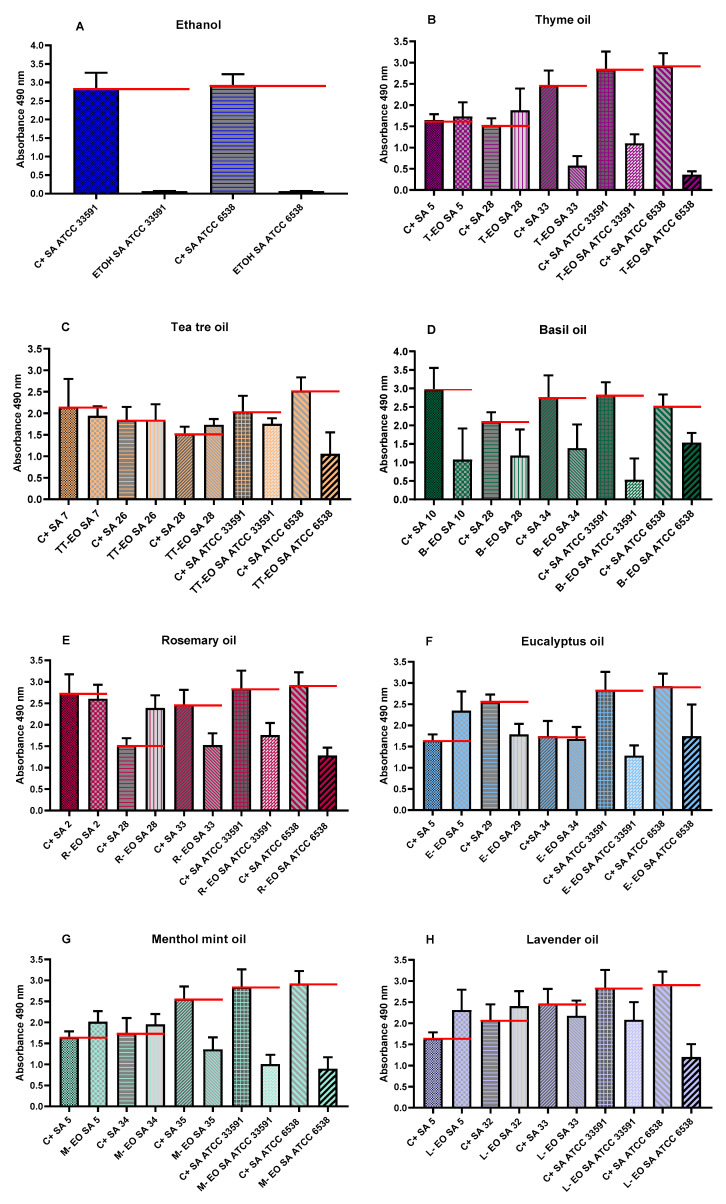
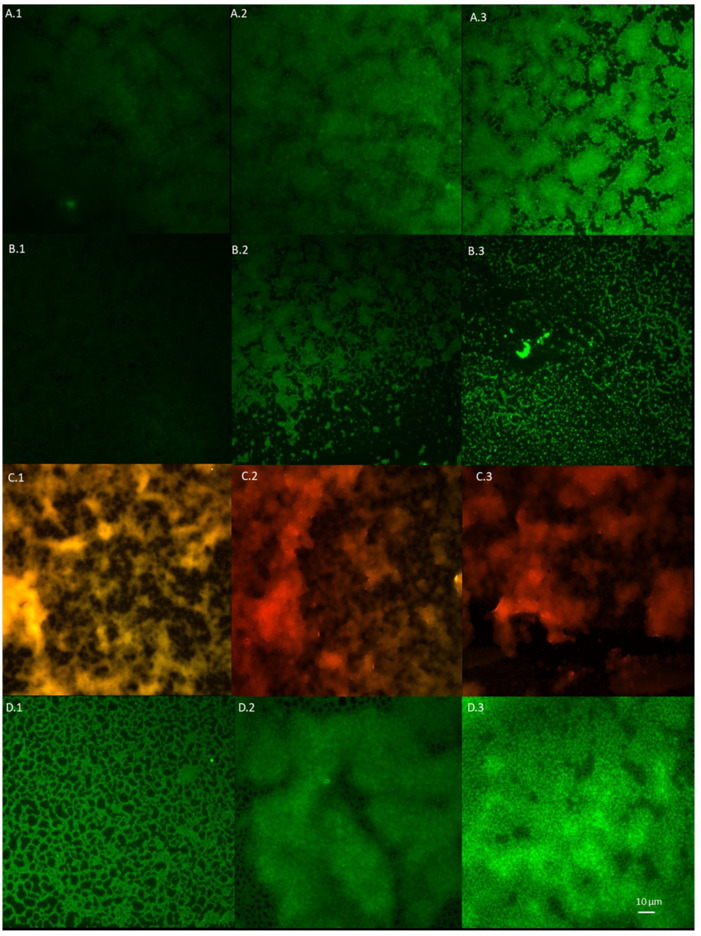
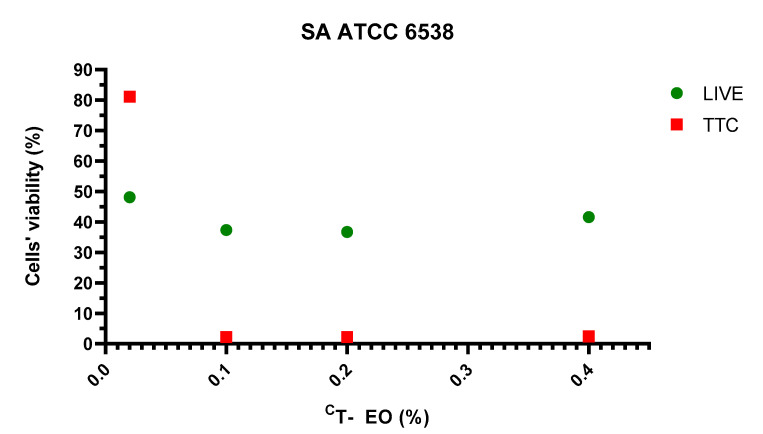
The high resistance of staphylococcal biofilm against antibiotics and developing resistance against antiseptics induces a search for novel antimicrobial compounds. Due to acknowledged and/or alleged antimicrobial activity of EOs, their application seems to be a promising direction to follow. Nevertheless, the high complexity of EOs composition and differences in laboratory protocols of the antimicrobial activity assessment hinders the exact estimation of EOs effectiveness. To overcome these disadvantages, in the present work we analysed the effectiveness of volatile and liquid forms of seven EOs (derived from thyme, tea tree, basil, rosemary, eucalyptus, lavender, and menthol mint) against 16 staphylococcal biofilm-forming strains using cohesive set of in vitro techniques, including gas chromatography-mass spectrometry, inverted Petri dish, modified disk-diffusion assay, microdilution techniques, antibiofilm dressing activity measurement, AntiBioVol protocol, fluorescence/confocal microscopy, and dynamic light scattering. Depending on the requirements of the technique, EOs were applied in emulsified or non-emulsified form. The obtained results revealed that application of different in vitro techniques allows us to get a comprehensive set of data and to gain insight into the analysed phenomena. In the course of our investigation, liquid and volatile fractions of thyme EO displayed the highest antibiofilm activity. Liquid fractions of rosemary oil were the second most active against . Vapour phases of tea tree and lavender oils exhibited the weakest anti-staphylococcal activity. The size of emulsified droplets was the lowest for T-EO and the highest for L-EO. Bearing in mind the limitations of the in vitro study, results from presented analysis may be of pivotal meaning for the potential application of thymol as a antimicrobial agent used to fight against staphylococcal biofilm-based infections.
葡萄球菌生物膜对抗生素具有高抗性且对防腐剂产生耐药性,这促使人们寻找新型抗菌化合物。由于挥发油(EOs)具有公认的和/或所谓的抗菌活性,其应用似乎是一个有前景的研究方向。然而,EOs成分的高度复杂性以及抗菌活性评估实验室方案的差异阻碍了对EOs有效性的准确评估。为了克服这些缺点,在本研究中,我们使用了一套连贯的体外技术,包括气相色谱 - 质谱联用、倒置培养皿、改良纸片扩散法、微量稀释技术、抗生物膜敷料活性测量、AntiBioVol方案、荧光/共聚焦显微镜和动态光散射,分析了七种EOs(源自百里香、茶树、罗勒、迷迭香、桉树、薰衣草和薄荷醇薄荷)的挥发性和液体形式对16株形成葡萄球菌生物膜菌株的有效性。根据技术要求,EOs以乳化或非乳化形式应用。所得结果表明,应用不同的体外技术使我们能够获得全面的数据,并深入了解所分析的现象。在我们的研究过程中,百里香EO的液体和挥发性部分表现出最高的抗生物膜活性。迷迭香油的液体部分对……的活性次之。茶树油和薰衣草油的气相表现出最弱的抗葡萄球菌活性。T-EO的乳化液滴尺寸最小,L-EO的最大。考虑到体外研究的局限性,本分析结果对于百里香酚作为对抗基于葡萄球菌生物膜感染的抗菌剂的潜在应用可能具有关键意义。