Department of Pharmaceutical Microbiology and Parasitology, Wrocław Medical University, Borowska 211A, 50-556, Wrocław, Poland.
Department of Immunology, Microbiology and Physiological Chemistry, Faculty of Biotechnology and Animal Husbandry, West Pomeranian University of Technology, Szczecin, Piastów 45, 70-311, Szczecin, Poland.
Sci Rep. 2019 Feb 4;9(1):1256. doi: 10.1038/s41598-018-37628-x.
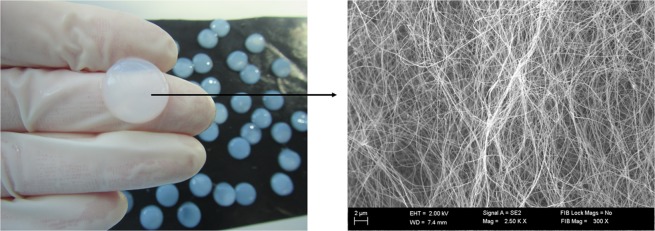
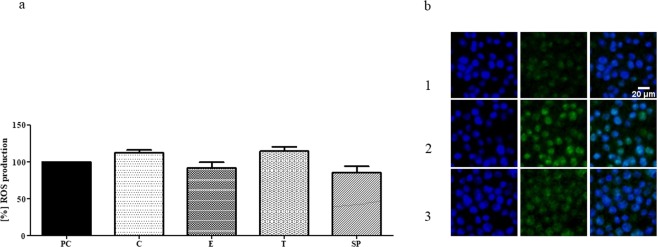
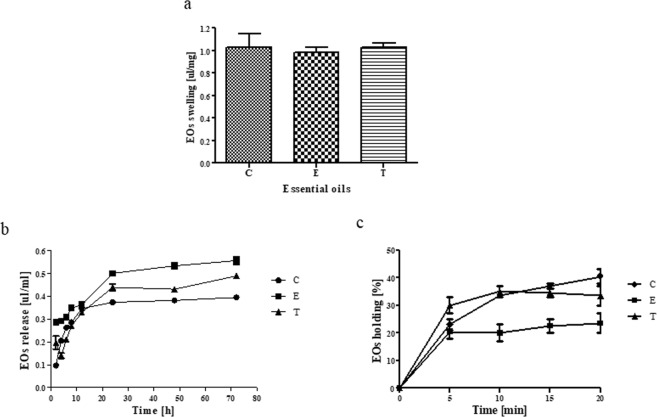
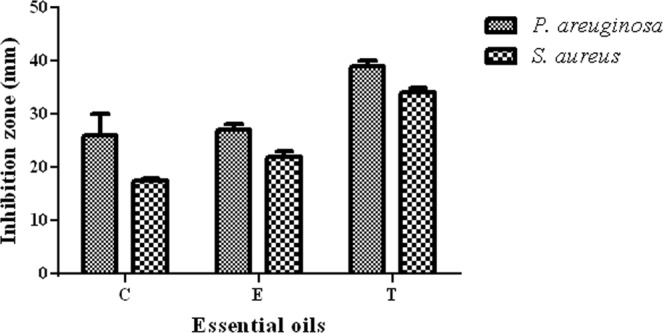
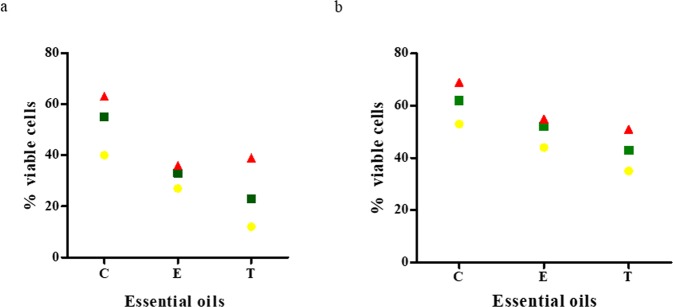
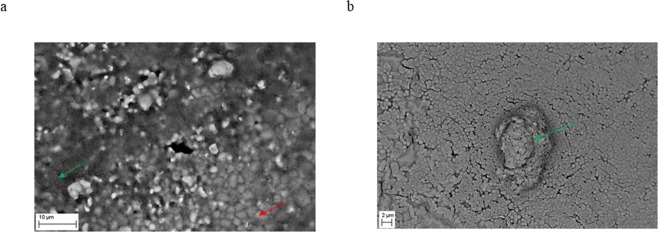
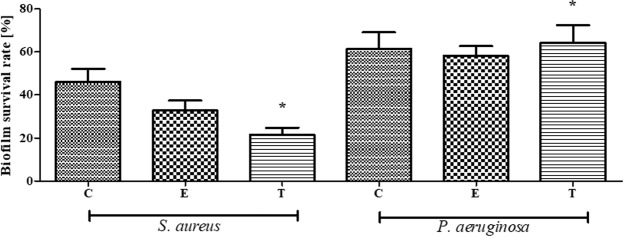
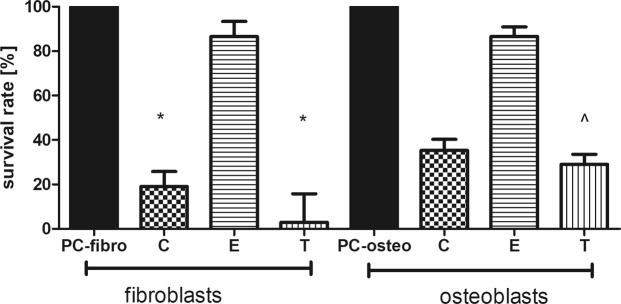
In this research, bacterial cellulose (BC), one of the most promising biopolymers of the recent years, was saturated with thyme, eucalyptus and clove essential oils (EOs) and applied against staphylococcal and pseudomonal biofilms formed on hydroxyapatite (HA). BC dressings were thoroughly analyzed with regard to their physical properties. Moreover, the exact composition and ability of particular EO molecules to adhere to HA was assessed. Additionally, cytotoxicity of oil-containing, cellulose-based dressings towards osteoblasts and fibroblasts as well as their impact on reactive oxygen species (ROS) production by macrophages was assessed. The results revealed the high ability of BC dressings to absorb and subsequently release EOs from within their microstructure; the highest number of compounds able to adhere to HA was found in the thyme EO. The eucalyptus EO displayed low, while thyme and clove EOs displayed high cytotoxicity towards fibroblast and osteoblast cell lines. The clove EO displayed the highest eradication ability toward staphylococcal, while the thyme EO against pseudomonal biofilm. Taken together, the results obtained indicate the suitability of EO-saturated BC dressings to eradicate pseudomonal and staphylococcal biofilm on HA surface and moreover, to not trigger reactive oxygen species production by immune system effector cells. However, due to cytotoxic effects of thyme and clove EOs towards cell lines in vitro, the eucalyptus EO-saturated BC dressing is of highest potential to be further applied.
在这项研究中,细菌纤维素(BC)作为近年来最有前途的生物聚合物之一,被饱和浸渍百里香、桉树和丁香精油(EOs),并应用于抑制在羟磷灰石(HA)上形成的葡萄球菌和假单胞菌生物膜。对 BC 敷料进行了全面的物理性能分析。此外,评估了特定 EO 分子与 HA 结合的精确组成和能力。还评估了含油、基于纤维素的敷料对成骨细胞和成纤维细胞的细胞毒性,以及它们对巨噬细胞产生活性氧物质(ROS)的影响。结果表明,BC 敷料具有很强的吸收能力,并能从微观结构中释放 EO;在所有 EO 中,能够结合到 HA 的化合物数量最多的是百里香 EO。桉树 EO 的结合能力较低,而百里香和丁香 EO 对成纤维细胞和成骨细胞系的细胞毒性较高。丁香 EO 对葡萄球菌生物膜的清除能力最高,而百里香 EO 对假单胞菌生物膜的清除能力最高。总的来说,研究结果表明,EO 饱和的 BC 敷料适合清除 HA 表面的假单胞菌和葡萄球菌生物膜,而且不会引发免疫系统效应细胞产生活性氧物质。然而,由于百里香和丁香 EOs 对体外细胞系的细胞毒性,桉树 EO 饱和的 BC 敷料最有潜力进一步应用。