Wang Gaoming, Yang Ludi, Hu Miao, Hu Renhao, Wang Yongkun, Chen Bo, Jiang Xiaohua, Cui Ran
Department of Hepatopancreatobiliary Surgery, Shanghai East Hospital, School of Medicine, Tongji University, Shanghai, China.
Department of Ophthalmology, Ninth People's Hospital, Shanghai, China.
Front Cell Dev Biol. 2021 Sep 17;9:736274. doi: 10.3389/fcell.2021.736274. eCollection 2021.
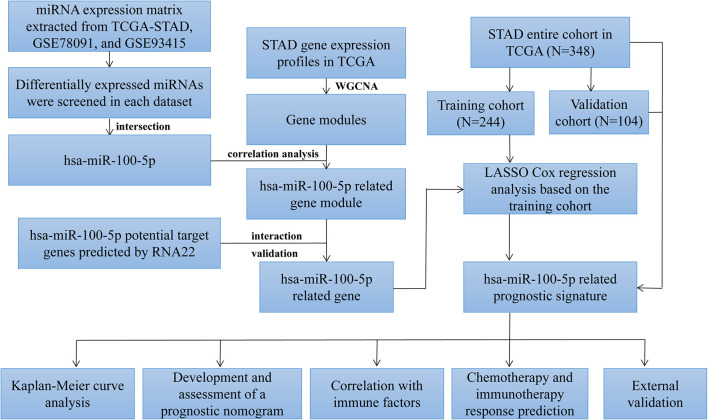
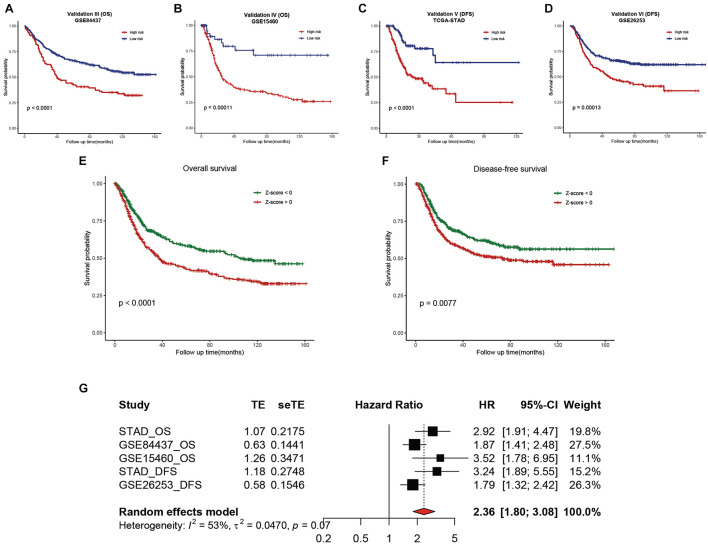
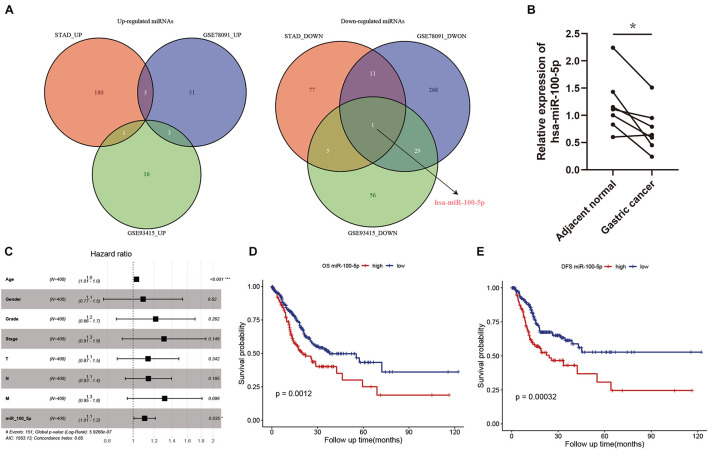
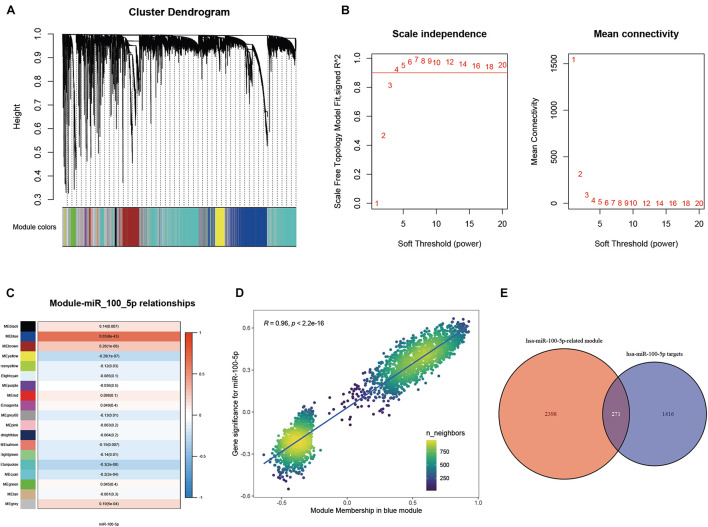
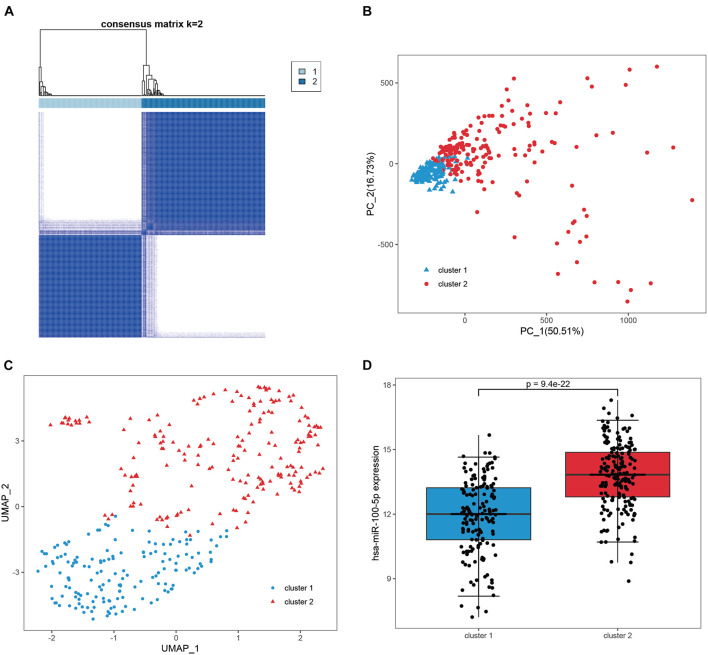
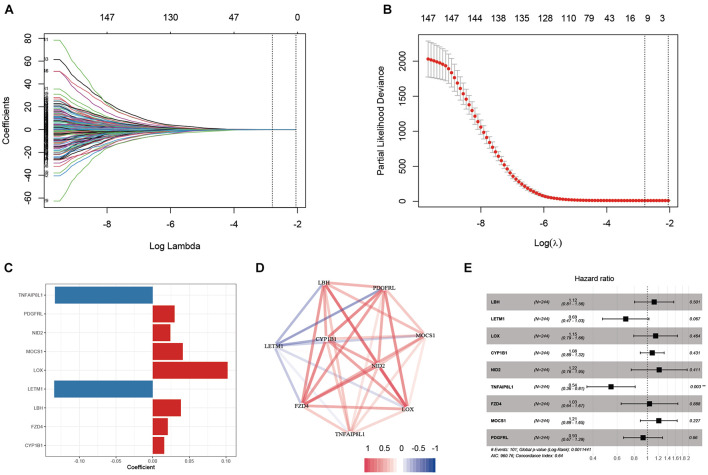
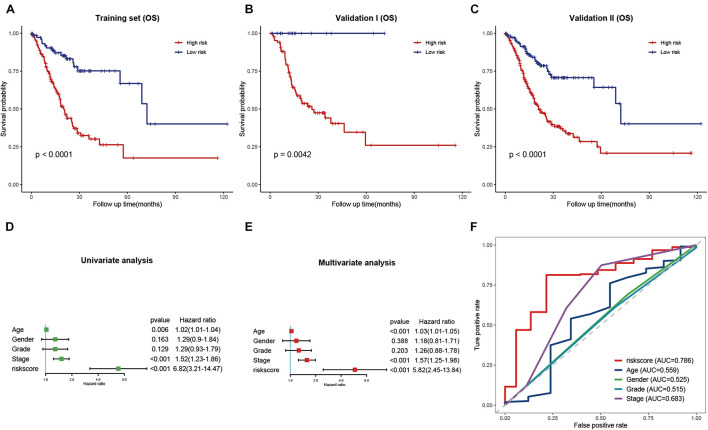
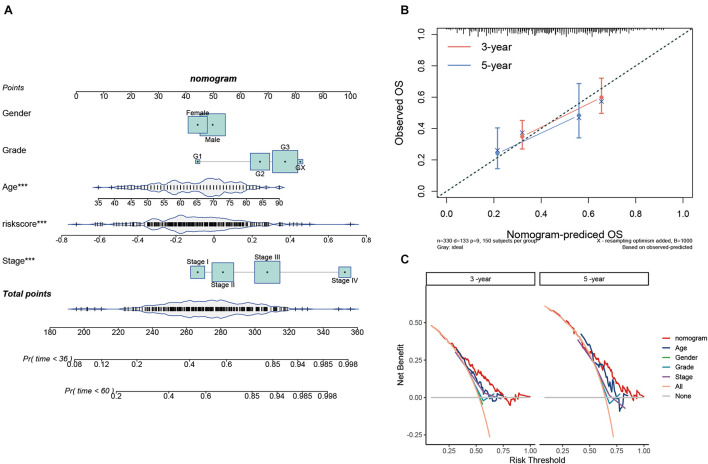
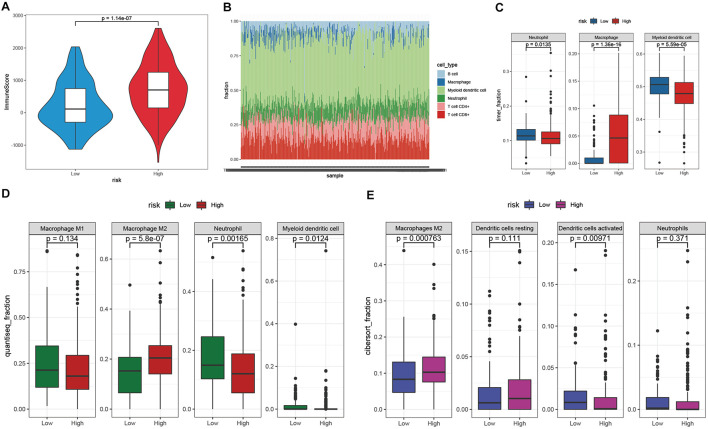
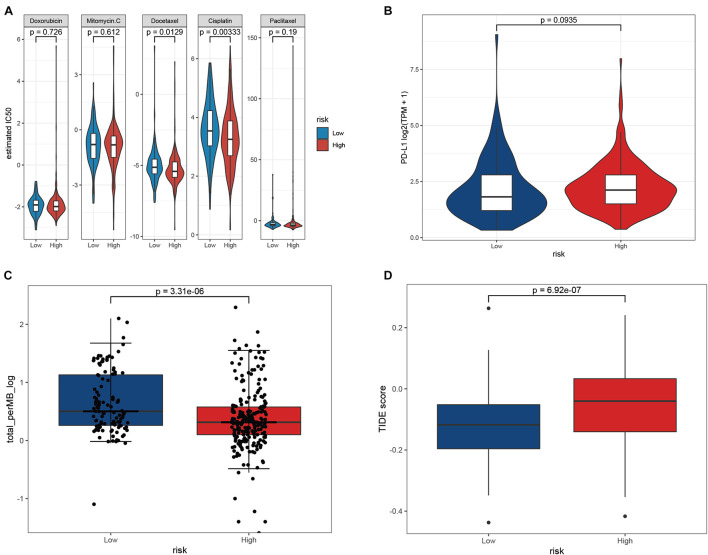
Stomach adenocarcinoma (STAD) is one of the most common cancers in the world. However, the prognosis of STAD remains poor, and the therapeutic effect of chemotherapy and immunotherapy varies from person to person. MicroRNAs (miRNAs) play vital roles in tumor development and metastasis and can be used for cancer diagnosis and prognosis. In this study, hsa-miR-100-5p was identified as the only dysregulated miRNA in STAD samples through an analysis of three miRNA expression matrices. A weighted gene co-expression network analysis (WGCNA) was performed to select hsa-miR-100-5p-related genes. A least absolute shrinkage and selection operator (LASSO) Cox regression analysis was performed to establish a miR-100-5p-related prognostic signature. Kaplan-Meier analyses, nomograms, and univariate and multivariate Cox regression analyses were used to evaluate the prognostic signature, which was subsequently identified as an independent risk factor for STAD patients. We investigated the tumor immune environment between low- and high-risk groups and found that, among component types, M2 macrophages contributed the most to the difference between these groups. A drug sensitivity analysis suggested that patients with high-risk scores may be more sensitive to docetaxel and cisplatin chemotherapy and that patients in the low-risk group may be more likely to benefit from immunotherapy. Finally, external cohorts were evaluated to validate the robustness of the prognostic signature. In summary, this study may provide new ideas for developing more individualized therapeutic strategies for STAD patients.
胃腺癌(STAD)是世界上最常见的癌症之一。然而,STAD的预后仍然很差,化疗和免疫疗法的治疗效果因人而异。微小RNA(miRNA)在肿瘤发生和转移中起着至关重要的作用,可用于癌症诊断和预后评估。在本研究中,通过对三个miRNA表达矩阵的分析,hsa-miR-100-5p被确定为STAD样本中唯一失调的miRNA。进行加权基因共表达网络分析(WGCNA)以选择与hsa-miR-100-5p相关的基因。进行最小绝对收缩和选择算子(LASSO)Cox回归分析以建立与miR-100-5p相关的预后特征。使用Kaplan-Meier分析、列线图以及单变量和多变量Cox回归分析来评估该预后特征,随后将其确定为STAD患者的独立危险因素。我们研究了低风险和高风险组之间的肿瘤免疫环境,发现在组成类型中,M2巨噬细胞对这些组之间的差异贡献最大。药物敏感性分析表明,高风险评分的患者可能对多西他赛和顺铂化疗更敏感,而低风险组的患者可能更有可能从免疫疗法中获益。最后,对外部队列进行评估以验证预后特征的稳健性。总之,本研究可能为制定更个体化的STAD患者治疗策略提供新思路。