Jalab Joud, Abdelwahed Wassim, Kitaz Adawia, Al-Kayali Rawaa
Department of Pharmacognosy, Faculty of Pharmacy, University of Aleppo, Syria.
Pharmaceutics and Pharmaceutical Technology Department, Faculty of Pharmacy, University of Aleppo, Syria.
Heliyon. 2021 Sep 20;7(9):e08033. doi: 10.1016/j.heliyon.2021.e08033. eCollection 2021 Sep.
The aim of this research is to conduct green synthesis of silver nanoparticles in an eco-friendly, economical and more effective approach using plant extract as well as to study the effects of the preparation conditions on the size of synthesized nanoparticles and its antibacterial activity.
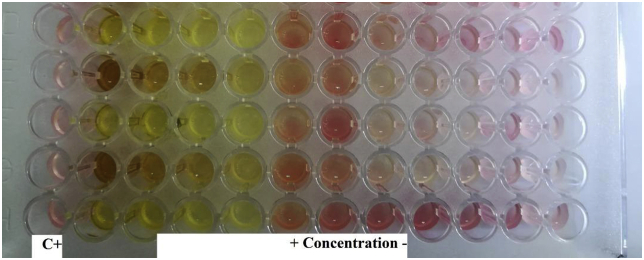
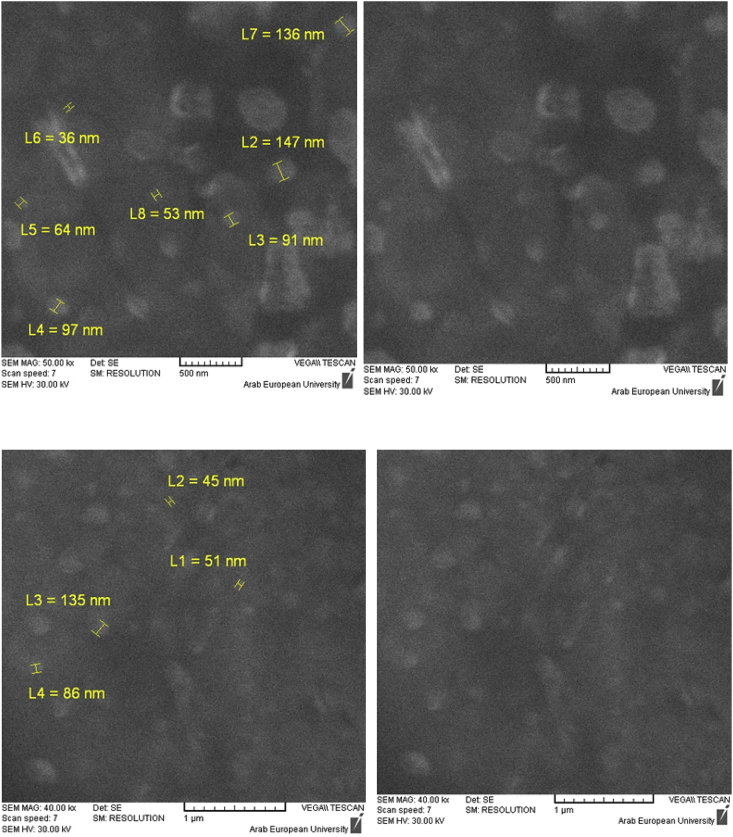
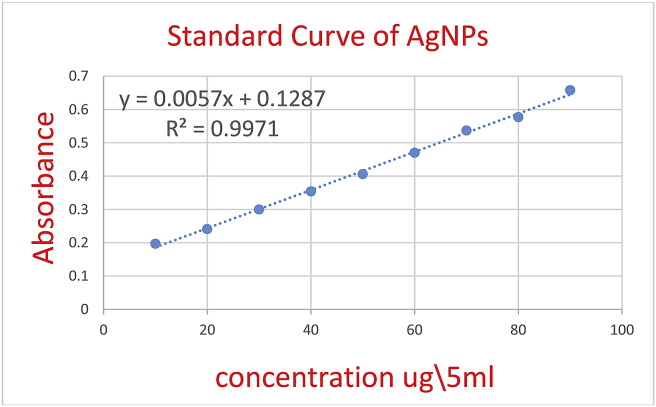
In this study, silver nanoparticles have been synthesized by reduction method using aqueous silver nitrate solution and aqueous extract of . Then, their characterization has been studied by several methods, such as visual inspection, UV-Vis spectroscopy, dynamic light scattering and scanning electron microscope. In addition, the effects of (silver nitrate: extract) ratio, type extract, temperature and reaction time have been studied on the size of prepared silver nanoparticles. Furthermore, the antibacterial effect of these nanoparticles was studied on using micro-dilution method and determination the Minimum Inhibitory Concentration (MIC).
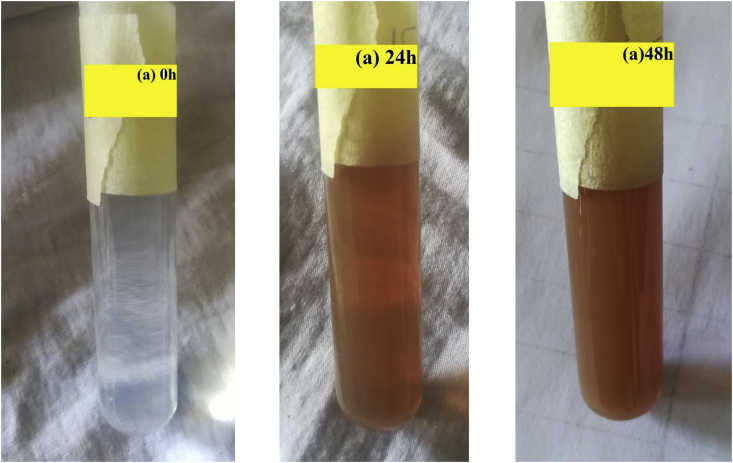
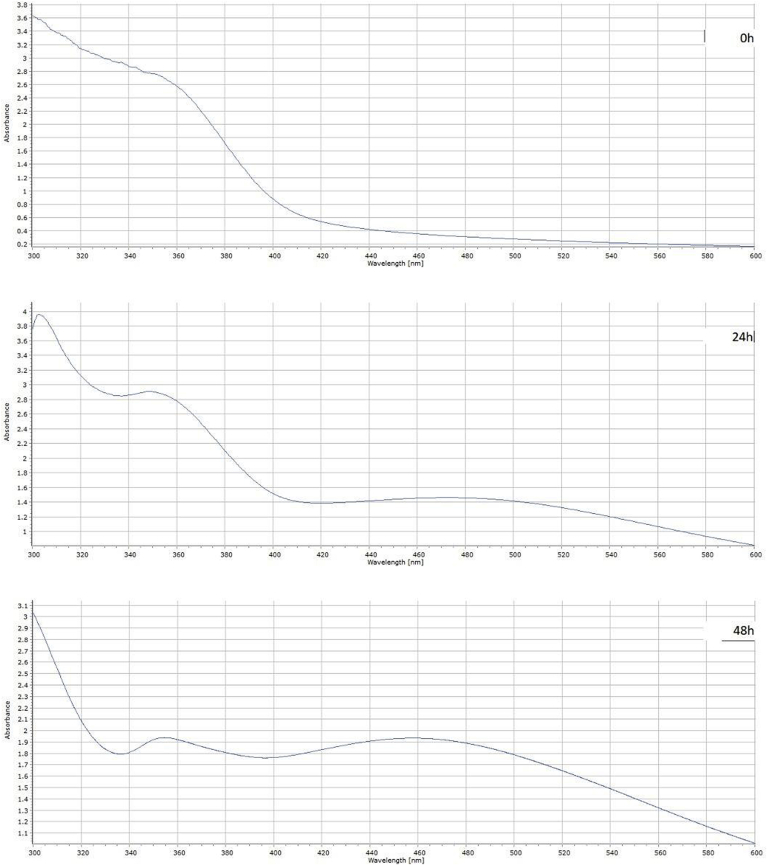
The results showed that the silver nanoparticles prepared using extract have reported visible yellowish brown color formation and the absorption peak at 460 nm indicated the biosynthesis of silver nanoparticles. Moreover, they have average diameter (88.11) nm and the polydispersity index (PdI) was suitable. The optimal conditions for synthesis silver nanoparticles were using aqueous extract in 9:1 ratio (silver nitrate: extract) at 35 °C for 48 h. These silver nanoparticles were stable in the in the fridge at 5 °C for a maximum period of 15 days. On the other hand, the antibacterial tests showed that these nanoparticles have high antibacterial activity where the MIC value ranged between (3.125-12.5) μg/ml on isolates.
We conclude that extract is considered effective as a reducing agent for the preparation of stable silver nanoparticles in certain conditions and this silver nanoparticle has a high antibacterial activity.
本研究旨在采用植物提取物,以一种环保、经济且更有效的方法进行银纳米颗粒的绿色合成,并研究制备条件对合成纳米颗粒尺寸及其抗菌活性的影响。
在本研究中,通过还原法,使用硝酸银水溶液和[植物名称]的水提取物合成了银纳米颗粒。然后,通过多种方法对其进行了表征,如目视检查、紫外可见光谱、动态光散射和扫描电子显微镜。此外还研究了(硝酸银:提取物)比例、提取物类型、温度和反应时间对制备的银纳米颗粒尺寸的影响。此外,采用微量稀释法并测定最低抑菌浓度(MIC),研究了这些纳米颗粒对[细菌名称]的抗菌效果。
结果表明,使用[植物名称]提取物制备的银纳米颗粒呈现出可见的黄棕色,在460nm处的吸收峰表明银纳米颗粒的生物合成。此外,它们的平均直径为(88.11)nm,多分散指数(PdI)合适。合成银纳米颗粒的最佳条件是在35℃下以9:1的比例(硝酸银:提取物)使用水提取物48小时。这些银纳米颗粒在5℃的冰箱中最多可稳定保存15天。另一方面,抗菌测试表明,这些纳米颗粒具有较高的抗菌活性,对[细菌名称]分离株的MIC值在(3.125 - 12.5)μg/ml之间。
我们得出结论,在特定条件下,[植物名称]提取物可有效作为还原剂制备稳定的银纳米颗粒,且这种银纳米颗粒具有较高的抗菌活性。