Department of Mechanical Engineering, Rowan University, Glassboro, NJ, 08028, United States of America.
Photonics4life Research Group, Department of Physics, University of Santiago de Compostela, A Coruña, Spain.
Biofabrication. 2021 Nov 24;14(1). doi: 10.1088/1758-5090/ac2d78.
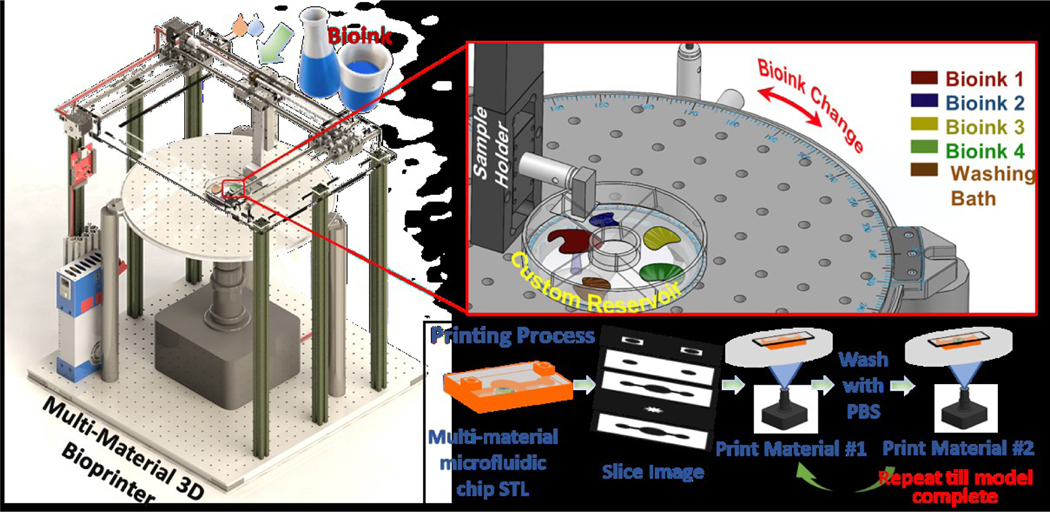
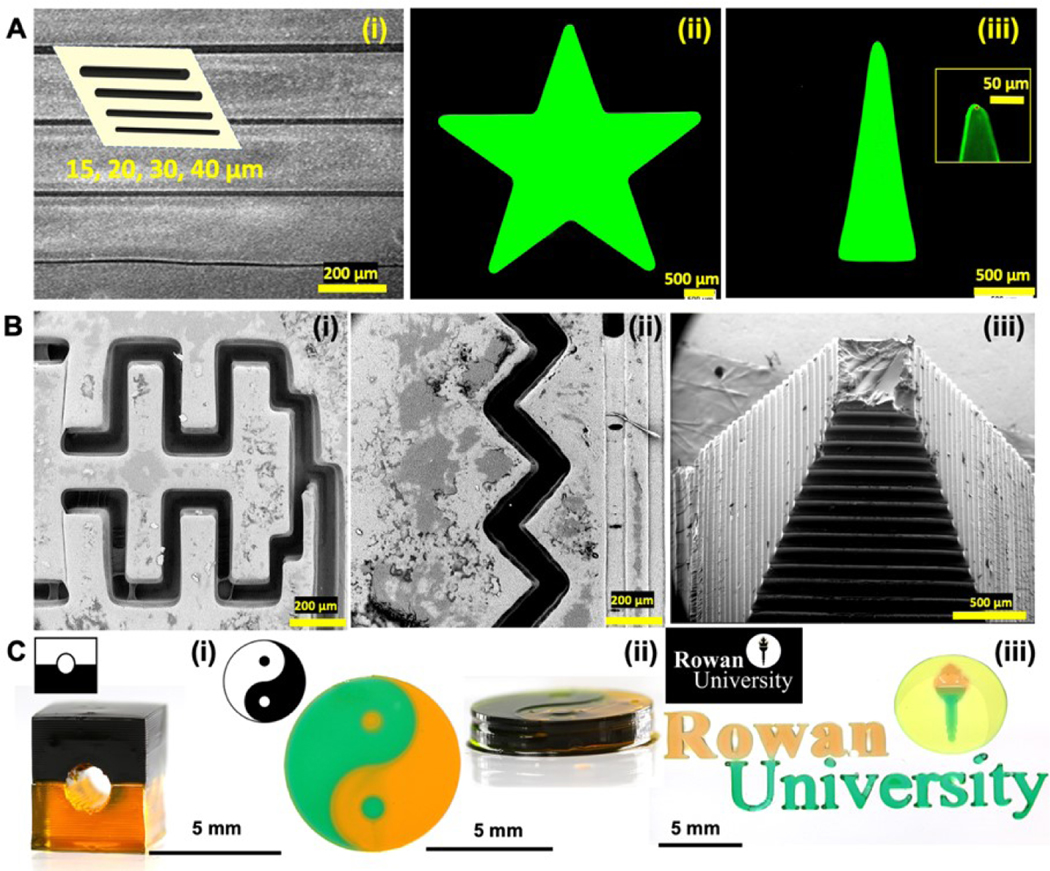
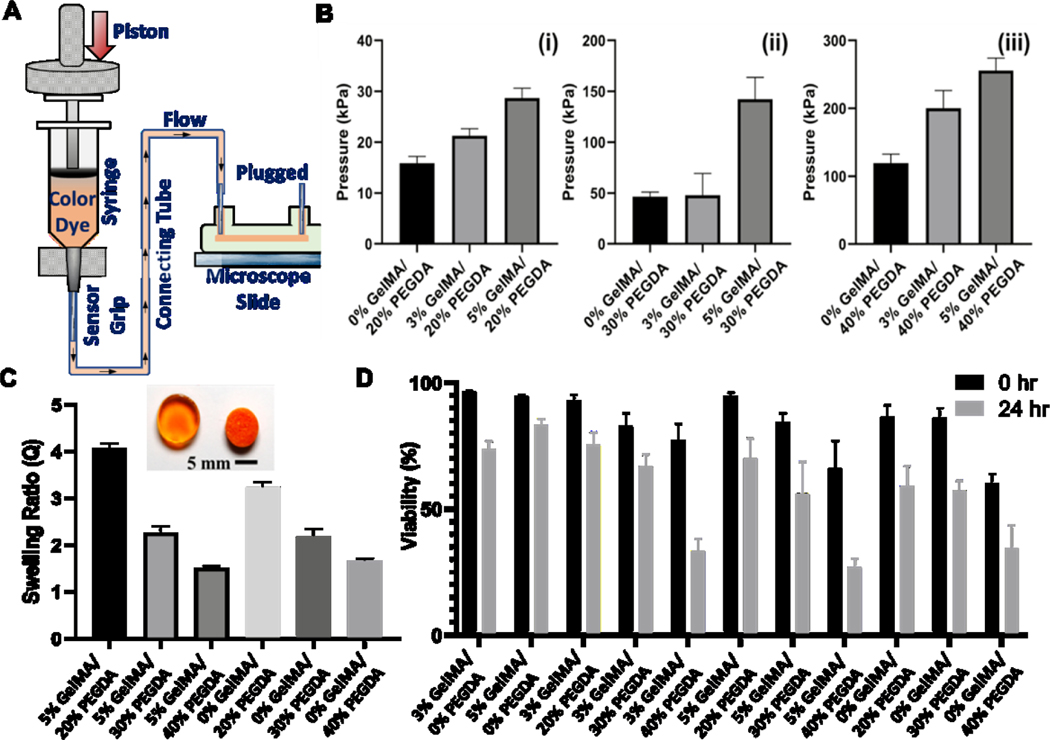
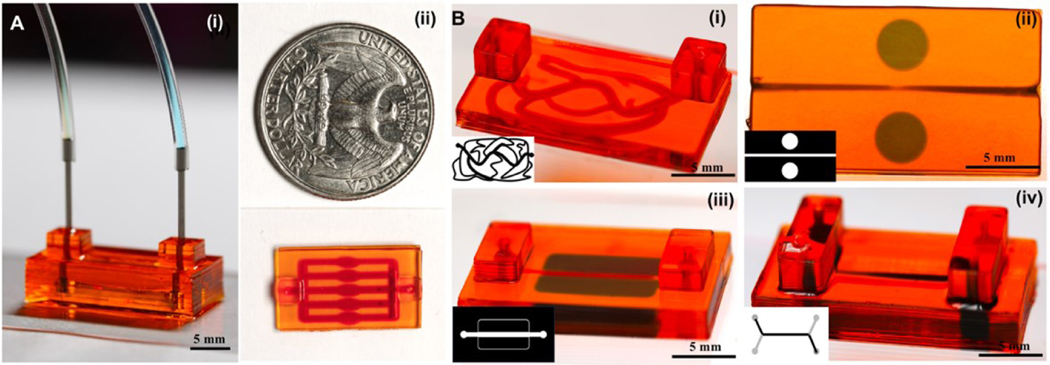
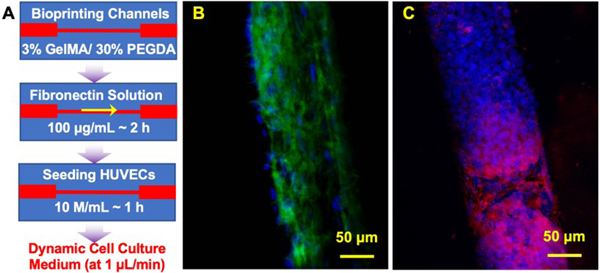
Recent advancements in digital-light-processing (DLP)-based bioprinting and hydrogel engineering have enabled novel developments in organs-on-chips. In this work, we designed and developed a multi-material, DLP-based bioprinter for rapid, one-step prototyping of hydrogel-based microfluidic chips. A composite hydrogel bioink based on poly-ethylene-glycol-diacrylate (PEGDA) and gelatin methacryloyl (GelMA) was optimized through varying the bioprinting parameters such as light exposure time, bioink composition, and layer thickness. We showed a wide range of mechanical properties of the microfluidic chips for various ratios of PEGDA:GelMA. Microfluidic features of hydrogel-based chips were then tested using dynamic flow experiments. Human-derived tumor cells were encapsulated in 3D bioprinted structures to demonstrate their bioactivity and cell-friendly environment. Cell seeding experiments then validated the efficacy of the selected bioinks for vascularized micro-tissues. Our biofabrication approach offers a useful tool for the rapid integration of micro-tissue models into organs-on-chips and high-throughput drug screening platforms.
基于数字光处理(DLP)的生物打印和水凝胶工程的最新进展使得器官芯片有了新的发展。在这项工作中,我们设计并开发了一种多材料、基于 DLP 的生物打印机,用于快速、一步式原型制作基于水凝胶的微流控芯片。通过改变生物打印参数,如光暴露时间、生物墨水组成和层厚,优化了基于聚乙二醇二丙烯酸酯(PEGDA)和明胶甲基丙烯酰(GelMA)的复合水凝胶生物墨水。我们展示了微流控芯片在不同 PEGDA:GelMA 比例下具有广泛的机械性能。然后使用动态流动实验测试了基于水凝胶的芯片的微流特征。将人源肿瘤细胞包封在 3D 生物打印结构中,以证明其生物活性和细胞友好环境。细胞接种实验随后验证了所选生物墨水用于血管化微组织的效果。我们的生物制造方法为快速将微组织模型集成到器官芯片和高通量药物筛选平台中提供了有用的工具。