Division of Neonatology, Department of Pediatrics, Emory University School of Medicine and Children's Healthcare of Atlanta, Atlanta, GA, USA.
Division of Gastroenterology, Hepatology and Nutrition, Department of Pediatrics, Emory University School of Medicine, Atlanta, GA, USA.
Pediatr Res. 2022 Jul;92(1):125-134. doi: 10.1038/s41390-021-01767-1. Epub 2021 Oct 6.
Maternal diet during pregnancy can impact progeny health and disease by influencing the offspring's gut microbiome and immune development. Gut microbial metabolism generates butyrate, a short-chain fatty acid that benefits intestinal health. Here we assess the effects of antenatal butyrate on the offspring's gastrointestinal health. We hypothesized that antenatal butyrate supplementation will induce protection against colitis in the offspring.
C57BL/6 mice received butyrate during pregnancy and a series of experiments were performed on their offspring. RNA sequencing was performed on colonic tissue of 3-week-old offspring. Six-8-week-old offspring were subjected to dextran sulfate sodium-induced colitis. Fecal microbiome analysis was performed on the 6-8-week-old offspring.
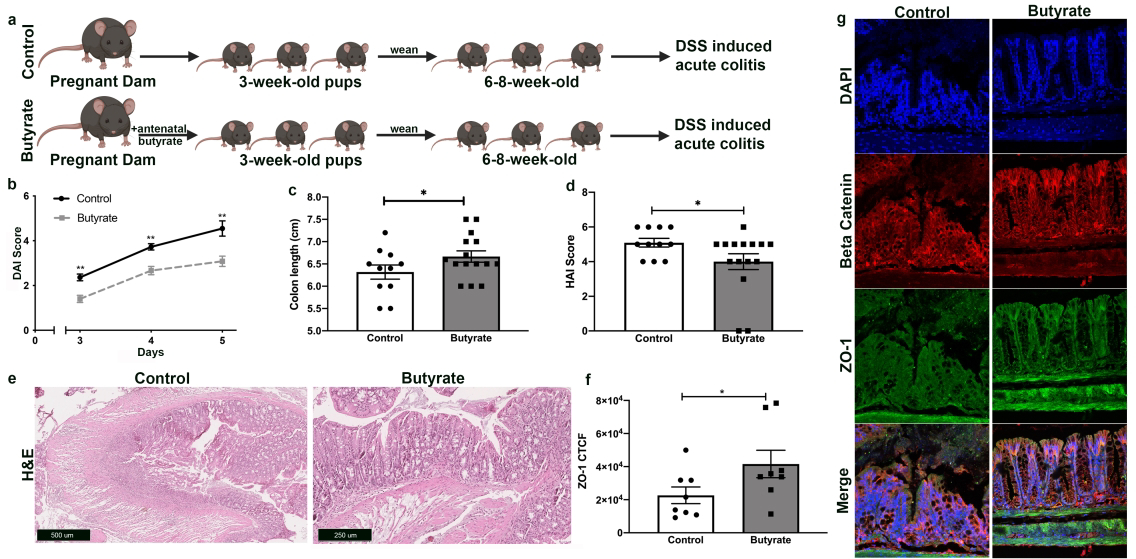
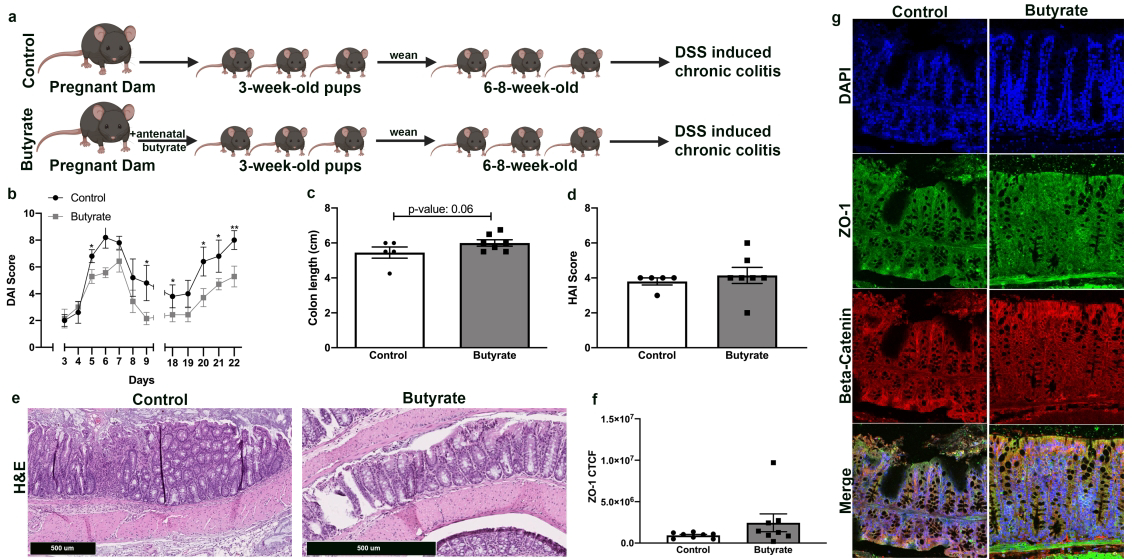
Antenatal butyrate supplementation dampened transcript enrichment of inflammation-associated colonic genes and prevented colonic injury in the offspring. Antenatal butyrate increased the offspring's stool microbiome diversity and expanded the prevalence of specific gut microbes.
Antenatal butyrate supplementation resulted in downregulation of genes in the offspring's colon that function in inflammatory signaling. In addition, antenatal butyrate supplementation was associated with protection against colitis and an expanded fecal microbiome taxonomic diversity in the offspring.
Dietary butyrate supplementation to pregnant mice led to downregulation of colonic genes involved in inflammatory signaling and cholesterol synthesis, changes in the fecal microbiome composition of the offspring, and protection against experimentally induced colitis in the offspring. These data support the mounting evidence that the maternal diet during pregnancy has enduring effects on the offspring's long-term health and disease risk. Although further investigations are needed to identify the mechanism of butyrate's effects on fetal gut development, the current study substantiates the approach of dietary intervention during pregnancy to optimize the long-term gastrointestinal health of the offspring.
孕妇的饮食会通过影响后代的肠道微生物群和免疫发育来影响后代的健康和疾病。肠道微生物代谢产生丁酸,丁酸是一种短链脂肪酸,有益于肠道健康。在此,我们评估了产前丁酸对后代胃肠道健康的影响。我们假设产前丁酸补充将诱导对后代结肠炎的保护作用。
C57BL/6 小鼠在怀孕期间接受丁酸治疗,并对其后代进行了一系列实验。对 3 周龄后代的结肠组织进行 RNA 测序。对 6-8 周龄的后代进行葡聚糖硫酸钠诱导的结肠炎实验。对 6-8 周龄的后代进行粪便微生物组分析。
产前丁酸补充可抑制与炎症相关的结肠基因的转录富集,并预防后代的结肠损伤。产前丁酸增加了后代粪便微生物组的多样性,并扩大了特定肠道微生物的流行。
产前丁酸补充导致后代结肠中参与炎症信号的基因下调。此外,产前丁酸补充与预防结肠炎和后代粪便微生物组分类多样性的扩展有关。
向怀孕的老鼠补充膳食丁酸可导致参与炎症信号和胆固醇合成的结肠基因下调、后代粪便微生物组组成的变化,以及对后代实验性结肠炎的保护作用。这些数据支持越来越多的证据表明,孕妇饮食在怀孕期间对后代的长期健康和疾病风险有持久影响。虽然需要进一步研究以确定丁酸对胎儿肠道发育影响的机制,但目前的研究证实了在怀孕期间进行饮食干预以优化后代长期胃肠道健康的方法。