Environmental Genomics, Christian-Albrechts University of Kiel, Kiel, Germany.
Max Planck Institute for Evolutionary Biology, Plön, Germany.
Nat Commun. 2021 Oct 7;12(1):5869. doi: 10.1038/s41467-021-26108-y.
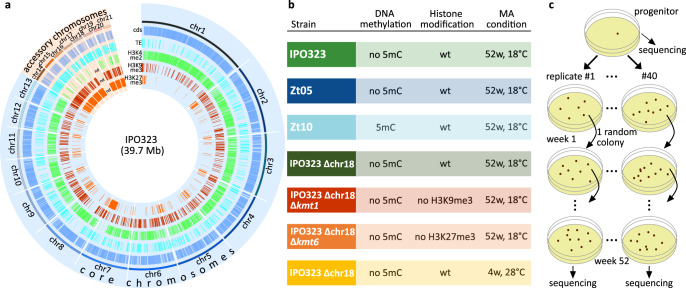
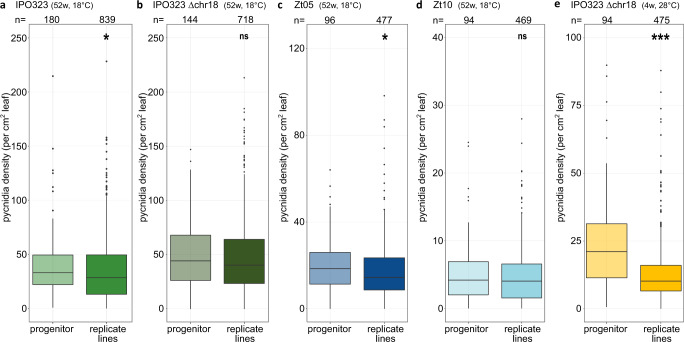
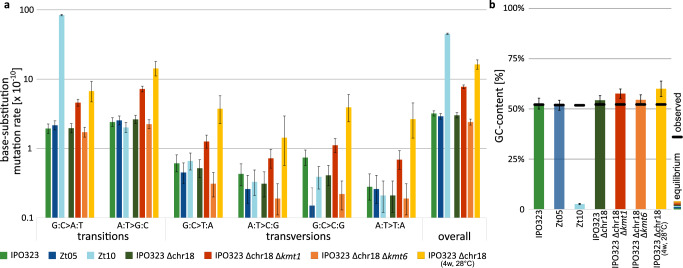
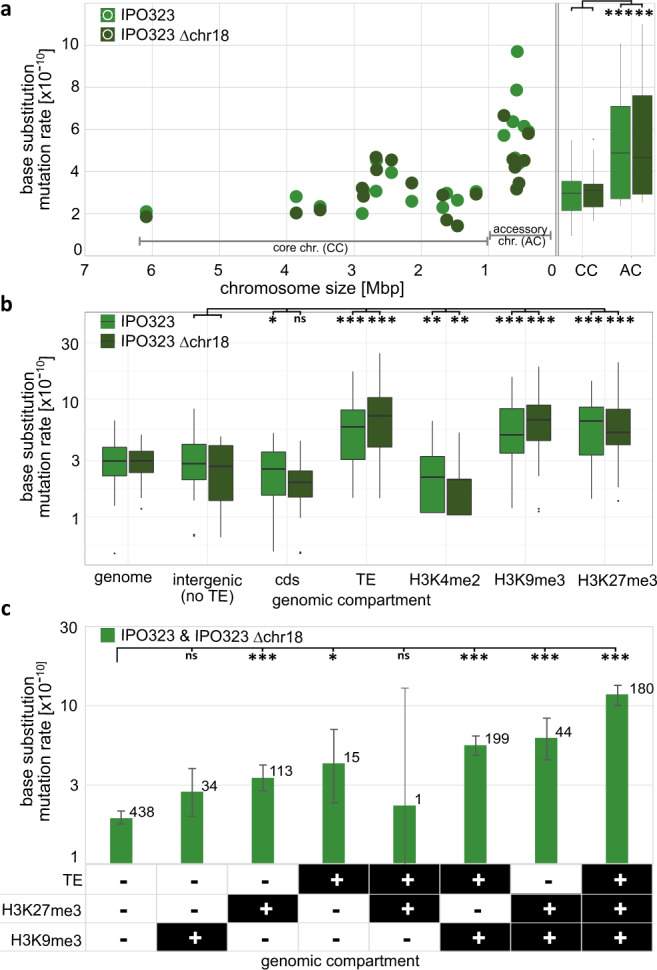
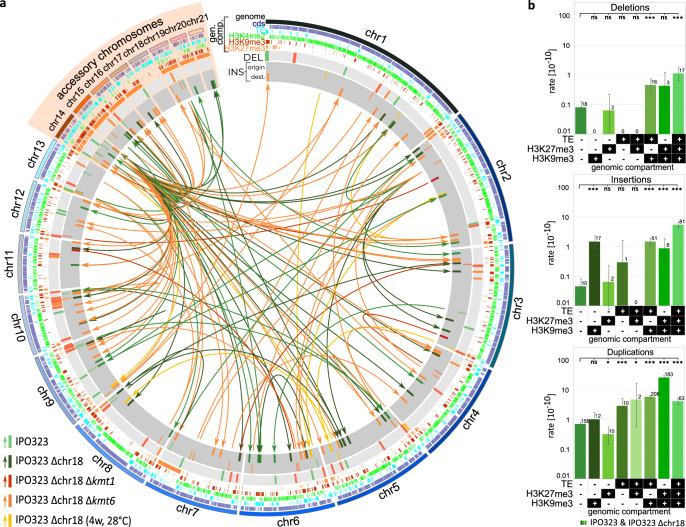
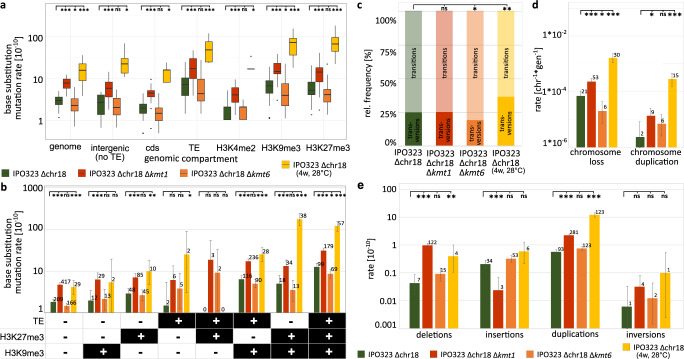
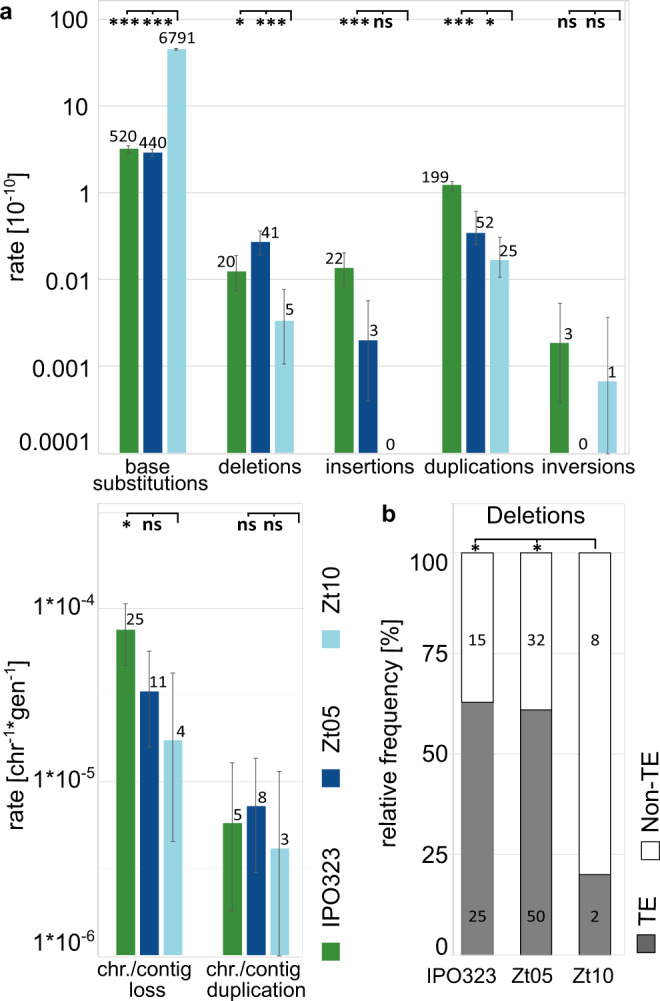
Mutations are the source of genetic variation and the substrate for evolution. Genome-wide mutation rates appear to be affected by selection and are probably adaptive. Mutation rates are also known to vary along genomes, possibly in response to epigenetic modifications, but causality is only assumed. In this study we determine the direct impact of epigenetic modifications and temperature stress on mitotic mutation rates in a fungal pathogen using a mutation accumulation approach. Deletion mutants lacking epigenetic modifications confirm that histone mark H3K27me3 increases whereas H3K9me3 decreases the mutation rate. Furthermore, cytosine methylation in transposable elements (TE) increases the mutation rate 15-fold resulting in significantly less TE mobilization. Also accessory chromosomes have significantly higher mutation rates. Finally, we find that temperature stress substantially elevates the mutation rate. Taken together, we find that epigenetic modifications and environmental conditions modify the rate and the location of spontaneous mutations in the genome and alter its evolutionary trajectory.
突变是遗传变异的来源,也是进化的基础。全基因组突变率似乎受到选择的影响,可能是适应性的。突变率也已知沿基因组变化,可能是对表观遗传修饰的响应,但因果关系仅被假设。在这项研究中,我们使用突变积累方法确定了表观遗传修饰和温度应激对真菌病原体有丝分裂突变率的直接影响。缺乏表观遗传修饰的缺失突变体证实组蛋白标记 H3K27me3 增加,而 H3K9me3 降低突变率。此外,转座元件 (TE) 中的胞嘧啶甲基化将突变率提高 15 倍,导致 TE 动员明显减少。此外,附加染色体的突变率也明显较高。最后,我们发现温度应激会大大提高突变率。总之,我们发现表观遗传修饰和环境条件改变了基因组中自发突变的速度和位置,并改变了其进化轨迹。