Lin Yicen, Alstrup Monica, Pang Janet Ka Yan, Maróti Gergely, Er-Rafik Mériem, Tourasse Nicolas, Økstad Ole Andreas, Kovács Ákos T
Bacterial Interactions and Evolution Group, DTU Bioengineering, Technical University of Denmark, Lyngby, Denmark.
Institute of Plant Biology, Biological Research Centre of the Hungarian Academy of Sciences, Szeged, Hungary.
mSystems. 2021 Oct 26;6(5):e0086421. doi: 10.1128/mSystems.00864-21. Epub 2021 Oct 12.
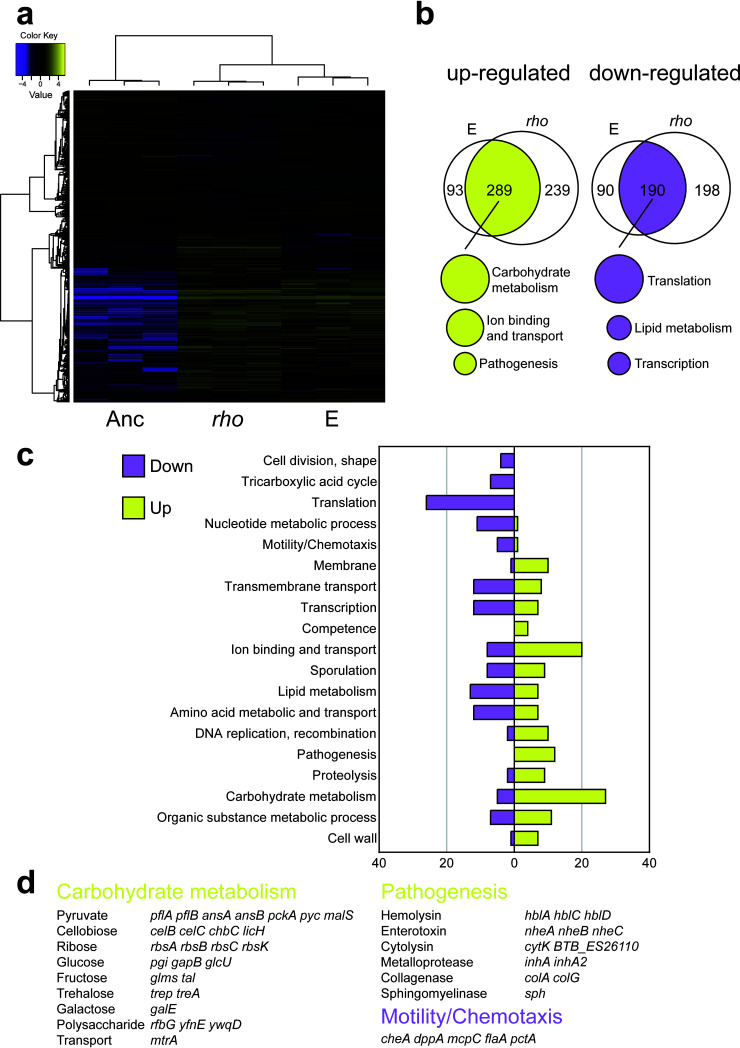
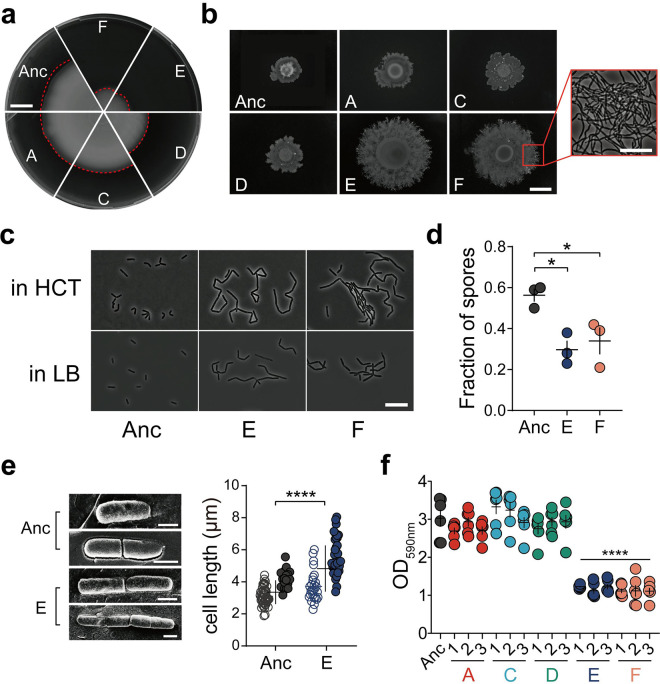
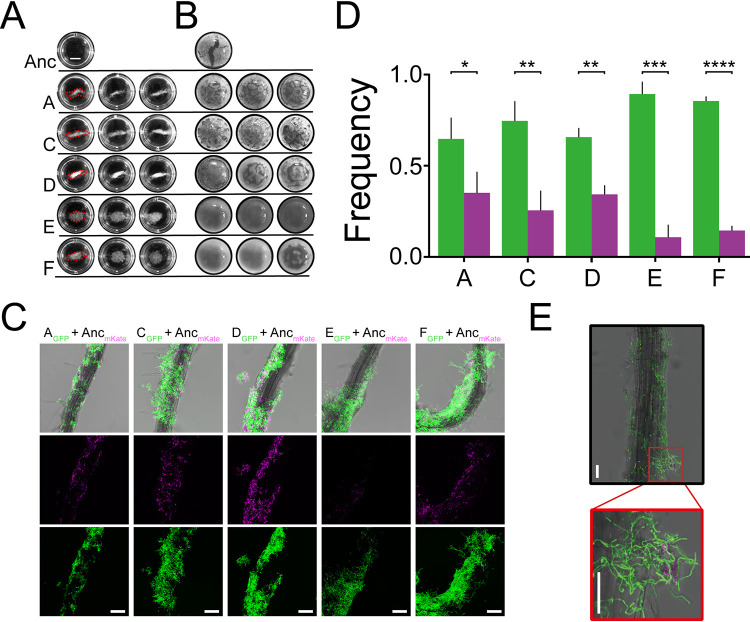
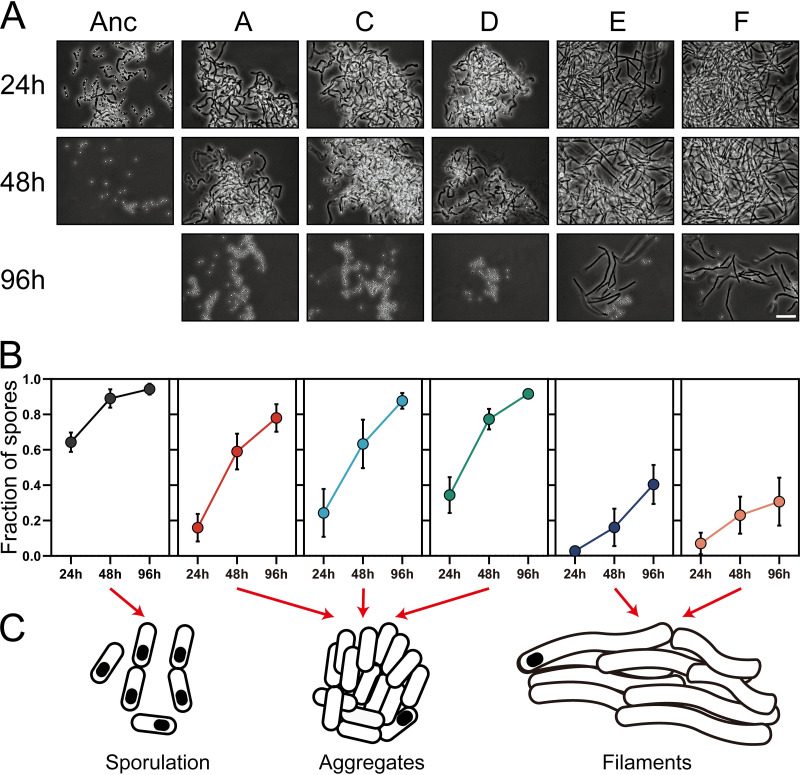
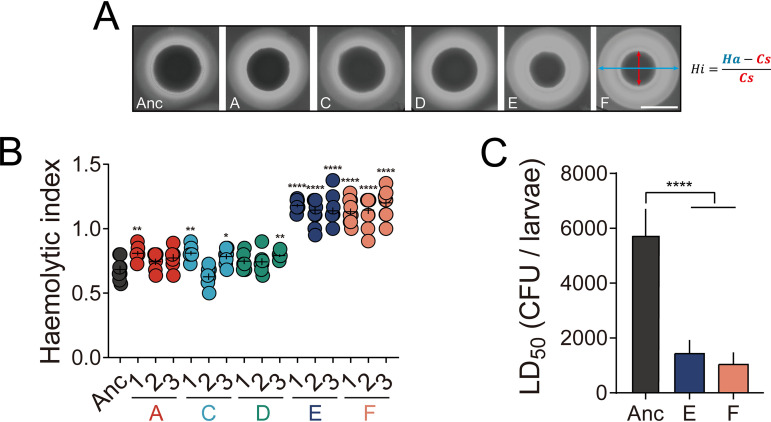
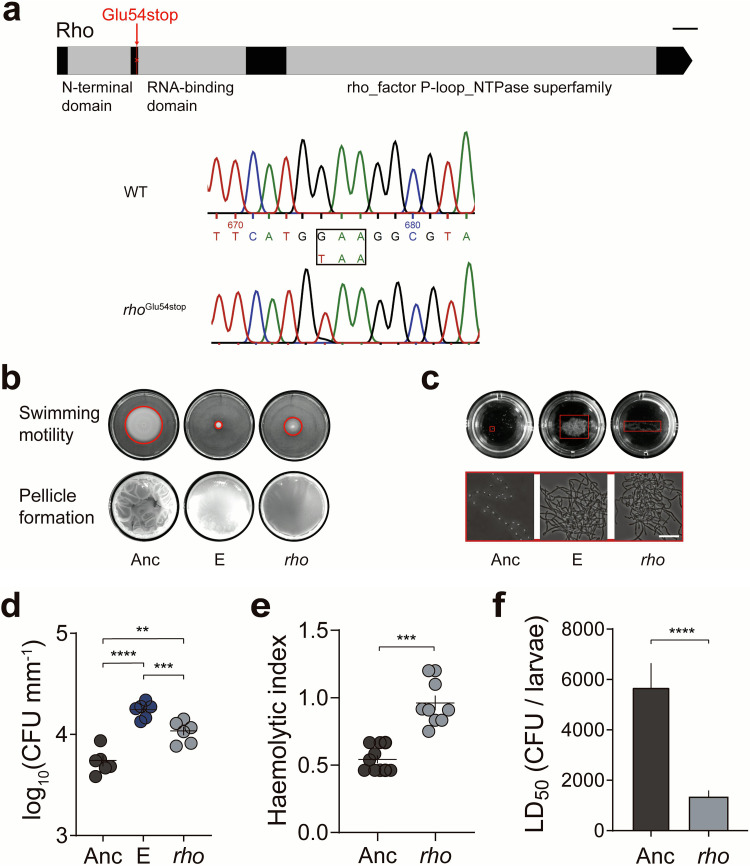
The Bacillus cereus group (Bacillus cereus sensu lato) has a diverse ecology, including various species that are vertebrate or invertebrate pathogens. Few isolates from the B. cereus group have however been demonstrated to benefit plant growth. Therefore, it is crucial to explore how bacterial development and pathogenesis evolve during plant colonization. Herein, we investigated Bacillus thuringiensis (Cry) adaptation to the colonization of Arabidopsis thaliana roots and monitored changes in cellular differentiation in experimentally evolved isolates. Isolates from two populations displayed improved iterative ecesis on roots and increased virulence against insect larvae. Molecular dissection and recreation of a causative mutation revealed the importance of a nonsense mutation in the transcription terminator gene. Transcriptome analysis revealed how Rho impacts various B. thuringiensis genes involved in carbohydrate metabolism and virulence. Our work suggests that evolved multicellular aggregates have a fitness advantage over single cells when colonizing plants, creating a trade-off between swimming and multicellularity in evolved lineages, in addition to unrelated alterations in pathogenicity. Biologicals-based plant protection relies on the use of safe microbial strains. During application of biologicals to the rhizosphere, microbes adapt to the niche, including genetic mutations shaping the physiology of the cells. Here, the experimental evolution of Bacillus thuringiensis lacking the insecticide crystal toxins was examined on the plant root to reveal how adaptation shapes the differentiation of this bacterium. Interestingly, evolution of certain lineages led to increased hemolysis and insect larva pathogenesis in B. thuringiensis driven by transcriptional rewiring. Further, our detailed study reveals how inactivation of the transcription termination protein Rho promotes aggregation on the plant root in addition to altered differentiation and pathogenesis in B. thuringiensis.
蜡样芽孢杆菌群(广义蜡样芽孢杆菌)具有多样的生态环境,包括多种作为脊椎动物或无脊椎动物病原体的物种。然而,从蜡样芽孢杆菌群中分离出的菌株很少被证明对植物生长有益。因此,探索细菌在植物定殖过程中其发育和致病机制如何演变至关重要。在此,我们研究了苏云金芽孢杆菌(Cry)对拟南芥根定殖的适应性,并监测了实验进化菌株中细胞分化的变化。来自两个种群的菌株在根上表现出更好的反复定殖能力,且对昆虫幼虫的毒力增强。对一个致病突变的分子剖析和重现揭示了转录终止子基因中一个无义突变的重要性。转录组分析揭示了Rho如何影响苏云金芽孢杆菌中参与碳水化合物代谢和毒力的各种基因。我们的研究表明,进化出的多细胞聚集体在定殖植物时比单细胞具有适应性优势,在进化谱系中除了致病性的无关变化外,还在游动性和多细胞性之间形成了权衡。基于生物制剂的植物保护依赖于使用安全的微生物菌株。在将生物制剂应用于根际的过程中,微生物会适应生态位,包括通过基因突变塑造细胞生理。在此,我们研究了缺乏杀虫晶体毒素的苏云金芽孢杆菌在植物根上的实验进化,以揭示适应性如何塑造这种细菌的分化。有趣的是,某些谱系的进化导致苏云金芽孢杆菌的溶血和昆虫幼虫致病能力增强,这是由转录重排驱动的。此外,我们的详细研究揭示了转录终止蛋白Rho的失活如何促进在植物根上的聚集,以及苏云金芽孢杆菌中分化和致病机制的改变。