University of British Columbia, Department of Psychiatry, Kinsmen Laboratory of Neurological Research, Detwiller Pavilion, 2255 Wesbrook Mall, Vancouver, V6T 1Z3, British Columbia, Canada.
Department of Psychology, Djavad Mowafaghian Centre for Brain Health, University of British Columbia, Vancouver, British Columbia, Canada.
Nat Commun. 2021 Oct 13;12(1):5992. doi: 10.1038/s41467-021-26255-2.
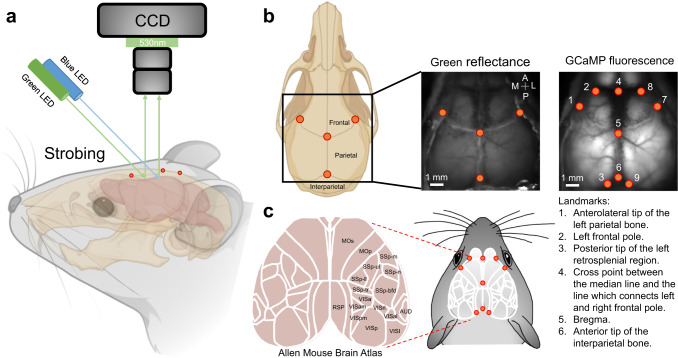
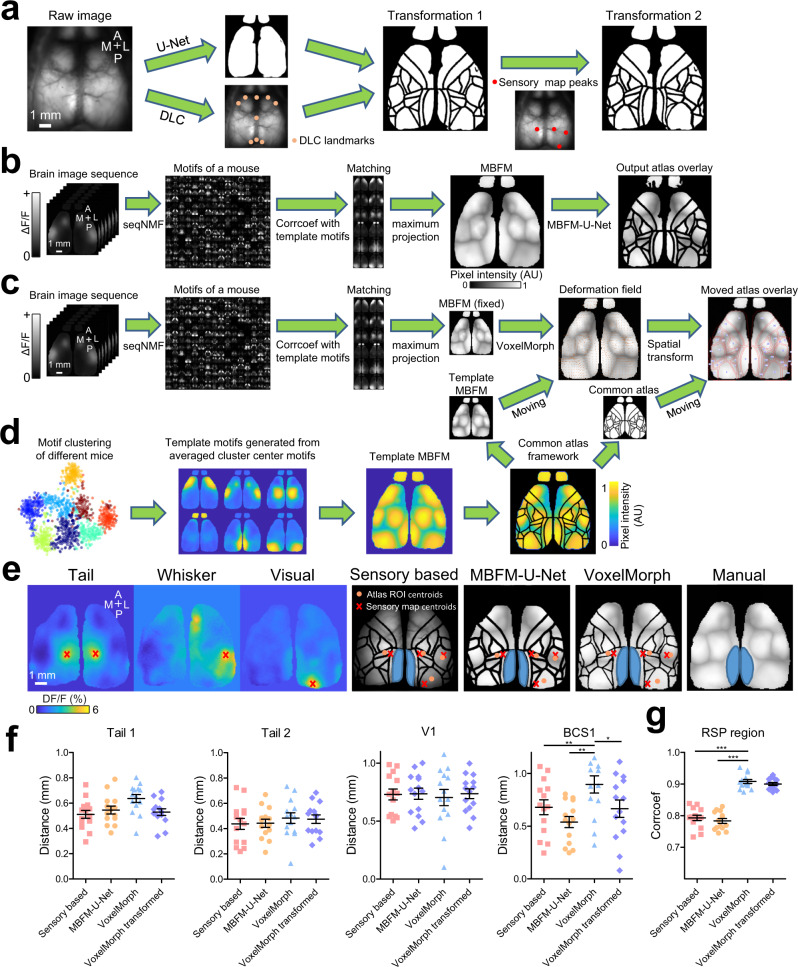
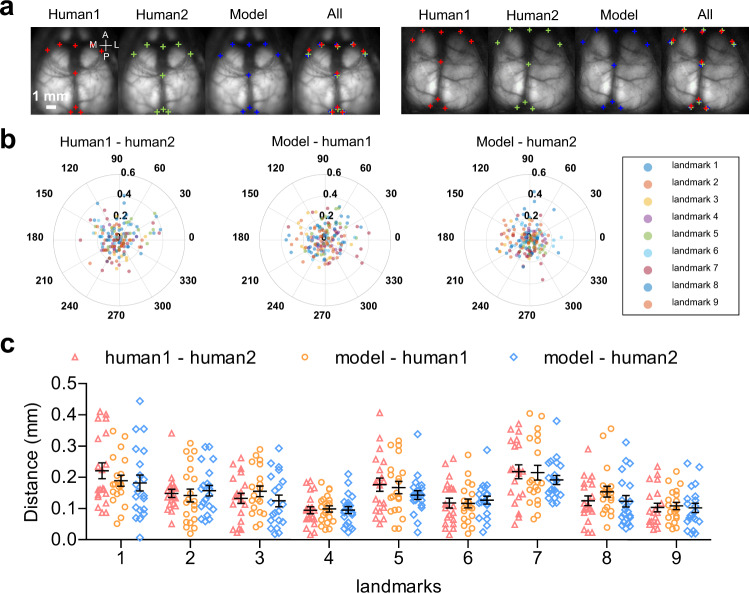
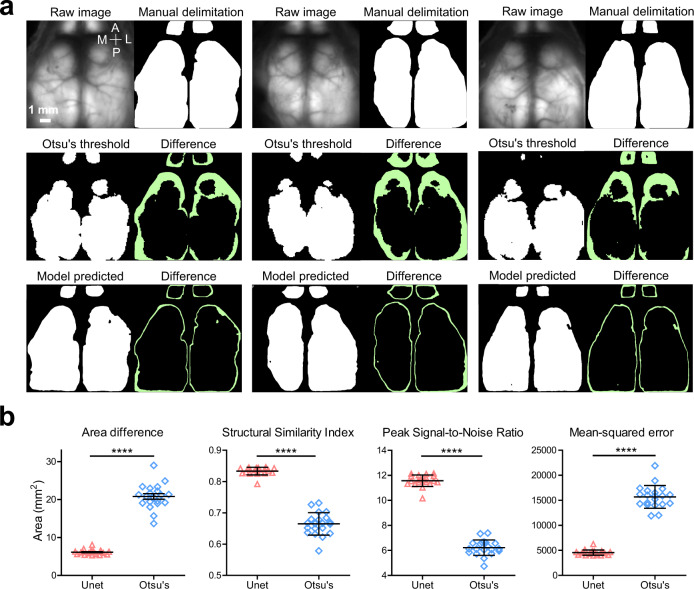
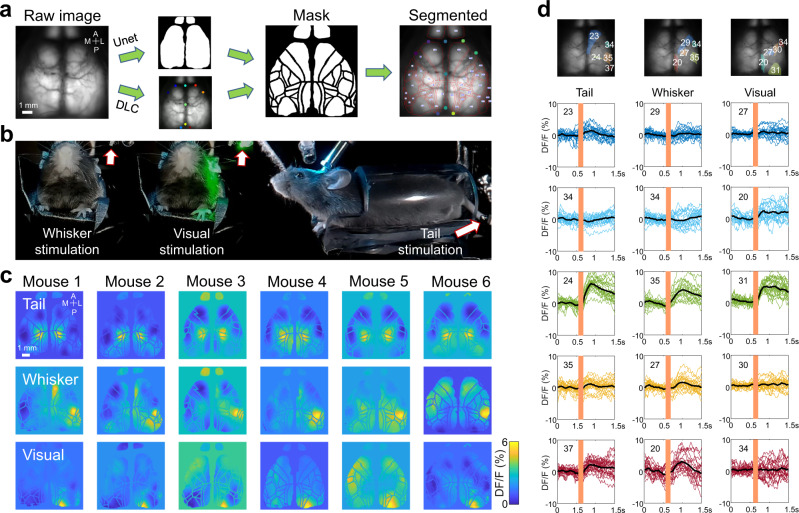
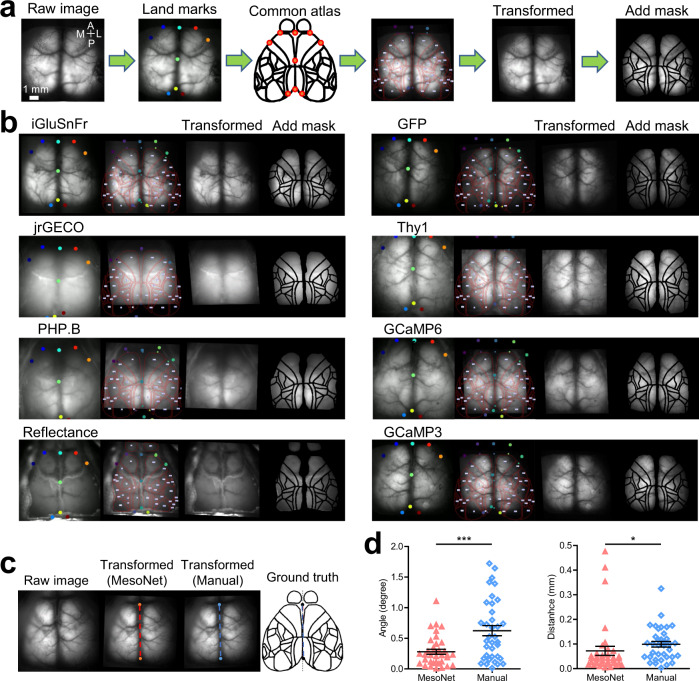
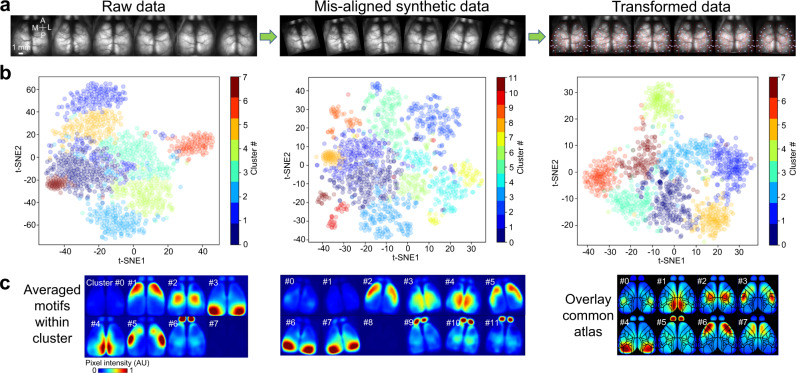
Understanding the basis of brain function requires knowledge of cortical operations over wide spatial scales and the quantitative analysis of brain activity in well-defined brain regions. Matching an anatomical atlas to brain functional data requires substantial labor and expertise. Here, we developed an automated machine learning-based registration and segmentation approach for quantitative analysis of mouse mesoscale cortical images. A deep learning model identifies nine cortical landmarks using only a single raw fluorescent image. Another fully convolutional network was adapted to delimit brain boundaries. This anatomical alignment approach was extended by adding three functional alignment approaches that use sensory maps or spatial-temporal activity motifs. We present this methodology as MesoNet, a robust and user-friendly analysis pipeline using pre-trained models to segment brain regions as defined in the Allen Mouse Brain Atlas. This Python-based toolbox can also be combined with existing methods to facilitate high-throughput data analysis.
理解大脑功能的基础需要了解广泛空间尺度上的皮质操作,以及在明确定义的大脑区域中对大脑活动进行定量分析。将解剖图谱与大脑功能数据匹配需要大量的工作和专业知识。在这里,我们开发了一种基于自动化机器学习的注册和分割方法,用于对小鼠介观皮质图像进行定量分析。一个深度学习模型仅使用单个原始荧光图像就能识别九个皮质地标。另一个全卷积网络被用于划定大脑边界。通过添加三个使用感觉图谱或时空活动模式的功能对齐方法,扩展了这种解剖配准方法。我们将这种方法称为 MesoNet,这是一种使用预训练模型来分割大脑区域的强大且用户友好的分析管道,这些大脑区域是根据艾伦小鼠脑图谱定义的。这个基于 Python 的工具包还可以与现有的方法结合使用,以方便进行高通量数据分析。