Zhongshan Hospital Xiamen University, Xiamen, Fujian 361004, China.
Chengyi University College, Jimei University, Xiamen, Fujian 361021, China.
Comput Math Methods Med. 2021 Oct 4;2021:3890988. doi: 10.1155/2021/3890988. eCollection 2021.
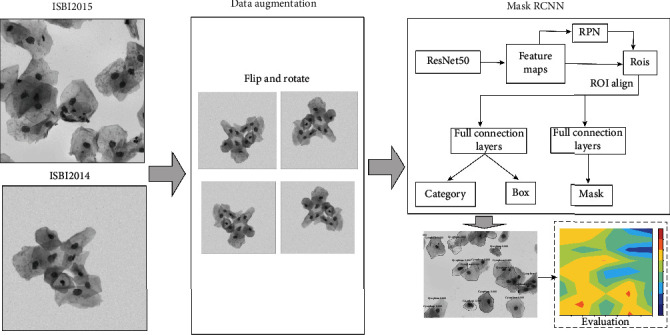
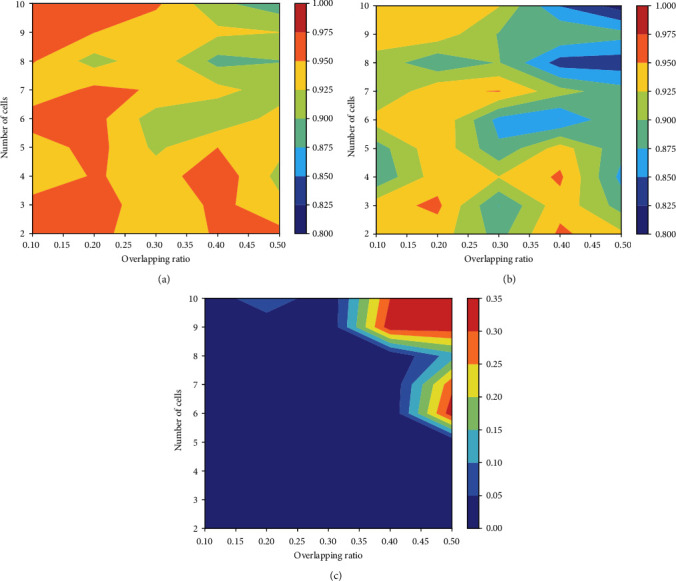
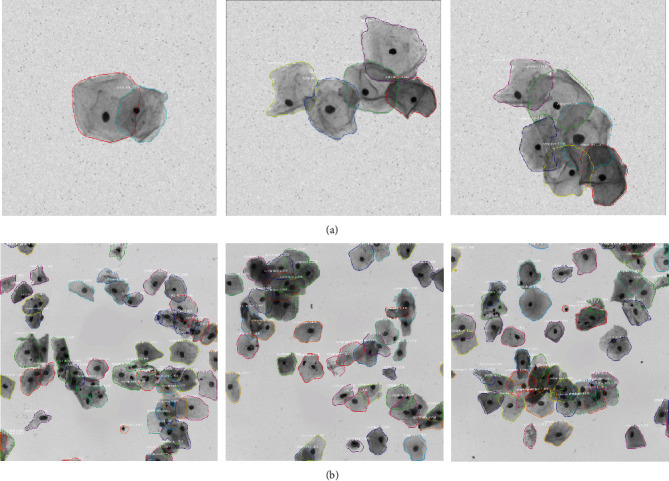
The task of segmenting cytoplasm in cytology images is one of the most challenging tasks in cervix cytological analysis due to the presence of fuzzy and highly overlapping cells. Deep learning-based diagnostic technology has proven to be effective in segmenting complex medical images. We present a two-stage framework based on Mask RCNN to automatically segment overlapping cells. In stage one, candidate cytoplasm bounding boxes are proposed. In stage two, pixel-to-pixel alignment is used to refine the boundary and category classification is also presented. The performance of the proposed method is evaluated on publicly available datasets from ISBI 2014 and 2015. The experimental results demonstrate that our method outperforms other state-of-the-art approaches with DSC 0.92 and FPRp 0.0008 at the DSC threshold of 0.8. Those results indicate that our Mask RCNN-based segmentation method could be effective in cytological analysis.
细胞学图像中的细胞质分割是宫颈细胞学分析中最具挑战性的任务之一,这是由于存在模糊和高度重叠的细胞。基于深度学习的诊断技术已被证明在分割复杂医学图像方面非常有效。我们提出了一种基于 Mask RCNN 的两阶段框架,用于自动分割重叠细胞。在第一阶段,提出了候选细胞质边界框。在第二阶段,使用像素到像素的对齐来细化边界,并进行类别分类。在 ISBI 2014 和 2015 年的公开数据集上评估了所提出方法的性能。实验结果表明,在 DSC 阈值为 0.8 时,我们的方法在 DSC 为 0.92 和 FPRp 为 0.0008 时优于其他最先进的方法。这些结果表明,我们基于 Mask RCNN 的分割方法在细胞学分析中可能是有效的。