Academy of Medical Sciences, Malawi University of Science and Technology, Thyolo, Malawi; Malawi Liverpool Wellcome Trust, Blantyre, Malawi.
Malawi Liverpool Wellcome Trust, Blantyre, Malawi.
Mol Biochem Parasitol. 2021 Nov;246:111425. doi: 10.1016/j.molbiopara.2021.111425. Epub 2021 Oct 16.
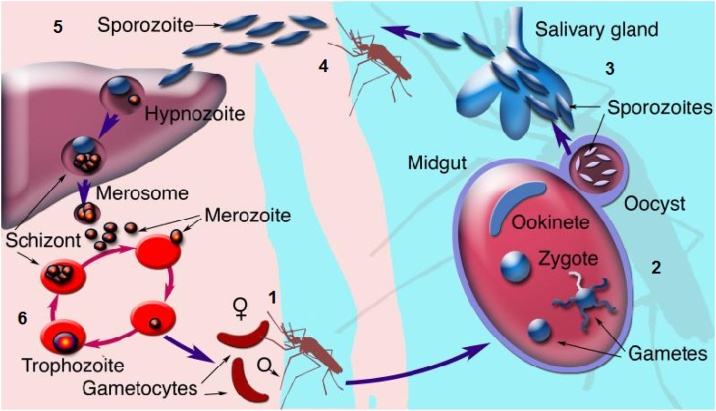
Plasmodium falciparum malaria still remains a major global public health challenge with over 220 million new cases and well over 400,000 deaths annually. Most of the deaths occur in sub-Saharan Africa which bears 90 % of the malaria cases. Such high P. falciparum malaria-related morbidity and mortality rates pose a huge burden on the health and economic wellbeing of the countries affected. Lately, substantial gains have been made in reducing malaria morbidity and mortality through intense malaria control initiatives such as use of effective antimalarials, intensive distribution and use of insecticide-treated nets (ITNs), and implementation of massive indoor residual spraying (IRS) campaigns. However, these gains are being threatened by widespread resistance of the parasite to antimalarials, and the vector to insecticides. Over the years the use of vaccines has proven to be the most reliable, cost-effective and efficient method for controlling the burden and spread of many infectious diseases, especially in resource poor settings with limited public health infrastructure. Nonetheless, this had not been the case with malaria until the most promising malaria vaccine candidate, RTS,S/AS01, was approved for pilot implementation programme in three African countries in 2015. This was regarded as the most important breakthrough in the fight against malaria. However, RTS,S/AS01 has been found to have some limitations, the main ones being low efficacy in certain age groups, poor immunogenicity and need for almost three boosters to attain a reasonable efficacy. Thus, the search for a more robust and effective malaria vaccine still continues and a better understanding of naturally acquired immune responses to the various stages, including the transmissible stages of the parasite, could be crucial in rational vaccine design. This review therefore compiles what is currently known about the basic biology of P. falciparum and the natural malaria immune response against malaria and progress made towards vaccine development.
恶性疟原虫疟疾仍然是一个重大的全球公共卫生挑战,每年有超过 2.2 亿例新发病例和超过 40 万例死亡。大多数死亡发生在撒哈拉以南非洲地区,该地区承担了 90%的疟疾病例。如此高的恶性疟原虫疟疾发病率和死亡率给受影响国家的健康和经济福祉带来了巨大负担。最近,通过强化疟疾控制举措,如使用有效抗疟药物、密集分发和使用驱虫蚊帐(ITN)以及实施大规模室内滞留喷洒(IRS)运动,在降低疟疾发病率和死亡率方面取得了重大进展。然而,寄生虫对抗疟药物和蚊子对杀虫剂的广泛耐药性正威胁着这些进展。多年来,疫苗的使用已被证明是控制许多传染病负担和传播的最可靠、最具成本效益和最有效的方法,特别是在资源有限、公共卫生基础设施有限的情况下。尽管如此,这种情况在疟疾方面并非如此,直到 2015 年最有希望的疟疾疫苗候选药物 RTS,S/AS01 被批准在三个非洲国家进行试点实施计划,情况才有所改变。这被认为是抗击疟疾的最重要突破。然而,RTS,S/AS01 被发现存在一些局限性,主要是在某些年龄组中的疗效较低、免疫原性差以及需要几乎三次加强针才能达到合理的疗效。因此,寻找更强大、更有效的疟疾疫苗的工作仍在继续,更好地了解针对寄生虫各个阶段的自然获得性免疫反应,包括寄生虫的可传播阶段,对于合理的疫苗设计可能至关重要。因此,本综述总结了目前已知的恶性疟原虫的基本生物学和针对疟疾的自然免疫反应以及疫苗开发方面的进展。