Keck School of Medicine of the University of Southern California, Los Angeles, California, USA.
Roski Eye Institute, Keck School of Medicine of the University of Southern California, Los Angeles, California, USA.
Br J Ophthalmol. 2023 Apr;107(4):511-517. doi: 10.1136/bjophthalmol-2021-319470. Epub 2021 Oct 20.
To assess the generalisability and performance of a deep learning classifier for automated detection of gonioscopic angle closure in anterior segment optical coherence tomography (AS-OCT) images.
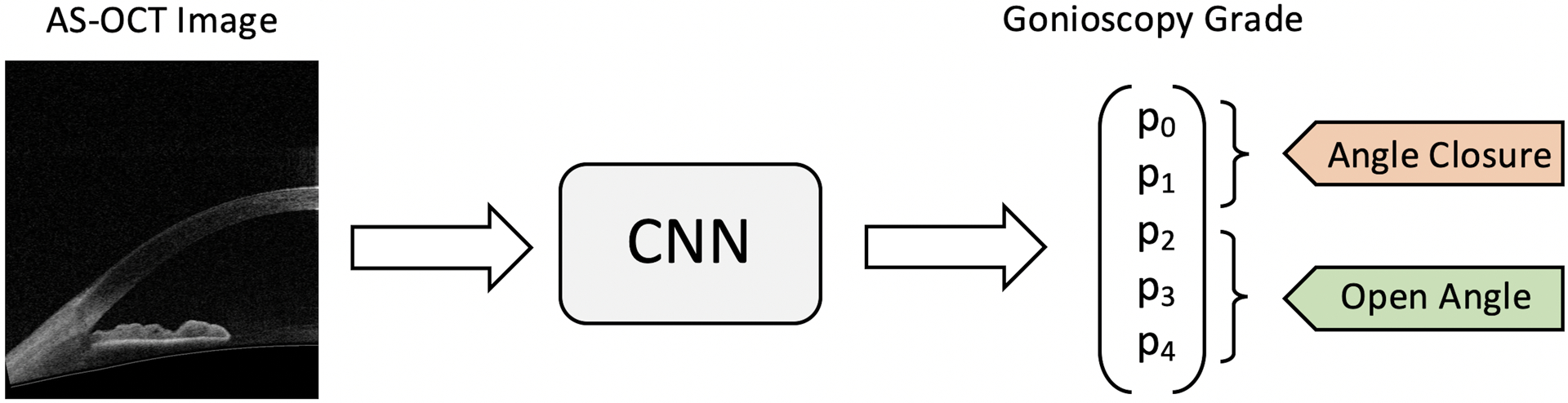
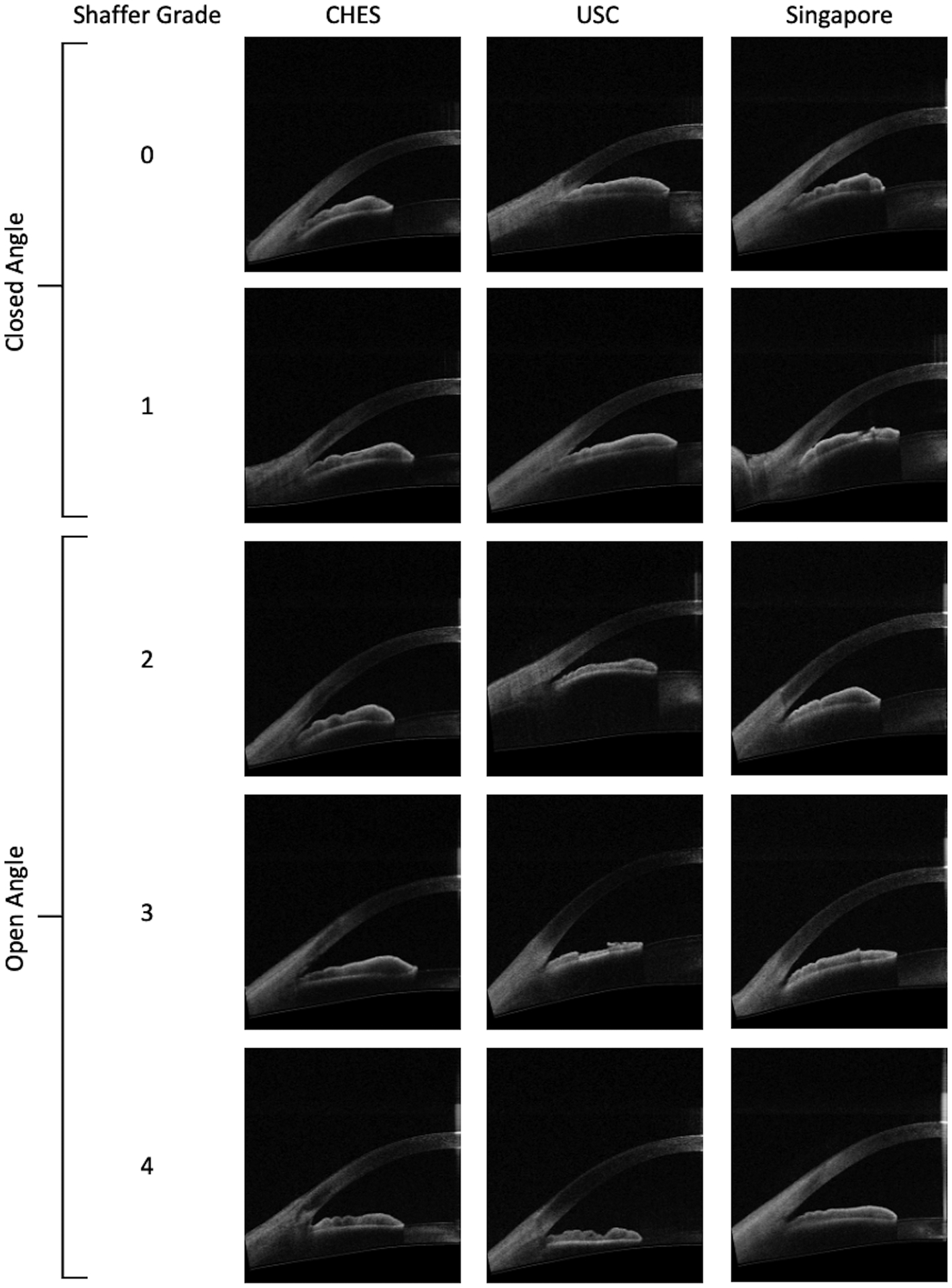
A convolutional neural network (CNN) model developed using data from the Chinese American Eye Study (CHES) was used to detect gonioscopic angle closure in AS-OCT images with reference gonioscopy grades provided by trained ophthalmologists. Independent test data were derived from the population-based CHES, a community-based clinic in Singapore, and a hospital-based clinic at the University of Southern California (USC). Classifier performance was evaluated with receiver operating characteristic curve and area under the receiver operating characteristic curve (AUC) metrics. Interexaminer agreement between the classifier and two human examiners at USC was calculated using Cohen's kappa coefficients.
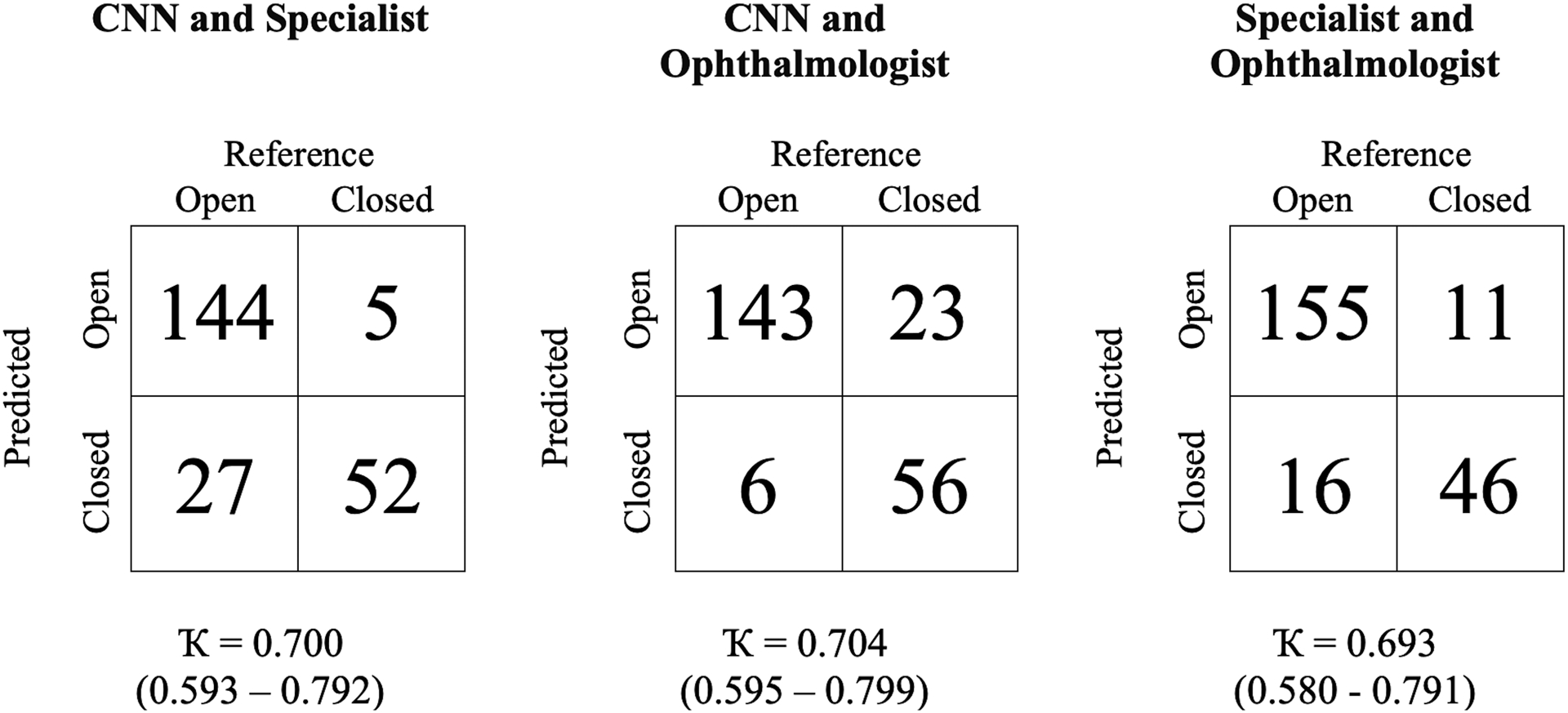
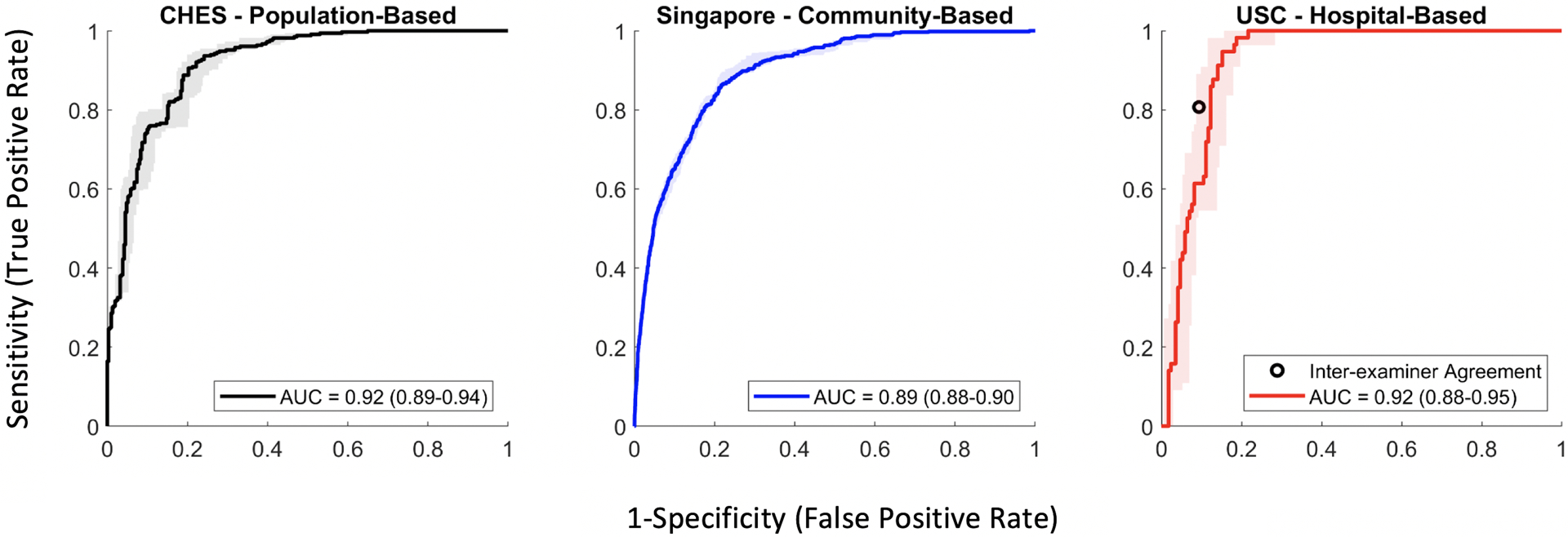
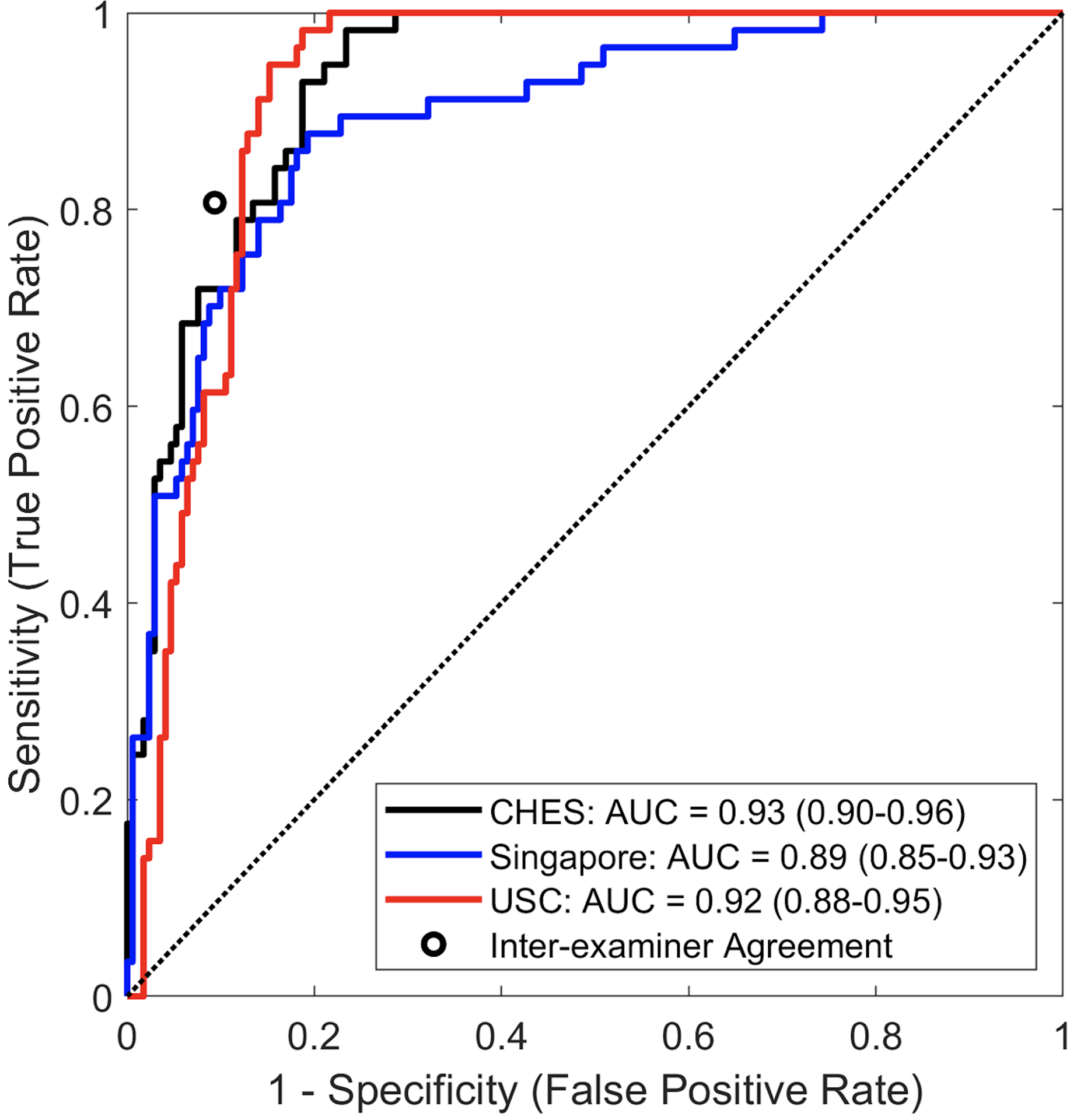
The classifier was tested using 640 images (311 open and 329 closed) from 127 Chinese Americans, 10 165 images (9595 open and 570 closed) from 1318 predominantly Chinese Singaporeans and 300 images (234 open and 66 closed) from 40 multiethnic USC patients. The classifier achieved similar performance in the CHES (AUC=0.917), Singapore (AUC=0.894) and USC (AUC=0.922) cohorts. Standardising the distribution of gonioscopy grades across cohorts produced similar AUC metrics (range 0.890-0.932). The agreement between the CNN classifier and two human examiners (Ҡ=0.700 and 0.704) approximated interexaminer agreement (Ҡ=0.693) in the USC cohort.
An OCT-based deep learning classifier demonstrated consistent performance detecting gonioscopic angle closure across three independent patient populations. This automated method could aid ophthalmologists in the assessment of angle status in diverse patient populations.
评估一种深度学习分类器在眼前节光学相干断层扫描(AS-OCT)图像中自动检测房角关闭的泛化能力和性能。
使用来自中美眼科研究(CHES)的数据开发的卷积神经网络(CNN)模型,使用经过培训的眼科医生提供的参考房角镜分级来检测 AS-OCT 图像中的房角关闭。独立的测试数据来自基于人群的 CHES、新加坡的一个社区诊所和南加州大学(USC)的一个医院诊所。使用接收者操作特征曲线和接收者操作特征曲线下面积(AUC)指标评估分类器性能。计算分类器与 USC 两名眼科医生之间的观察者间一致性,使用 Cohen 的 kappa 系数。
该分类器使用来自 127 名中国人的 640 张图像(311 张开放和 329 张关闭)、来自 1318 名主要为中国人的新加坡人的 10165 张图像(9595 张开放和 570 张关闭)和来自 40 名多种族 USC 患者的 300 张图像(234 张开放和 66 张关闭)进行了测试。分类器在 CHES(AUC=0.917)、新加坡(AUC=0.894)和 USC(AUC=0.922)队列中表现相似。跨队列标准化房角镜分级的分布产生了相似的 AUC 指标(范围为 0.890-0.932)。CNN 分类器与两名人类观察者之间的一致性(Ҡ=0.700 和 0.704)接近 USC 队列中的观察者间一致性(Ҡ=0.693)。
基于 OCT 的深度学习分类器在三个独立的患者群体中检测房角镜角度关闭的性能一致。这种自动化方法可以帮助眼科医生评估不同患者群体的角度状态。