Institute for Personalized Medicine, Department of Biochemistry and Molecular Biology, Pennsylvania State University College of Medicine, Hershey, PA 17033, USA.
Tianjin Institute of Industrial Biotechnology, Chinese Academy of Sciences, 32 West 7th Avenue, Tianjin Airport Economic Area, Tianjin, 300308, P.R. China.
J Ind Microbiol Biotechnol. 2022 Apr 14;49(2). doi: 10.1093/jimb/kuab076.
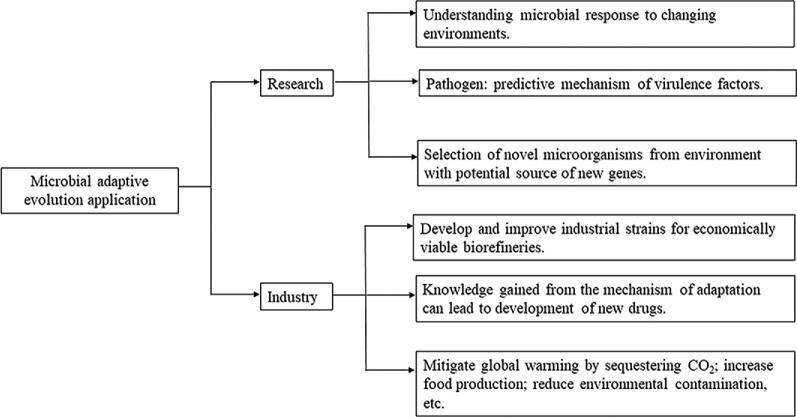
Bacterial species can adapt to significant changes in their environment by mutation followed by selection, a phenomenon known as "adaptive evolution." With the development of bioinformatics and genetic engineering, research on adaptive evolution has progressed rapidly, as have applications of the process. In this review, we summarize various mechanisms of bacterial adaptive evolution, the technologies used for studying it, and successful applications of the method in research and industry. We particularly highlight the contributions of Dr. L. O. Ingram. Microbial adaptive evolution has significant impact on our society not only from its industrial applications, but also in the evolution, emergence, and control of various pathogens.
细菌物种可以通过突变和选择来适应环境的重大变化,这种现象被称为“适应性进化”。随着生物信息学和基因工程的发展,适应性进化的研究进展迅速,该过程的应用也取得了进展。在这篇综述中,我们总结了细菌适应性进化的各种机制、用于研究它的技术,以及该方法在研究和工业中的成功应用。我们特别强调了 L. O. Ingram 博士的贡献。微生物适应性进化不仅对我们的社会产生了重大影响,从其工业应用方面来看,它还影响着各种病原体的进化、出现和控制。