Guffey Alexandra A, Loll Patrick J
Department of Biochemistry & Molecular Biology, College of Medicine, Drexel University, Philadelphia, PA 19102, USA.
Microorganisms. 2021 Sep 25;9(10):2026. doi: 10.3390/microorganisms9102026.
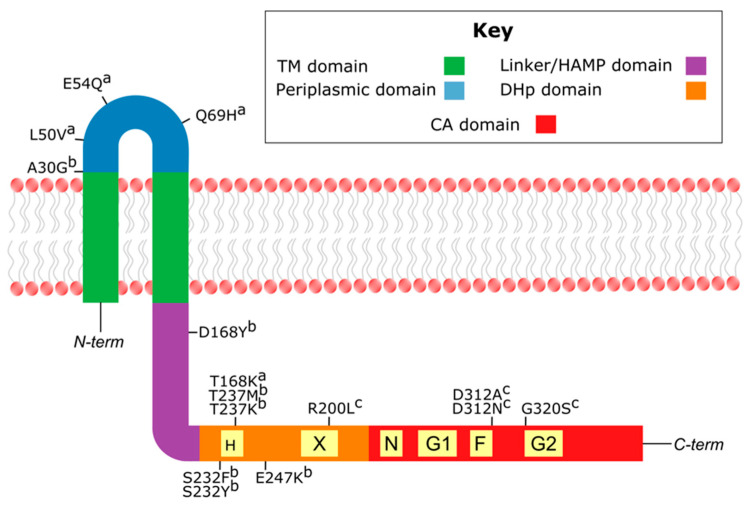
Vancomycin-resistant enterococci (VRE) are a serious threat to human health, with few treatment options being available. New therapeutics are urgently needed to relieve the health and economic burdens presented by VRE. A potential target for new therapeutics is the VanRS two-component system, which regulates the expression of vancomycin resistance in VRE. VanS is a sensor histidine kinase that detects vancomycin and in turn activates VanR; VanR is a response regulator that, when activated, directs expression of vancomycin-resistance genes. This review of VanRS examines how the expression of vancomycin resistance is regulated, and provides an update on one of the field's most pressing questions: How does VanS sense vancomycin?
耐万古霉素肠球菌(VRE)对人类健康构成严重威胁,可供选择的治疗方法很少。迫切需要新的治疗方法来减轻VRE带来的健康和经济负担。新治疗方法的一个潜在靶点是VanRS双组分系统,该系统调节VRE中万古霉素抗性的表达。VanS是一种传感组氨酸激酶,可检测万古霉素并进而激活VanR;VanR是一种反应调节因子,激活后可指导万古霉素抗性基因的表达。本文对VanRS进行综述,探讨万古霉素抗性的表达是如何调控的,并就该领域最紧迫的问题之一提供最新信息:VanS如何感知万古霉素?