Romo-Barrera Carol M, Castrillón-Rivera Laura E, Palma-Ramos Alejandro, Castañeda-Sánchez Jorge I, Luna-Herrera Julieta
Departamento de Inmunología, Escuela Nacional de Ciencias Biológicas, Instituto Politécnico Nacional, Ciudad de México 11340, Mexico.
Departamento de Sistemas Biológicos, Universidad Autónoma Metropolitana Unidad Xochimilco, Ciudad de México 04960, Mexico.
Microorganisms. 2021 Sep 25;9(10):2027. doi: 10.3390/microorganisms9102027.
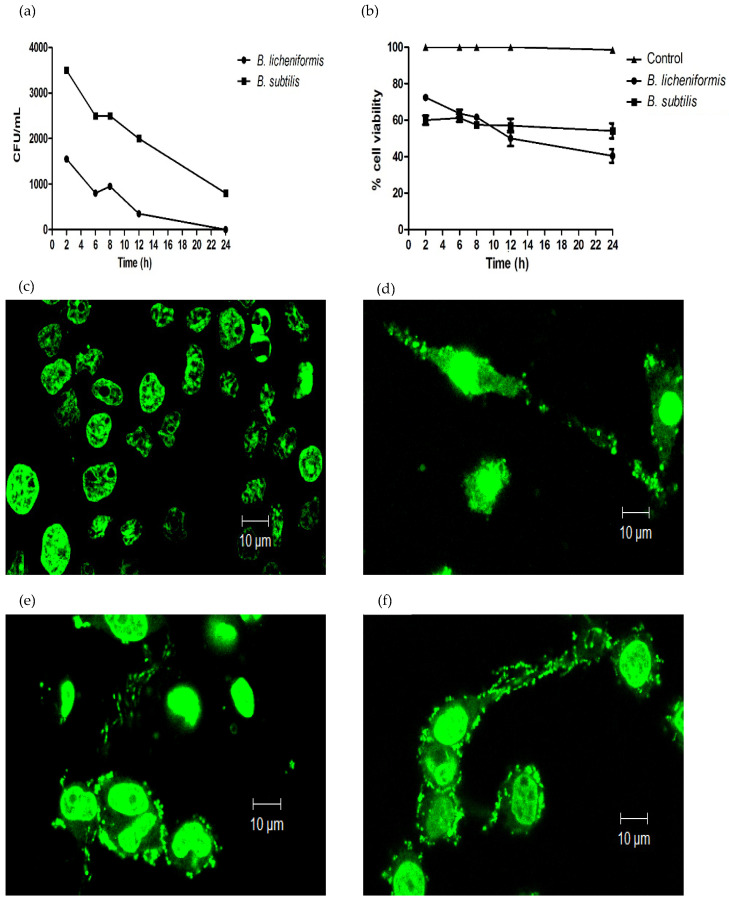
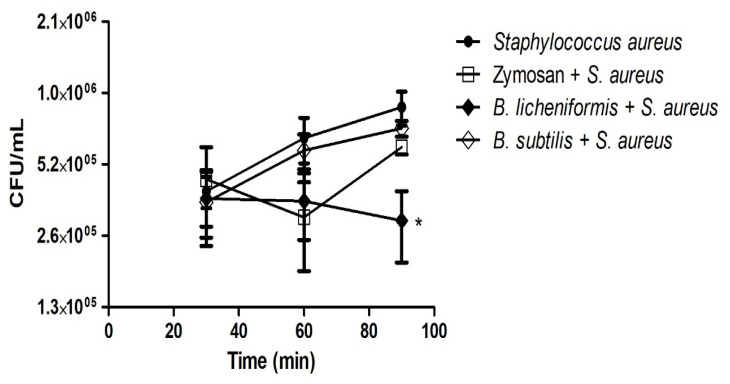
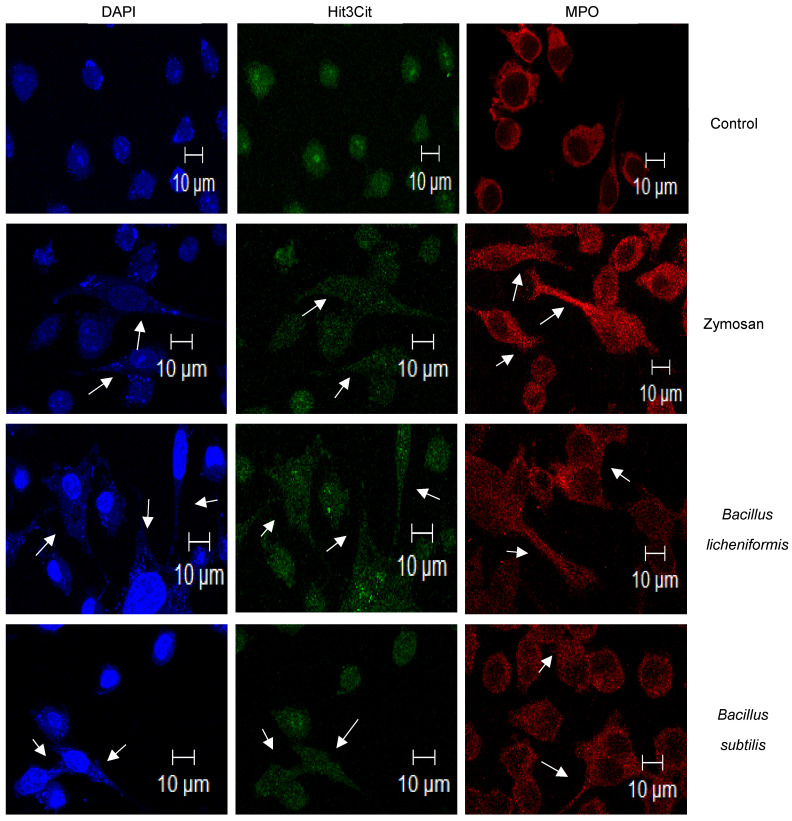
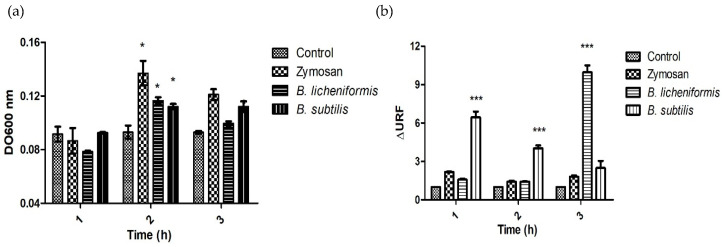
Probiotics are considered living microorganisms that help preserve the health of the host who uses them. are a genus of Gram-positive bacteria used as probiotics for animal and human consumption. They are currently distributed in various commercial forms. Two of the species used as probiotics are and . Macrophages are central cells in the immune response, being fundamental in the elimination of microbial pathogens, for which they use various mechanisms, including the formation of extracellular traps (METs). There have been very few studies carried out on the participation of macrophages in response to the interaction of probiotics of the genus with the host. In this work, we used macrophages from the J774A mouse cell line.1, and we found that they are susceptible to infection by the two species. However, both species were eliminated as the infection progressed. Using confocal microscopy, we identified the formation of METs from the first hours of infection, which were characterized by the presence of myeloperoxidase (MPO) and citrullinated histone (Hit3Cit). Quantitative data on extracellular DNA release were also obtained; release was observed starting in the first hour of infection. The induction of METs by caused a significant decrease in the colony-forming units (CFU) of . The induction of METS by bacteria of the genus is a mechanism that participates in controlling the probiotic and potentially pathogenic bacteria such as . The induction of METs to control pathogens may be a novel mechanism that could explain the beneficial effects of probiotics of the genus
益生菌被认为是有助于维护其使用者健康的活微生物。 是革兰氏阳性菌的一个属,用作动物和人类食用的益生菌。它们目前以各种商业形式销售。用作益生菌的两个物种是 和 。巨噬细胞是免疫反应的核心细胞,在消除微生物病原体方面至关重要,为此它们使用各种机制,包括形成细胞外陷阱(METs)。关于巨噬细胞在响应 属益生菌与宿主相互作用中的参与情况,所开展的研究非常少。在这项工作中,我们使用了J774A小鼠细胞系的巨噬细胞,并且我们发现它们易受这两种 物种的感染。然而,随着感染的进展,这两个物种都被清除。使用共聚焦显微镜,我们从感染的最初几个小时就确定了METs的形成,其特征是存在髓过氧化物酶(MPO)和瓜氨酸化组蛋白(Hit3Cit)。还获得了细胞外DNA释放的定量数据;在感染的第一个小时就观察到了释放。 诱导METs导致 的菌落形成单位(CFU)显著减少。 属细菌诱导METs是一种参与控制益生菌和潜在病原菌(如)的机制。诱导METs来控制病原体可能是一种新机制,这可以解释 属益生菌的有益作用。