Elnaem Mohamed Hassan, Mohd Taufek Nor Hidayah, Ab Rahman Norny Syafinaz, Mohd Nazar Nor Ilyani, Zin Che Suraya, Nuffer Wesley, Turner Christopher John
Department of Pharmacy Practice, Faculty of Pharmacy, International Islamic University Malaysia, Kuantan 25200, Pahang, Malaysia.
Department of Clinical Pharmacy, Skaggs School of Pharmacy and Pharmaceutical Sciences, University of Colorado Anschutz Medical Campus, Aurora, CO 80045, USA.
Vaccines (Basel). 2021 Oct 9;9(10):1156. doi: 10.3390/vaccines9101156.
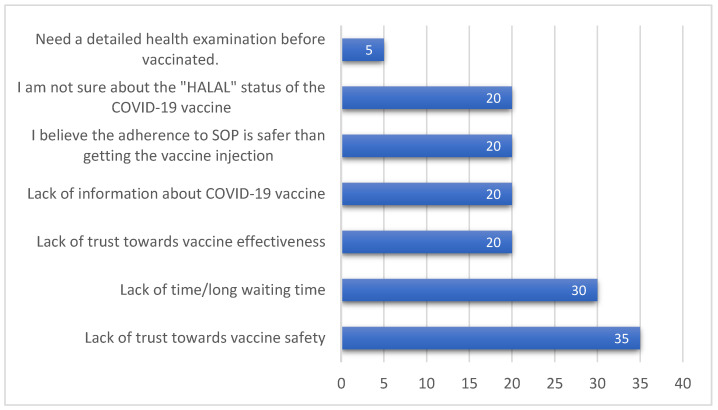
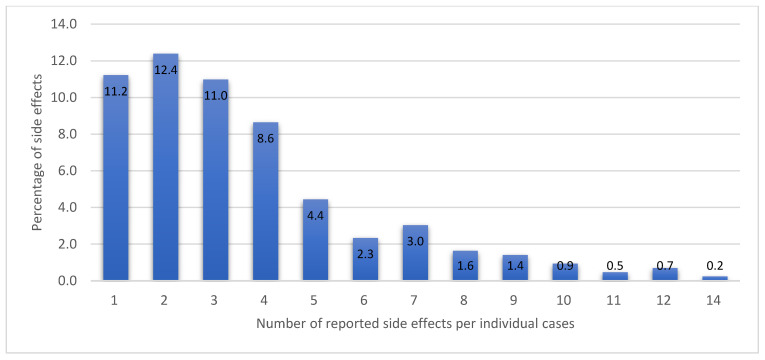
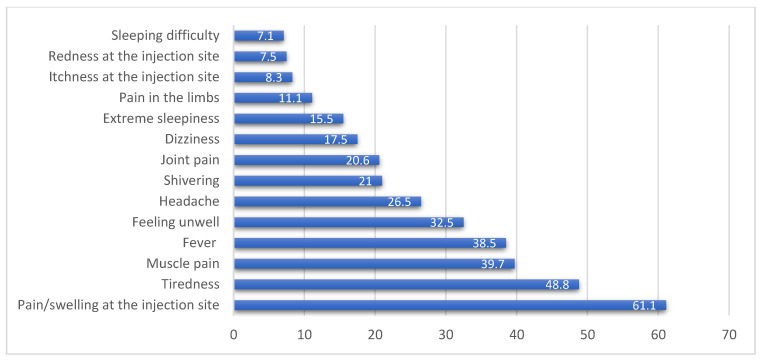
This study aimed to investigate the attitudes, perceptions, and experiences of side effects with the COVID-19 vaccines in Malaysia among participants in the National Vaccination Program. A cross-sectional survey was conducted among a sample of vaccine-eligible and vaccinated individuals in Malaysia between May and July 2021. A total of 428 respondents completed the survey. A vast majority (98.6%) of the respondents had registered to be vaccinated. Twenty participants (4.7%) expressed concerns about either registering or receiving the COVID-19 vaccination, mainly due to their uncertainty of vaccine safety. Approximately 77.5% received their vaccinations. Of them, 76.8% had experienced vaccine-related side effects. About 40% of the side effects occurred more with the second dose, particularly those who received the Pfizer-BioNTech vaccine ( < 0.001). Pain at the injection site (61.1%) and tiredness (48.8%) were the most reported side effects. Compared to those aged ≥60 years, all age groups were more likely to exhibit vaccine-related side effects; meanwhile, males (OR: 0.51, 95% CI: 0.27-0.93) were less likely to experience side effects than females. Those who received the Sinovac vaccine were at lower risk of experiencing side effects (OR: 0.08, 95% CI: 0.03-0.22) and were more likely to report fewer side effects than Pfizer-BioNTech ( = 0.012) and Oxford-AstraZeneca groups (= 0.001). The overall attitudes toward the COVID-19 vaccination program were positive. Several differences in the experiences of vaccine-related side effects, in terms of prevalence and numbers, were attributed to age, gender, and received vaccine type.
本研究旨在调查马来西亚国家疫苗接种计划参与者对新冠疫苗副作用的态度、认知及经历。2021年5月至7月间,对马来西亚符合疫苗接种条件且已接种疫苗的个体样本进行了横断面调查。共有428名受访者完成了调查。绝大多数(98.6%)受访者已登记接种疫苗。20名参与者(4.7%)对登记或接种新冠疫苗表示担忧,主要原因是他们对疫苗安全性不确定。约77.5%的人接种了疫苗。其中,76.8%经历过与疫苗相关的副作用。约40%的副作用在接种第二剂时更易出现,尤其是接种辉瑞 - 生物科技疫苗的人(<0.001)。注射部位疼痛(61.1%)和疲劳(48.8%)是报告最多的副作用。与60岁及以上人群相比,所有年龄组出现与疫苗相关副作用的可能性更高;同时,男性(比值比:0.51,95%置信区间:0.27 - 0.93)出现副作用的可能性低于女性。接种科兴疫苗的人出现副作用的风险较低(比值比:0.08,95%置信区间:0.03 - 0.22),且与接种辉瑞 - 生物科技疫苗组(=0.012)和牛津 - 阿斯利康疫苗组(=0.001)相比,报告副作用较少的可能性更高。对新冠疫苗接种计划的总体态度是积极的。在与疫苗相关副作用的经历方面,患病率和数量上的一些差异归因于年龄、性别和接种的疫苗类型。