Pan Guangsheng, Hu Qinran, Gu Wei, Ding Shixing, Qiu Haifeng, Lu Yuping
School of Electrical Engineering, Southeast University, Nanjing, China, 210096.
School of Cyber Science and Engineering, Southeast University, Nanjing, China, 210096.
Nat Commun. 2021 Oct 25;12(1):6156. doi: 10.1038/s41467-021-26358-w.
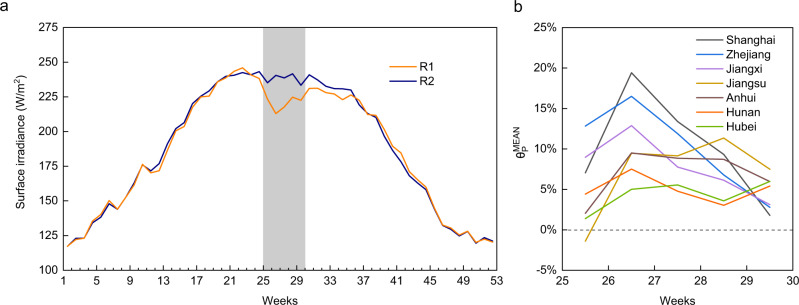
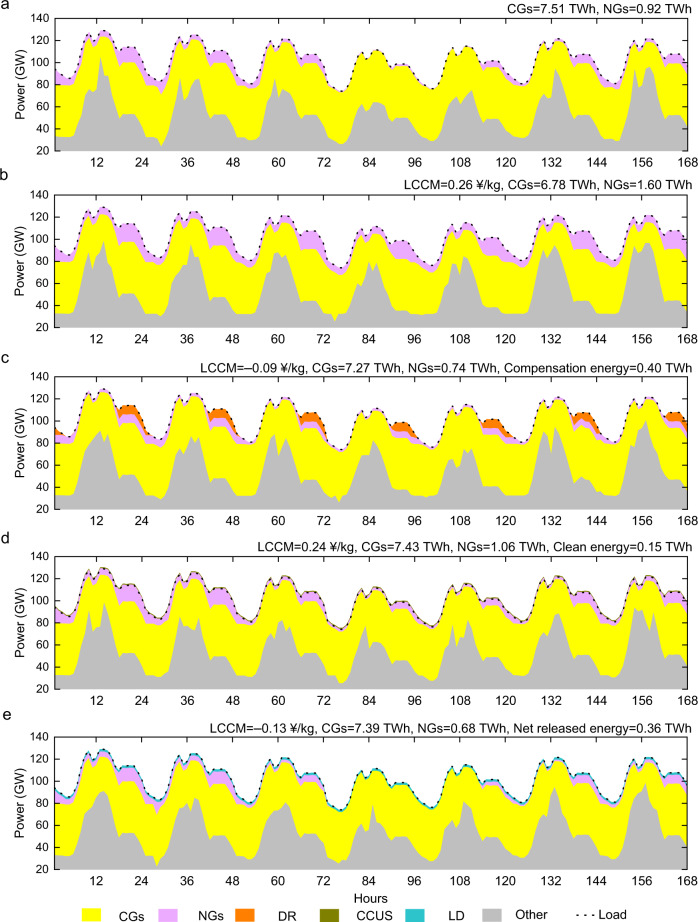
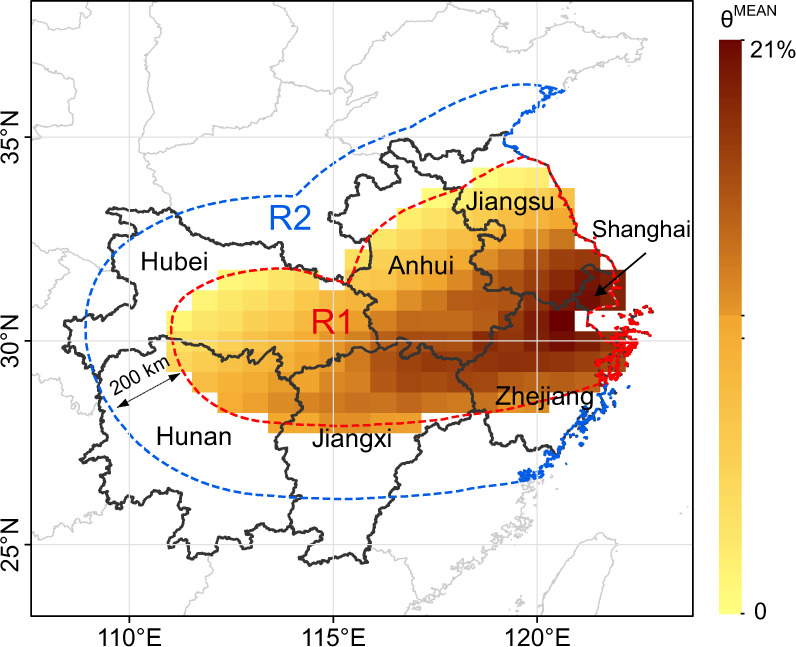
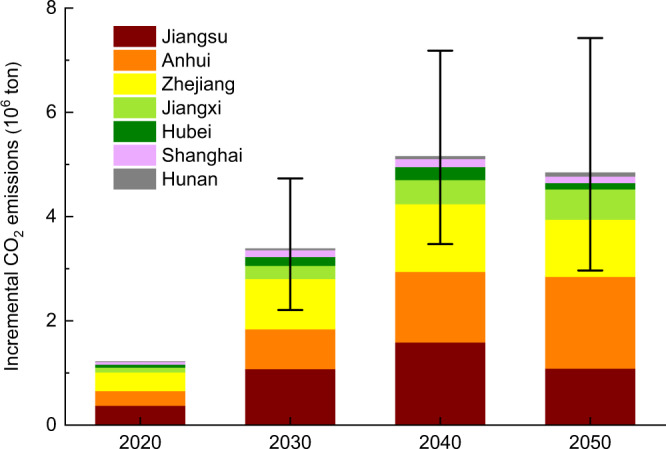
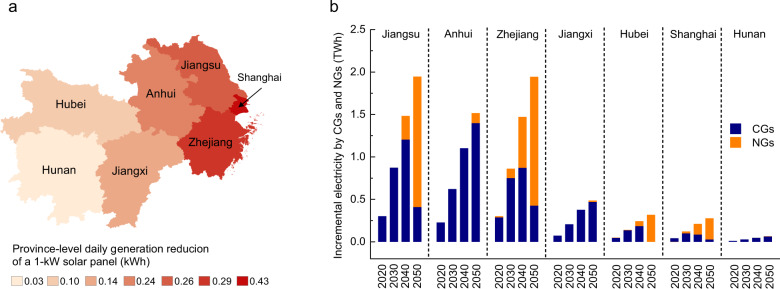
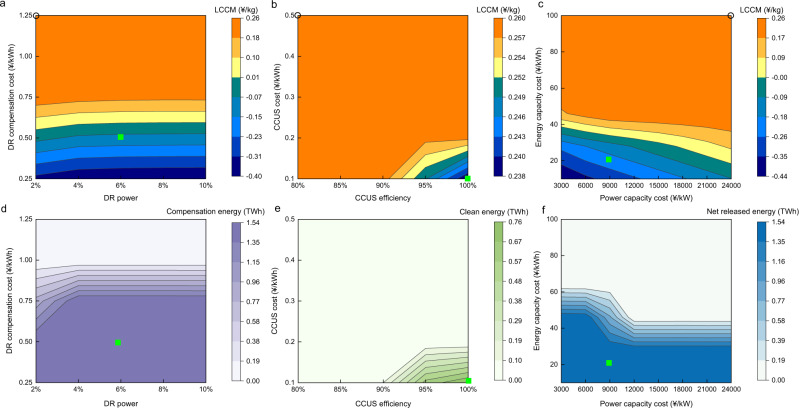
As a typical climate that occurs in the Yangtze-Huaihe River basin of China with a size of 500,000 km, plum rain can reduce the photovoltaic (PV) potential by lowering the surface irradiance (SI) in the affected region. Based on hourly meteorological data from 1980 to 2020, we find that plum rain can lower the SI in the affected region with a weekly peak drop of more than 20% at the most affected locations. This SI drop, coupled with a large number of deployed PV systems, can cause incremental CO emissions (ICEs) of local power systems by increasing the additional thermal power. Using a cost optimization model, we demonstrate that the ICEs in 2020 already reached 1.22 megatons and could range from 2.21 to 4.73 megatons, 3.47 to 7.19 megatons, and 2.97 to 7.43 megatons in 2030, 2040, and 2050, respectively, considering a change trend interval of a ±25% fluctuation in power generation and demand in the different years. To offset these ICEs, we compare four pathways integrated with promising technologies. This analysis reveals that the advanced deployment of complementary technologies can improve the PV utilization level to address climate impacts.
梅雨是中国长江淮河流域出现的一种典型气候,影响范围达50万平方公里,它会降低受影响地区的地面辐照度(SI),从而降低光伏发电潜力。基于1980年至2020年的逐小时气象数据,我们发现梅雨会降低受影响地区的地面辐照度,在受影响最严重的地点,每周峰值降幅超过20%。这种地面辐照度的下降,再加上大量已部署的光伏系统,会通过增加额外的火力发电量,导致当地电力系统的增量碳排放(ICEs)。使用成本优化模型,我们证明,考虑到不同年份发电和需求±25%波动的变化趋势区间,2020年的增量碳排放已达到122万吨,2030年、2040年和2050年分别可能在221万至473万吨、347万至719万吨和297万至743万吨之间。为了抵消这些增量碳排放,我们比较了与有前景的技术相结合的四种途径。该分析表明,互补技术的先进部署可以提高光伏发电利用水平,以应对气候影响。