Université Côte d'Azur, CHU, Inserm, C3M, Nice, France.
Université Côte d'Azur, Inserm, C3M, Nice, France.
Sci Rep. 2021 Oct 28;11(1):21275. doi: 10.1038/s41598-021-00443-y.
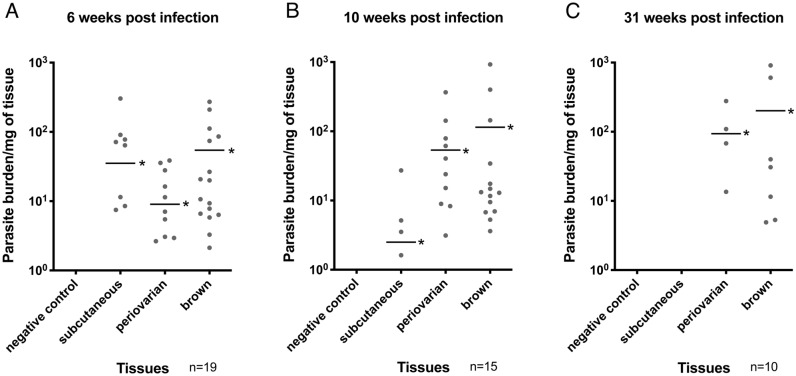
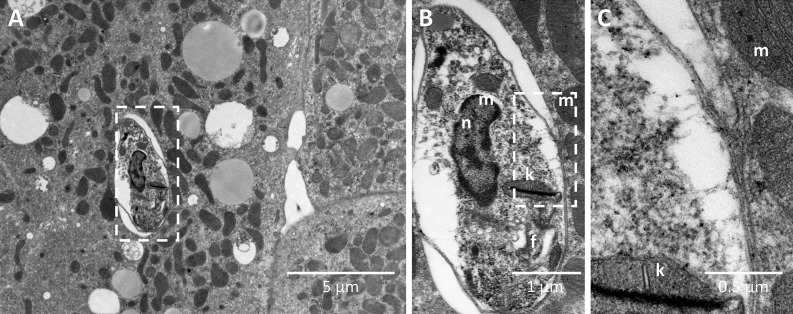
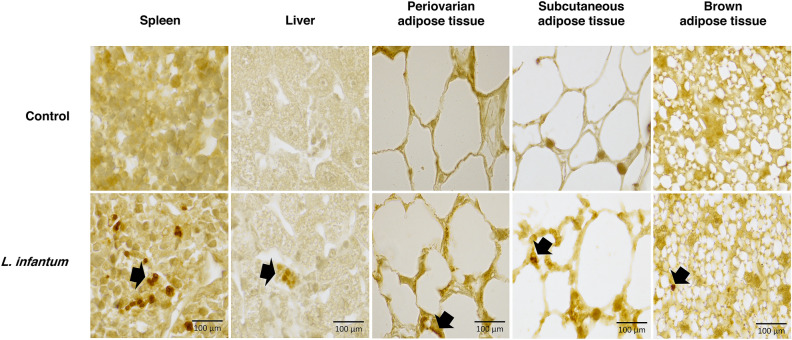
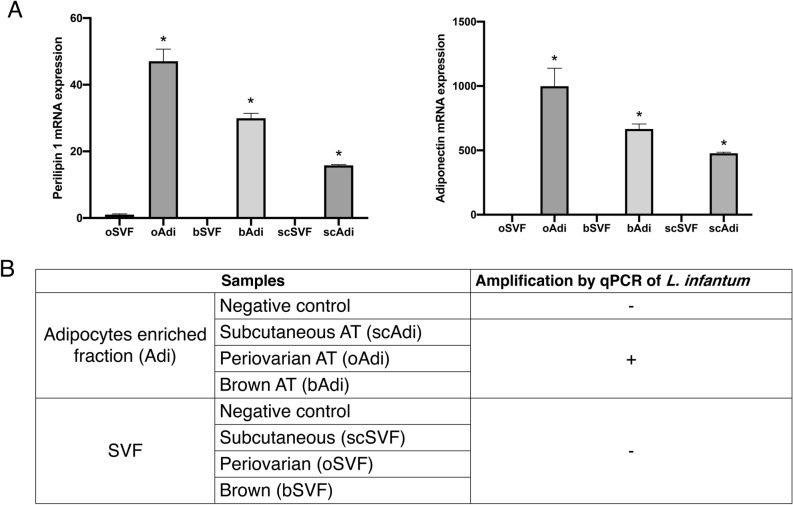
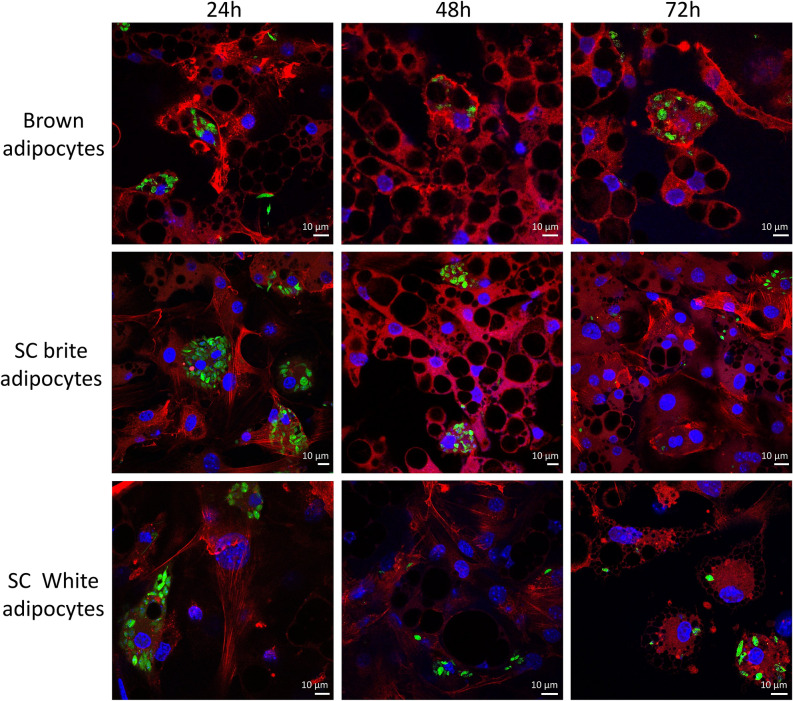
Leishmania infantum is the causative agent of visceral leishmaniasis transmitted by the bite of female sand flies. According to the WHO, the estimated annual incidence of leishmaniasis is one million new cases, resulting in 30,000 deaths per year. The recommended drugs for treating leishmaniasis include Amphotericin B. But over the course of the years, several cases of relapses have been documented. These relapses cast doubt on the efficiency of actual treatments and raise the question of potential persistence sites. Indeed, Leishmania has the ability to persist in humans for long periods of time and even after successful treatment. Several potential persistence sites have already been identified and named as safe targets. As adipose tissue has been proposed as a sanctuary of persistence for several pathogens, we investigated whether Leishmania infantum could be found in this tissue. We demonstrated both in cell cultures and in vivo that Leishmania infantum was able to infect adipocytes. Altogether our results suggest adipocytes as a 'safe target' for Leishmania infantum parasites.
利什曼原虫是内脏利什曼病的病原体,由雌性沙蝇叮咬传播。据世界卫生组织估计,利什曼病的年发病率为 100 万例,每年导致 3 万人死亡。推荐用于治疗利什曼病的药物包括两性霉素 B。但多年来,已有几例复发的病例记录。这些复发对实际治疗的效果提出了质疑,并提出了潜在持续存在的问题。事实上,利什曼原虫能够在人体内长时间潜伏,甚至在成功治疗后也能潜伏。已经确定了几个潜在的持续存在的部位,并将其命名为安全靶标。由于脂肪组织已被提出为几种病原体的持续存在的避难所,我们研究了利什曼原虫是否可以在这种组织中找到。我们在细胞培养和体内证明了利什曼原虫能够感染脂肪细胞。总之,我们的研究结果表明脂肪细胞是利什曼原虫寄生虫的“安全靶标”。