School of Plant Protection, Hainan University, Haikou, Hainan Province, 570228, P. R. China.
Department of Entomology, Abdul Wali Khan University Mardan, 23200, Pakistan.
J Insect Sci. 2021 Sep 1;21(5). doi: 10.1093/jisesa/ieab080.
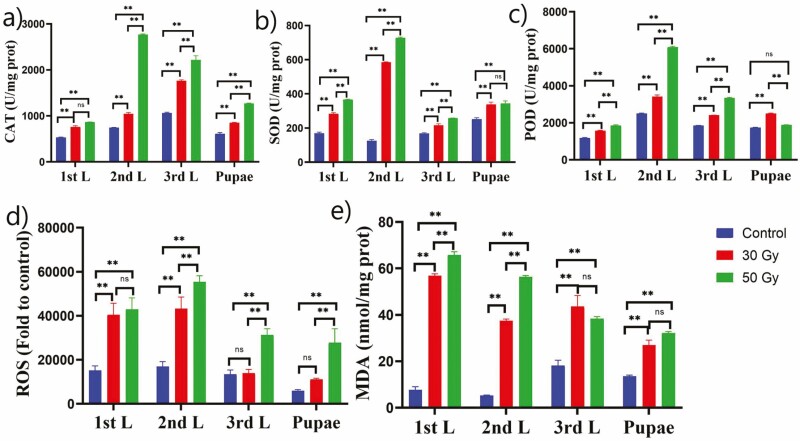
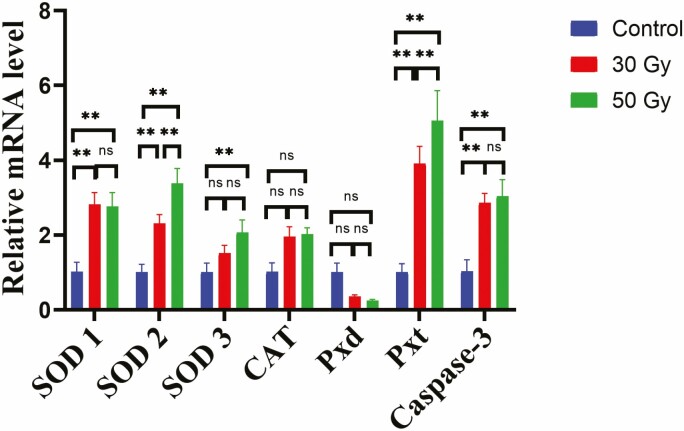
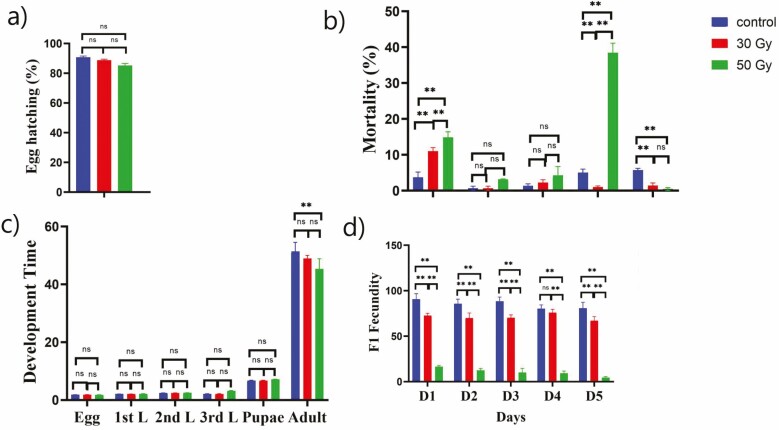
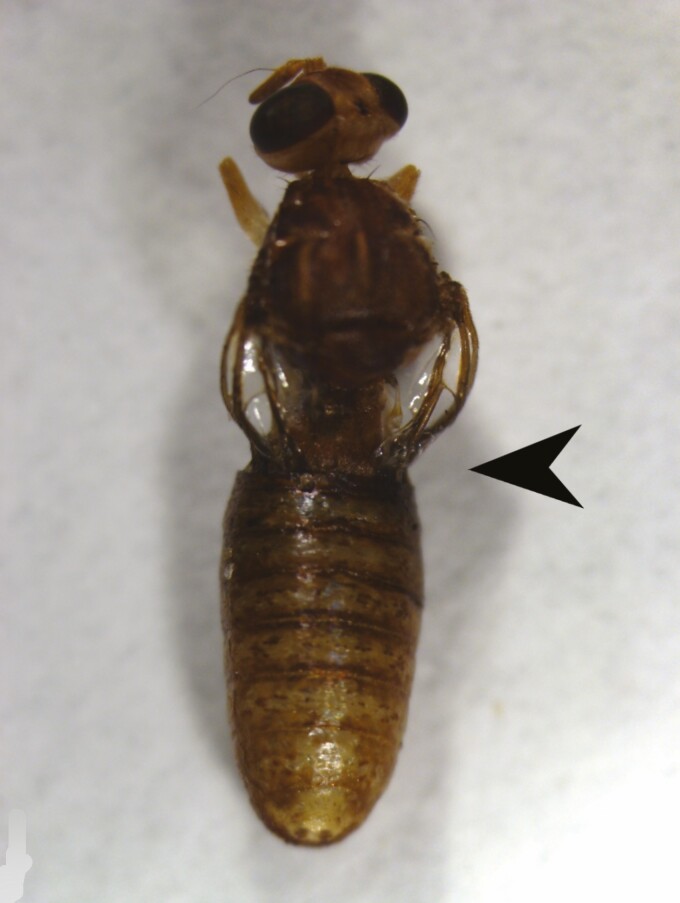
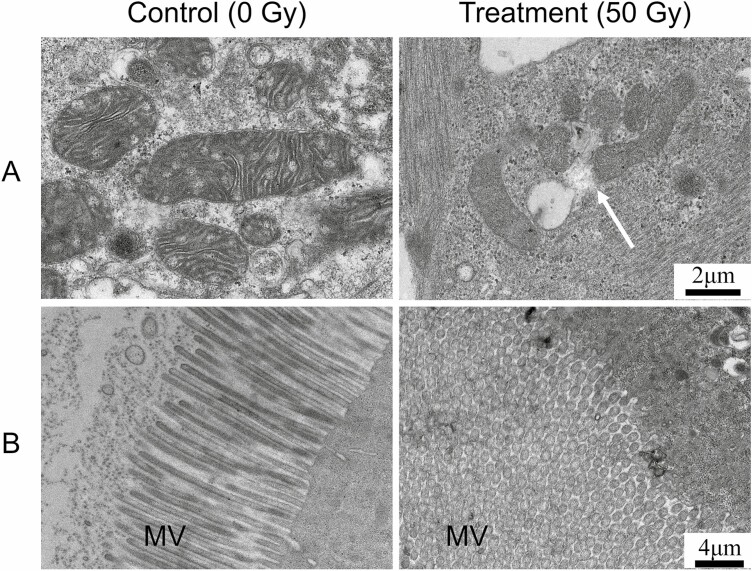
Radiation is considered as a promising insect pest control strategy for minimizing postharvest yield losses. Among various techniques, irradiation is a method of choice as it induces lethal biochemical or molecular changes that cause a downstream cascade of abrupt physiological abnormalities at the cellular level. In this study, we evaluated the effect of 60Co-γ radiation on various developmental stages of Zeugodacus cucurbitae Coquillett and subsequent carry-over effects on the progeny. For this purpose, we treated eggs with 30- and 50-Gy radiation doses of 60Co-γ. We found that radiation significantly affected cellular antioxidants, insect morphology, and gene expression profiles. Our results indicate that in response to various doses of irradiation reactive oxygen species, catalase, peroxidase, and superoxide dismutase activities were increased along with a significant increase in the malondialdehyde (MDA) content. We observed higher mortality rates during the pupal stage of the insects that hatched from irradiated eggs (50 Gy). Furthermore, the life span of the adults was reduced in response to 50 Gy radiation. The negative effects carried over to the next generation were marked by significantly lower fecundity in the F1 generation of the irradiation groups as compared to control. The radiation induced morphological abnormalities at the pupal, as well as the adult, stages. Furthermore, variations in the gene expression following irradiation are discussed. Taken together, our results signify the utility of 60Co-γ radiation for fruit fly postharvest management.
辐射被认为是一种有前途的害虫控制策略,可以最大限度地减少收获后产量损失。在各种技术中,辐照是一种首选方法,因为它会引起致命的生化或分子变化,从而导致细胞水平上突然出现一连串生理异常。在这项研究中,我们评估了 60Co-γ 辐射对南瓜实蝇不同发育阶段的影响,以及随后对后代的遗传效应。为此,我们用 30 和 50Gy 的 60Co-γ 辐射剂量处理卵。我们发现辐射显著影响细胞抗氧化剂、昆虫形态和基因表达谱。我们的结果表明,对不同剂量的辐照反应中,活性氧、过氧化氢酶、过氧化物酶和超氧化物歧化酶的活性增加,同时丙二醛(MDA)含量显著增加。我们观察到从辐照卵孵化的昆虫在蛹期死亡率更高(50Gy)。此外,成虫的寿命在 50Gy 辐射下缩短。下一代的负面影响是,与对照组相比,辐照组的 F1 代的繁殖力显著降低。辐射诱导了蛹期以及成虫期的形态异常。此外,还讨论了辐照后基因表达的变化。总的来说,我们的结果表明 60Co-γ 辐射在果实蝇采后管理中的应用潜力。