Alzubaidi Laith, Duan Ye, Al-Dujaili Ayad, Ibraheem Ibraheem Kasim, Alkenani Ahmed H, Santamaría Jose, Fadhel Mohammed A, Al-Shamma Omran, Zhang Jinglan
School of Computer Science, Queensland University of Technology, Brisbane, Queensland, Australia.
AlNidhal Campus, University of Information Technology & Communications, Baghdad, Baghdad, Iraq.
PeerJ Comput Sci. 2021 Sep 28;7:e715. doi: 10.7717/peerj-cs.715. eCollection 2021.
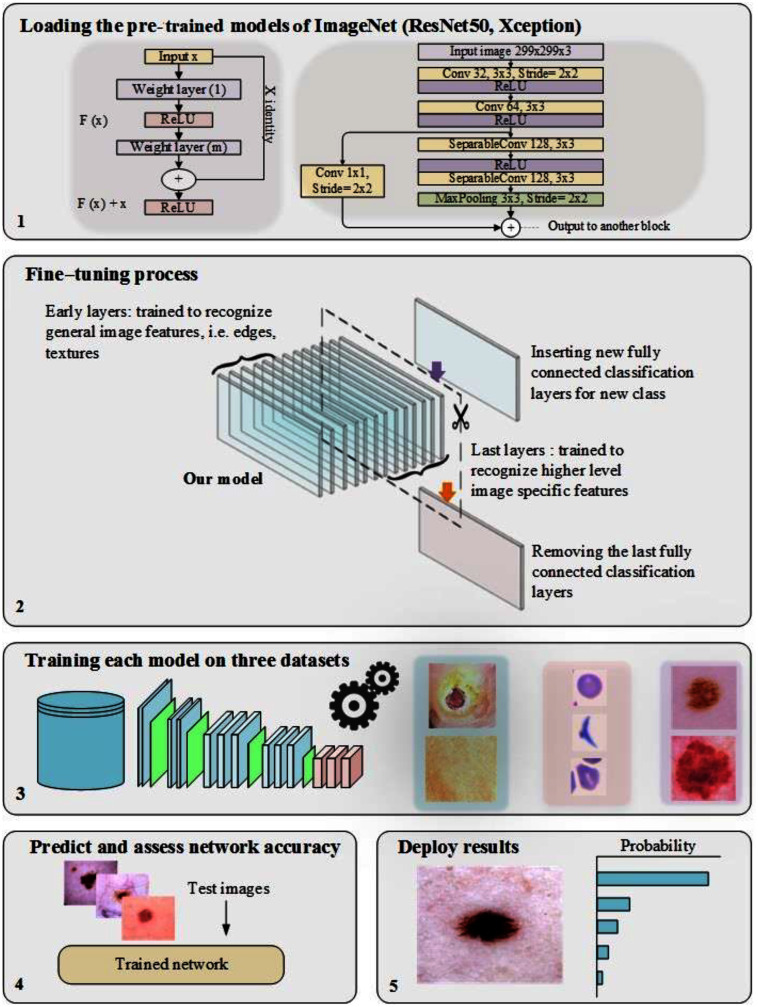
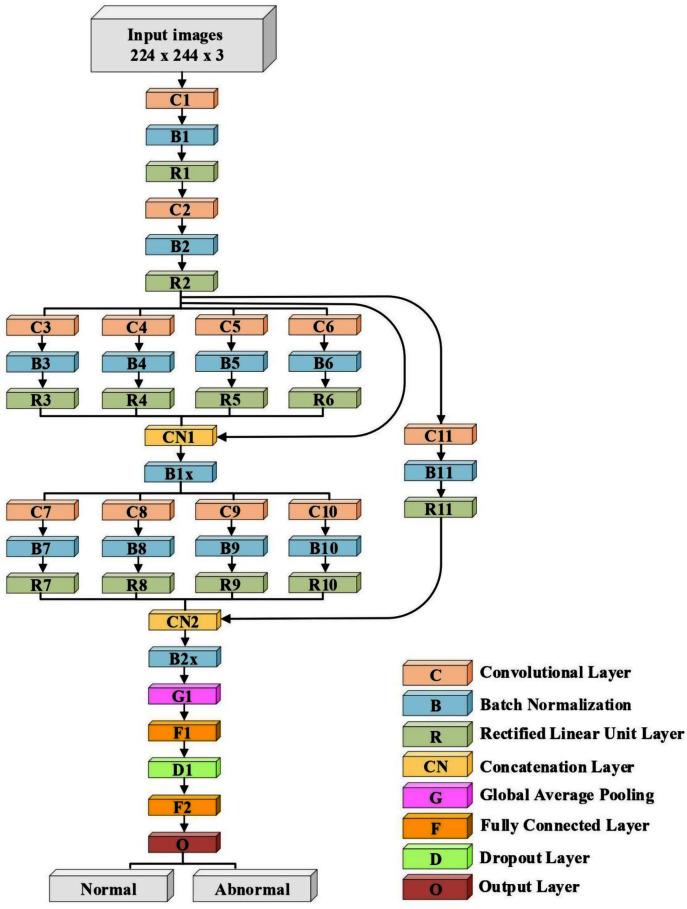
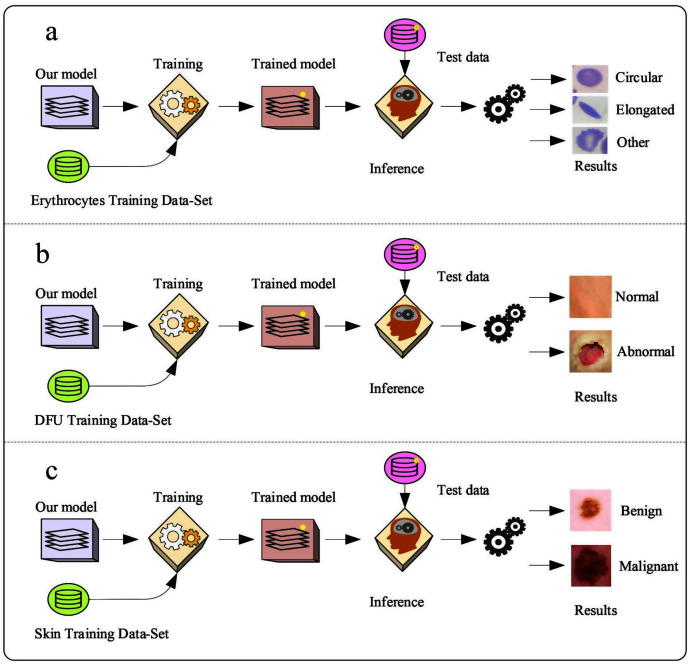
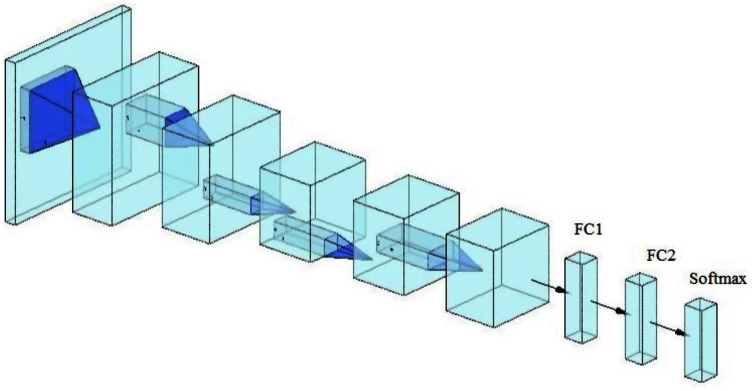
Transfer learning (TL) has been widely utilized to address the lack of training data for deep learning models. Specifically, one of the most popular uses of TL has been for the pre-trained models of the ImageNet dataset. Nevertheless, although these pre-trained models have shown an effective performance in several domains of application, those models may not offer significant benefits in all instances when dealing with medical imaging scenarios. Such models were designed to classify a thousand classes of natural images. There are fundamental differences between these models and those dealing with medical imaging tasks regarding learned features. Most medical imaging applications range from two to ten different classes, where we suspect that it would not be necessary to employ deeper learning models. This paper investigates such a hypothesis and develops an experimental study to examine the corresponding conclusions about this issue. The lightweight convolutional neural network (CNN) model and the pre-trained models have been evaluated using three different medical imaging datasets. We have trained the lightweight CNN model and the pre-trained models with two scenarios which are with a small number of images once and a large number of images once again. Surprisingly, it has been found that the lightweight model trained from scratch achieved a more competitive performance when compared to the pre-trained model. More importantly, the lightweight CNN model can be successfully trained and tested using basic computational tools and provide high-quality results, specifically when using medical imaging datasets.
迁移学习(TL)已被广泛用于解决深度学习模型训练数据不足的问题。具体而言,TL最流行的用途之一是用于ImageNet数据集的预训练模型。然而,尽管这些预训练模型在多个应用领域都表现出了有效的性能,但在处理医学成像场景时,这些模型在所有情况下可能都不会带来显著的好处。此类模型旨在对一千类自然图像进行分类。在学习到的特征方面,这些模型与处理医学成像任务的模型存在根本差异。大多数医学成像应用的类别在两到十个之间,我们怀疑在此情况下没有必要使用更深层次的学习模型。本文对这一假设进行了研究,并开展了一项实验研究来检验关于这个问题的相应结论。我们使用三个不同的医学成像数据集对轻量级卷积神经网络(CNN)模型和预训练模型进行了评估。我们在两种情况下对轻量级CNN模型和预训练模型进行了训练,一种情况是使用少量图像训练一次,另一种情况是使用大量图像训练一次。令人惊讶的是,研究发现,与预训练模型相比,从零开始训练的轻量级模型取得了更具竞争力的性能。更重要的是,轻量级CNN模型可以使用基本的计算工具成功地进行训练和测试,并提供高质量的结果,特别是在使用医学成像数据集时。