Azomahou Théophile T, Ndung'u Njuguna, Ouédraogo Mahamady
African Economic Research Consortium (AERC), Kenya.
University Clermont Auvergne, CERDI, France.
Resour Policy. 2021 Aug;72:102093. doi: 10.1016/j.resourpol.2021.102093. Epub 2021 Apr 6.
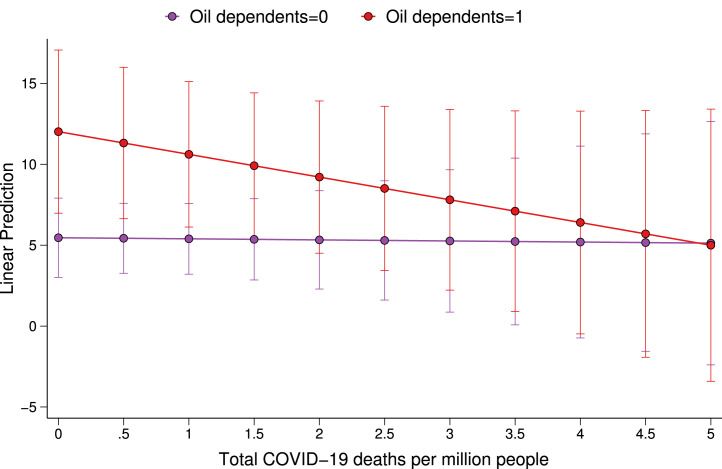
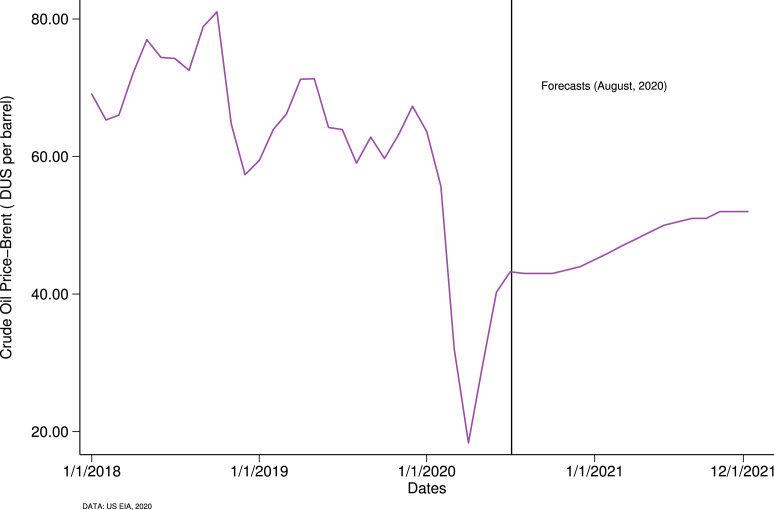
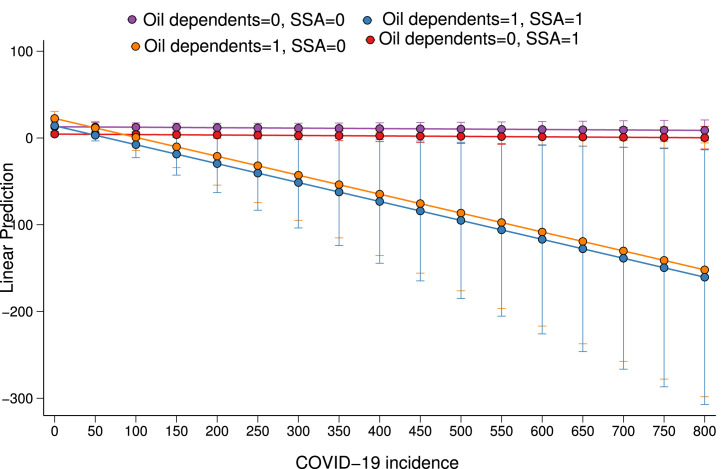
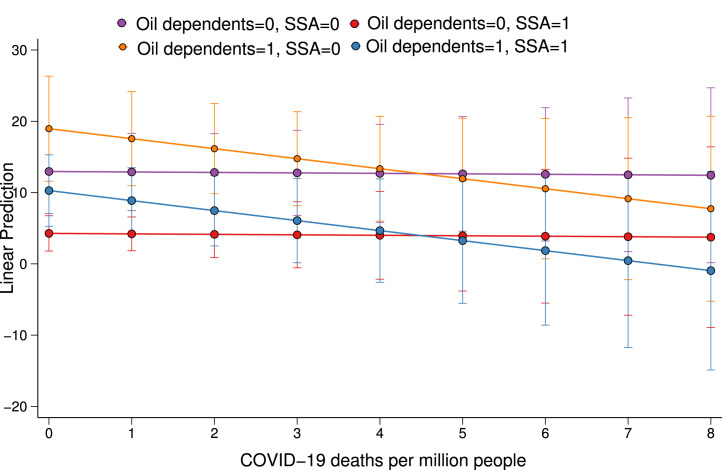
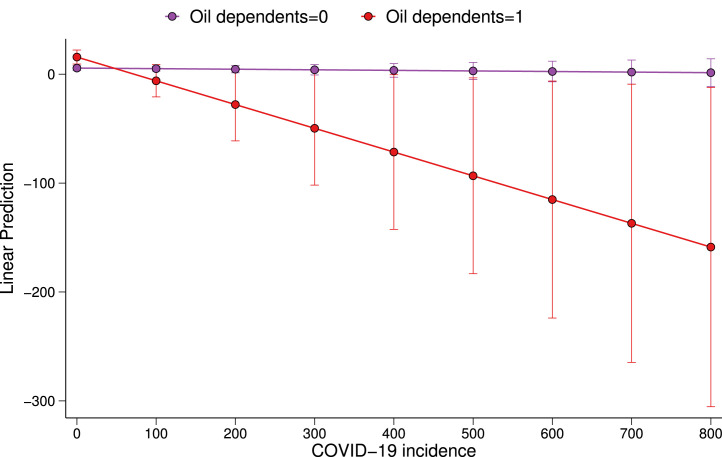
Oil-dependent countries face a twin-shock: in addition to the COVID-19 outbreak, they are facing an oil price collapse. In this paper, we study the impact of this dual shock on the forecasted GDP growth in Africa using the COVID-19 outbreak as a natural experiment. We use the IMF World Economic Outlook's GDP growth forecasts before and after the outbreak. We find that COVID-19 related deaths result in -2.75 percentage points forecasted GDP growth loss in the all sample while oil-dependence induces -7.6 percentage points loss. We document that the joint shock entails higher forecasted growth loss in oil-dependent economies (-10.75 percentage points). Based on oil price forecasts and our empirical findings, we identify five recovery policies with high potential: social safety net policy, economic diversification, innovation and technological transformation, fiscal discipline, and climate-friendly recovery policy.
除了新冠疫情爆发外,它们还面临油价暴跌。在本文中,我们以新冠疫情爆发作为一项自然实验,研究这种双重冲击对非洲预测GDP增长的影响。我们使用了国际货币基金组织《世界经济展望》中疫情爆发前后的GDP增长预测。我们发现,在所有样本中,与新冠疫情相关的死亡导致预测GDP增长损失2.75个百分点,而对石油的依赖则导致7.6个百分点的损失。我们记录到,这种联合冲击在依赖石油的经济体中导致更高的预测增长损失(10.75个百分点)。基于油价预测和我们的实证研究结果,我们确定了五项具有高潜力的复苏政策:社会安全网政策、经济多元化、创新与技术转型、财政纪律以及气候友好型复苏政策。