Suh Jung-Soo, Kim Heon-Su, Kim Tae-Jin
Department of Integrated Biological Science, Pusan National University, Pusan 46241, Republic of Korea.
Department of Biological Sciences, Pusan National University, Pusan 46241, Republic of Korea.
Sens Actuators B Chem. 2021 May 1;334:129663. doi: 10.1016/j.snb.2021.129663. Epub 2021 Feb 16.
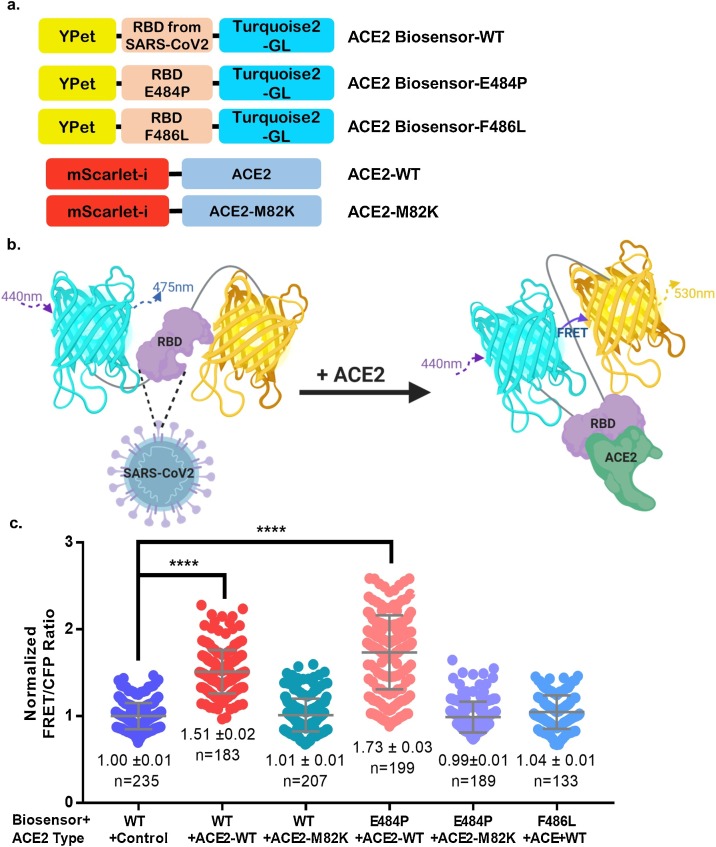
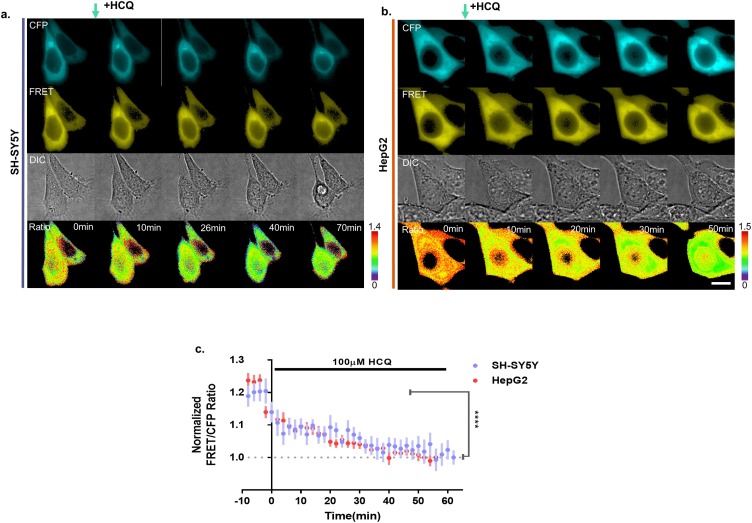
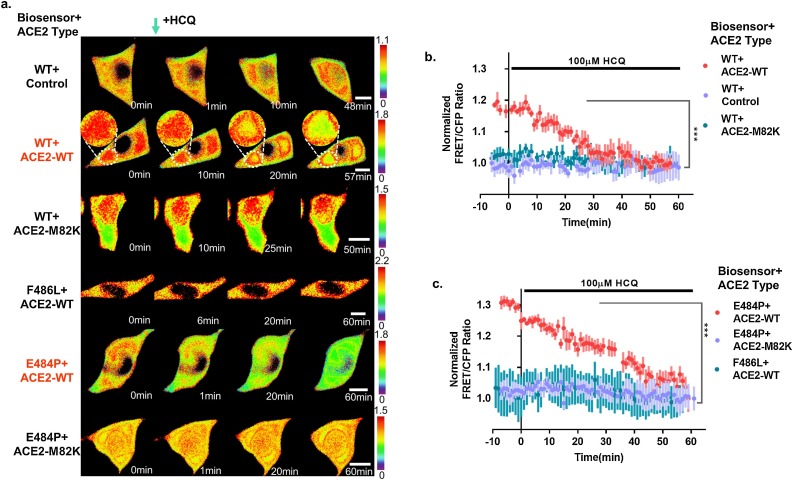
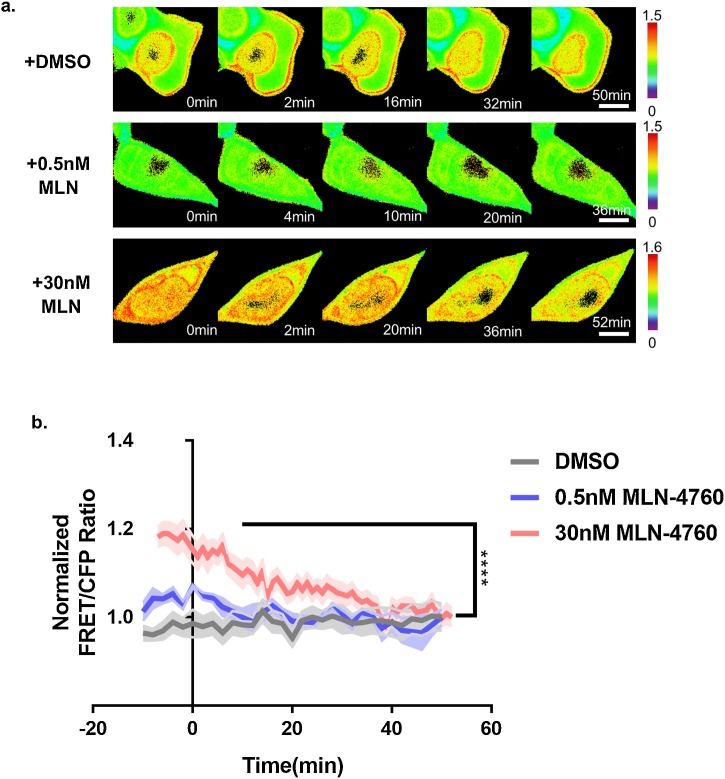
The global outbreak of coronavirus disease and rapid spread of the causative severe acute respiratory syndrome coronavirus 2 (SARS-CoV-2) represent a significant threat to human health. A key mechanism of human SARS-CoV-2 infection is initiated by the combination of human angiotensin-converting enzyme 2 (hACE2) and the receptor-binding domain (RBD) of the SARS-CoV-2-derived spike glycoprotein. Despite the importance of these protein interactions, there are still insufficient detection methods to observe their activity at the cellular level. Herein, we developed a novel fluorescence resonance energy transfer (FRET)-based hACE2 biosensor to monitor the interaction between hACE2 and SARS-CoV-2 RBD. This biosensor facilitated the visualization of hACE2-RBD activity with high spatiotemporal resolutions at the single-cell level. Further studies revealed that the FRET-based hACE2 biosensors were sensitive to both exogenous and endogenous hACE2 expression, suggesting that they might be safely applied to the early stage of SARS-CoV-2 infection without direct virus use. Therefore, our novel biosensor could potentially help develop drugs that target SARS-CoV-2 by inhibiting hACE2-RBD interaction.
冠状病毒病的全球爆发以及致病的严重急性呼吸综合征冠状病毒2(SARS-CoV-2)的迅速传播对人类健康构成了重大威胁。人类感染SARS-CoV-2的一个关键机制是由人类血管紧张素转换酶2(hACE2)与SARS-CoV-2衍生的刺突糖蛋白的受体结合域(RBD)结合引发的。尽管这些蛋白质相互作用很重要,但仍缺乏足够的检测方法来在细胞水平观察它们的活性。在此,我们开发了一种基于新型荧光共振能量转移(FRET)的hACE2生物传感器,以监测hACE2与SARS-CoV-2 RBD之间的相互作用。这种生物传感器有助于在单细胞水平以高时空分辨率可视化hACE2-RBD活性。进一步的研究表明,基于FRET的hACE2生物传感器对外源性和内源性hACE2表达均敏感,这表明它们可能无需直接使用病毒即可安全应用于SARS-CoV-2感染的早期阶段。因此,我们的新型生物传感器可能有助于通过抑制hACE2-RBD相互作用来开发针对SARS-CoV-2的药物。