Department of Microbiology and Hygiene, Bangladesh Agricultural University, Mymensingh, 2202, Bangladesh.
Graduate School of Life and Environmental Sciences, Osaka Prefecture University, Osaka, 598-8531, Japan.
BMC Infect Dis. 2021 Nov 7;21(1):1139. doi: 10.1186/s12879-021-06834-w.
The alarming rise in multi-drug resistant (MDR) zoonotic pathogens, including Campylobacter spp., has been threatening the health sector globally. In Bangladesh, despite rapid growth in poultry sector little is known about the potential risks of zoonotic pathogens in homestead duck flocks. The aim of this study was to understand the occurrence, species diversity, and multi-drug resistance in Campylobacter spp., and identify the associated risk factors in duck farms in Bangladesh.
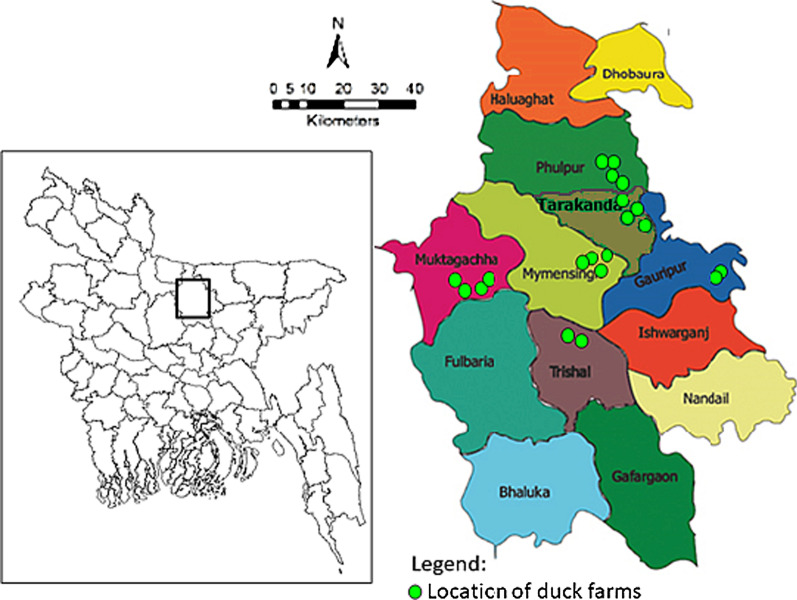
The study involved 20 duck farms at 6 sub-districts of Mymensingh, Bangladesh. Monthly occurrence of Campylobacter spp. in potential sources at the farms during February-September, 2018, was detected by culture and PCR-based methods. Campylobacter isolates were examined for resistance to different antimicrobials. Risk factors, concerning climatic and environmental disposition, farm management, and anthropogenic practices, of Campylobacter infection were estimated by participatory epidemiological tools.
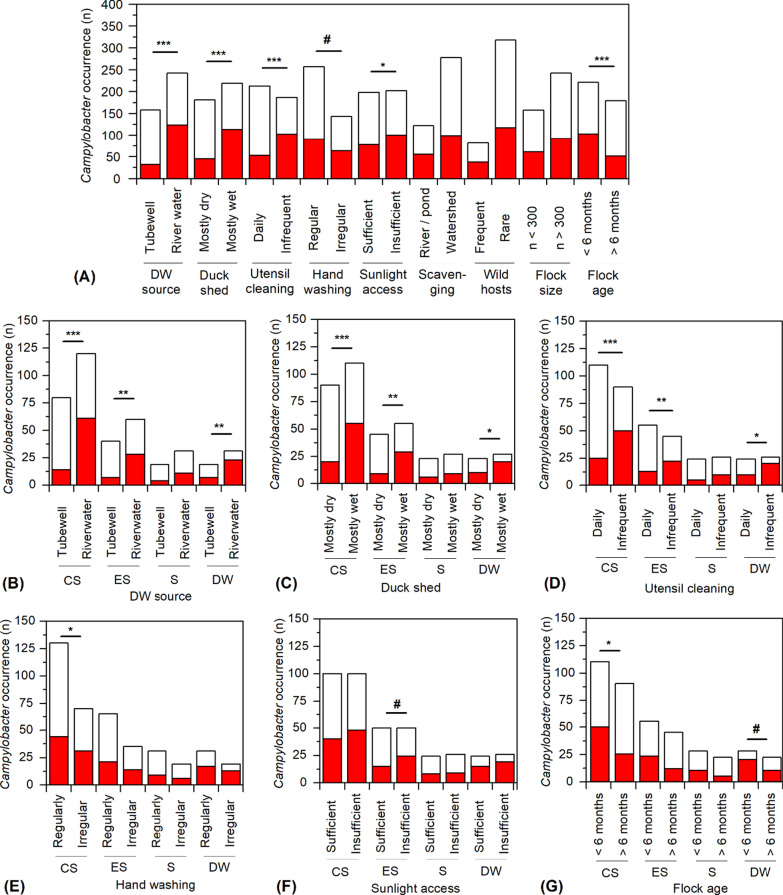
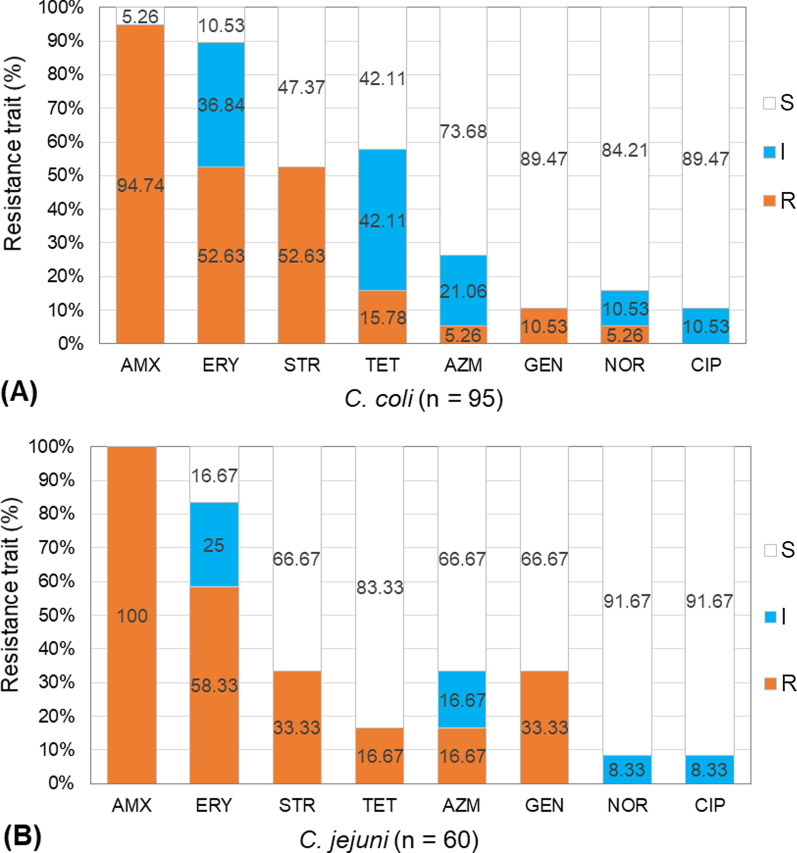
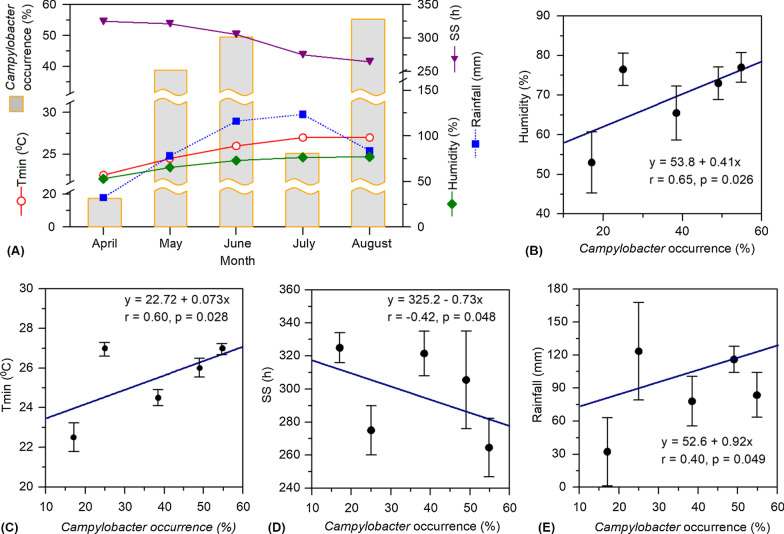
Occurrence of Campylobacter spp. was detected in overall 36.90% (155/420) samples, more frequently in drinking water (60%, 30/50), followed by cloacal swab (37.50%, 75/200), egg surface swab (35%, 35/100) and soil of the duck resting places (30%, 15/50) but was not detected in feed samples (n = 20). PCR assays distinguished the majority (61.30%, 95/155) of the isolates as C. coli, while the rest (38.70%, 60/155) were C. jejuni. Notably, 41.7% (25/60) and 31.6% (30/95) strains of C. jejuni and C. coli, respectively, were observed to be MDR. The dynamics of Campylobacter spp., distinctly showing higher abundance during summer and late-monsoon, correlated significantly with temperature, humidity, and rainfall, while sunshine hours had a negative influence. Anthropogenic management-related factors, including, inadequate hygiene practices, use of untreated river water, wet duck shed, flock age (1-6 months), and unscrupulous use of antimicrobials were identified to enhance the risk of MDR Campylobacter infection.
The present study clearly demonstrates that duck farms contribute to the enhanced occurrence and spread of potentially pathogenic and MDR C. coli and C. jejuni strains and the bacterial dynamics are governed by a combined interaction of environmental and anthropogenic factors. A long-term holistic research at the environment-animal-human interface would be integral to divulge health risk reduction approaches tackling the spread of Campylobacter spp. from duck farms.
包括弯曲杆菌属在内的多药耐药(MDR)人畜共患病原体的惊人增长,一直在威胁着全球的卫生部门。在孟加拉国,尽管家禽业迅速发展,但人们对家禽养殖场中同源鸭群中可能存在的人畜共患病原体的潜在风险知之甚少。本研究旨在了解弯曲杆菌属的发生、物种多样性和多药耐药性,并确定孟加拉国养鸭场中弯曲杆菌属的相关危险因素。
本研究涉及孟加拉国迈门辛地区 6 个分区的 20 个养鸭场。2018 年 2 月至 9 月期间,通过培养和基于 PCR 的方法每月检测农场中潜在来源的弯曲杆菌属。对弯曲杆菌分离株进行不同抗生素耐药性检测。采用参与式流行病学工具评估与气候和环境状况、农场管理和人为实践有关的弯曲杆菌感染危险因素。
在总共 420 份样本中,36.90%(155/420)的样本中检测到弯曲杆菌属,饮用水中更为常见(60%,30/50),其次是泄殖腔拭子(37.50%,75/200)、蛋表面拭子(35%,35/100)和鸭休息场所的土壤(30%,15/50),但在饲料样本(n=20)中未检测到。PCR 检测将大多数(61.30%,95/155)分离株鉴定为大肠弯曲杆菌,其余(38.70%,60/155)为空肠弯曲杆菌。值得注意的是,41.7%(25/60)和 31.6%(30/95)的空肠弯曲杆菌和大肠弯曲杆菌菌株分别表现为多药耐药。弯曲杆菌属的动态变化,夏季和季末明显更为丰富,与温度、湿度和降雨呈显著相关,而日照时间则有负面影响。人为管理相关因素,包括卫生实践不足、使用未经处理的河水、潮湿的鸭舍、鸭群年龄(1-6 个月)和滥用抗生素,被确定为增加多药耐药弯曲杆菌感染的风险因素。
本研究清楚地表明,养鸭场有助于增加潜在致病性和多药耐药的大肠弯曲杆菌和空肠弯曲杆菌菌株的发生和传播,细菌动态受环境和人为因素的共同影响。在环境-动物-人界面进行长期的整体研究,对于揭示减少鸭场弯曲杆菌属传播的健康风险的方法至关重要。