Sanya Nanfan Research Institute of Hainan University, Hainan, China.
College of Plant Protection, Hainan University, Hainan, China.
PLoS One. 2021 Nov 8;16(11):e0258508. doi: 10.1371/journal.pone.0258508. eCollection 2021.
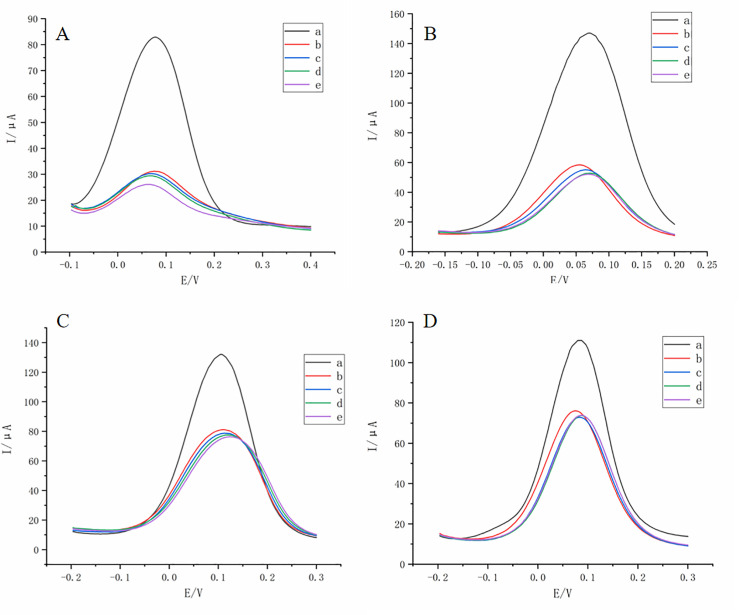
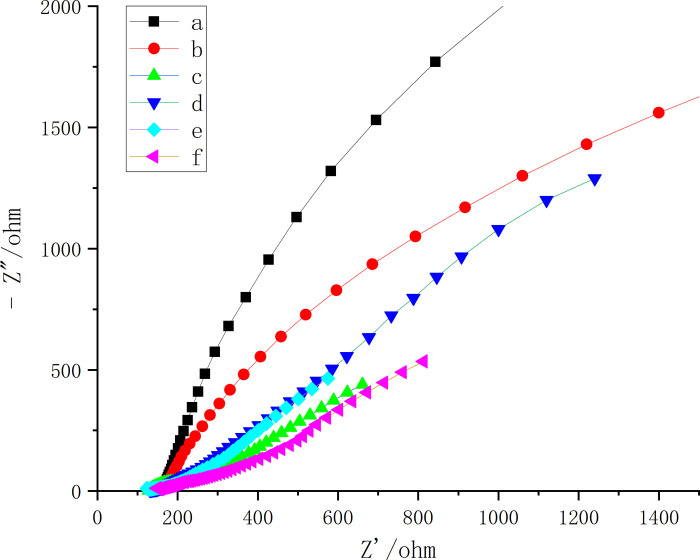
In order to achieve rapid detection of thiamethoxam residues in mango, cowpea and water, this study modified the screen printed carbon electrode (SPCE) to make a specific molecular imprinting sensor (Thiamethoxam-MIP/Au/rGO/SPCE) for thiamethoxam. An integrated smartphone platform was also built for thiamethoxam residue analysis. The performance of the complete system was analyzed by cyclic voltammetry (CV) and differential pulse voltammetry (DPV). The system was then applied for the rapid determination of thiamethoxam residues in water, mango and cowpea samples. The results showed that the molecular sensor showed good linearity in the range 0.5-3.0 μmol/L of thiamethoxam. The detection limit of thiamethoxam was 0.5 μmol/L. Moreover, the sensor had good reproducibility and anti-interference performance. The average recovery rates of the pesticide residues in water, mango and cowpea samples were in the range of 90-110% with relative standard deviations < 5%. The rapid detection system for thiamethoxam residue constructed in this study was simple, reliable, reproducible and had strong anti-interference. It has broad application prospects in the field detection of thiamethoxam residue, and serves as a valuable reference for the further development of rapid detection technology of pesticide residues in the field of environment and food safety.
为实现对芒果、豇豆和水中噻虫嗪残留的快速检测,本研究对丝网印刷碳电极(SPCE)进行了改进,制作了噻虫嗪特异性分子印迹传感器(Thiamethoxam-MIP/Au/rGO/SPCE)。同时还构建了集成智能手机的噻虫嗪残留分析平台。通过循环伏安法(CV)和差分脉冲伏安法(DPV)对整个系统的性能进行了分析。然后,将该系统应用于水、芒果和豇豆样品中噻虫嗪残留的快速测定。结果表明,分子传感器在噻虫嗪 0.5-3.0 μmol/L 范围内具有良好的线性关系。噻虫嗪的检测限为 0.5 μmol/L。此外,该传感器具有良好的重现性和抗干扰性能。水、芒果和豇豆样品中农药残留的平均回收率在 90-110%之间,相对标准偏差<5%。本研究构建的噻虫嗪残留快速检测系统简单、可靠、重现性好,抗干扰能力强,在噻虫嗪残留的现场检测领域具有广阔的应用前景,为环境和食品安全领域农药残留快速检测技术的进一步发展提供了有价值的参考。