Mremi Irene R, George Janeth, Rumisha Susan F, Sindato Calvin, Kimera Sharadhuli I, Mboera Leonard E G
Department of Veterinary Medicine and Public Health, Sokoine University of Agriculture, Morogoro, Tanzania.
SACIDS Foundation for One Health, Sokoine University of Agriculture, Morogoro, Tanzania.
One Health Outlook. 2021 Nov 9;3(1):22. doi: 10.1186/s42522-021-00052-9.
This systematic review aimed to analyse the performance of the Integrated Disease Surveillance and Response (IDSR) strategy in Sub-Saharan Africa (SSA) and how its implementation has embraced advancement in information technology, big data analytics techniques and wealth of data sources.
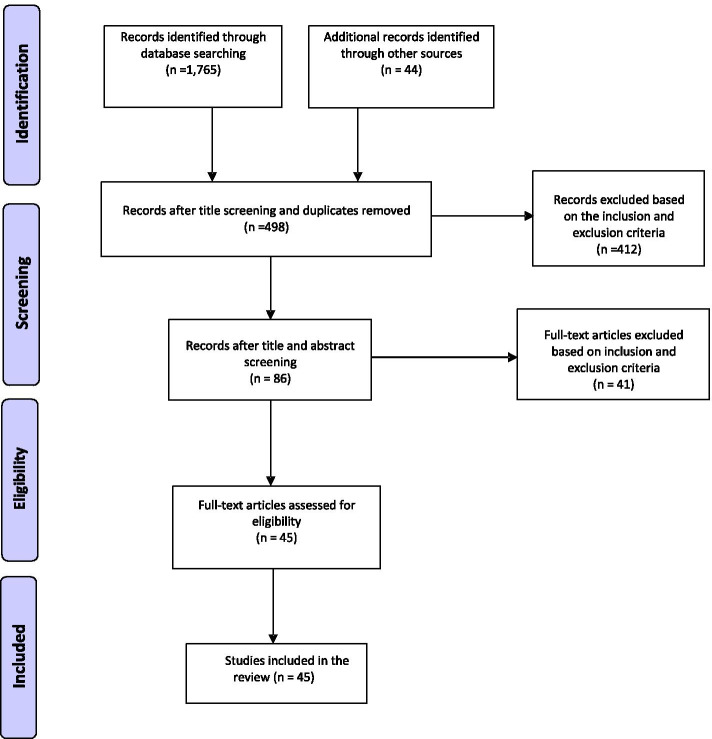
HINARI, PubMed, and advanced Google Scholar databases were searched for eligible articles. The review followed the Preferred Reporting Items for Systematic Reviews and Meta-Analysis Protocols.
A total of 1,809 articles were identified and screened at two stages. Forty-five studies met the inclusion criteria, of which 35 were country-specific, seven covered the SSA region, and three covered 3-4 countries. Twenty-six studies assessed the IDSR core functions, 43 the support functions, while 24 addressed both functions. Most of the studies involved Tanzania (9), Ghana (6) and Uganda (5). The routine Health Management Information System (HMIS), which collects data from health care facilities, has remained the primary source of IDSR data. However, the system is characterised by inadequate data completeness, timeliness, quality, analysis and utilisation, and lack of integration of data from other sources. Under-use of advanced and big data analytical technologies in performing disease surveillance and relating multiple indicators minimises the optimisation of clinical and practice evidence-based decision-making.
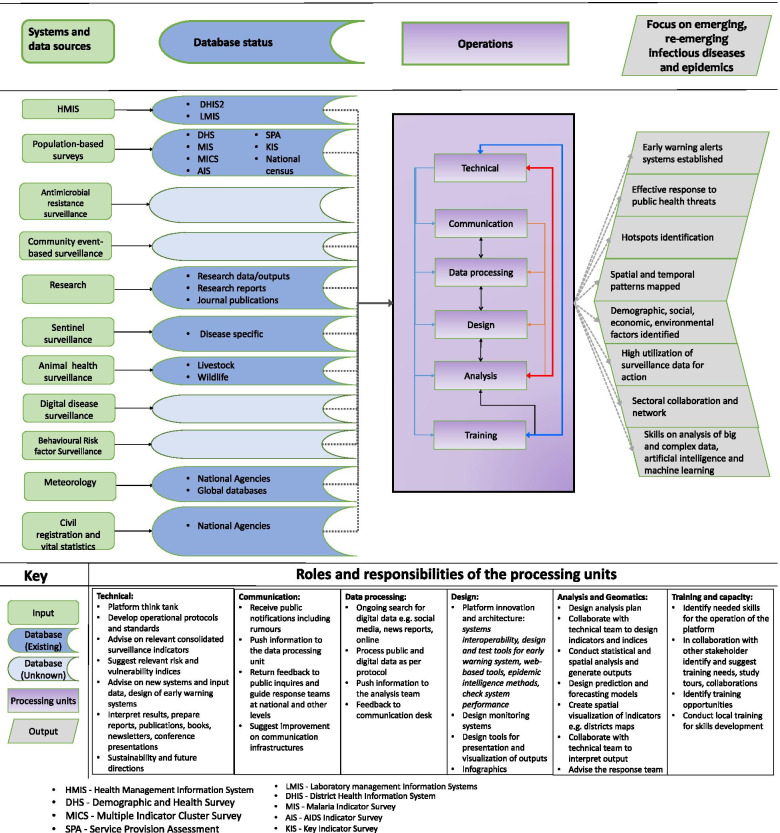
This review indicates that most countries in SSA rely mainly on traditional indicator-based disease surveillance utilising data from healthcare facilities with limited use of data from other sources. It is high time that SSA countries consider and adopt multi-sectoral, multi-disease and multi-indicator platforms that integrate other sources of health information to provide support to effective detection and prompt response to public health threats.
本系统评价旨在分析综合疾病监测与应对(IDSR)策略在撒哈拉以南非洲(SSA)的实施情况,以及该策略在实施过程中如何采用信息技术、大数据分析技术的进展和丰富的数据源。
在HINARI、PubMed和高级谷歌学术数据库中检索符合条件的文章。本评价遵循系统评价与Meta分析方案的首选报告项目。
在两个阶段共识别并筛选出1809篇文章。45项研究符合纳入标准,其中35项针对特定国家,7项涵盖SSA地区,3项涵盖3 - 4个国家。26项研究评估了IDSR的核心功能,43项评估了支持功能,24项同时涉及这两种功能。大多数研究涉及坦桑尼亚(9项)、加纳(6项)和乌干达(5项)。从医疗机构收集数据的常规卫生管理信息系统(HMIS)仍然是IDSR数据的主要来源。然而,该系统存在数据完整性、及时性、质量、分析和利用不足的问题,且缺乏来自其他来源数据的整合。在进行疾病监测和关联多个指标时,先进和大数据分析技术的使用不足,这使得基于临床和实践证据的决策优化程度降至最低。
本评价表明,SSA的大多数国家主要依赖基于传统指标的疾病监测,利用医疗机构的数据,而对其他来源数据的使用有限。SSA国家早应考虑并采用多部门、多疾病和多指标平台,整合其他健康信息来源,以支持对公共卫生威胁的有效检测和及时应对。