Shuja Junaid, Alanazi Eisa, Alasmary Waleed, Alashaikh Abdulaziz
Department of Computer Science, COMSATS University Islamabad, Abbottabad Campus, Islamabad, Pakistan.
Department of Computer Engineering, Umm Al-Qura University, Makkah, Saudi Arabia.
Appl Intell (Dordr). 2021;51(3):1296-1325. doi: 10.1007/s10489-020-01862-6. Epub 2020 Sep 21.
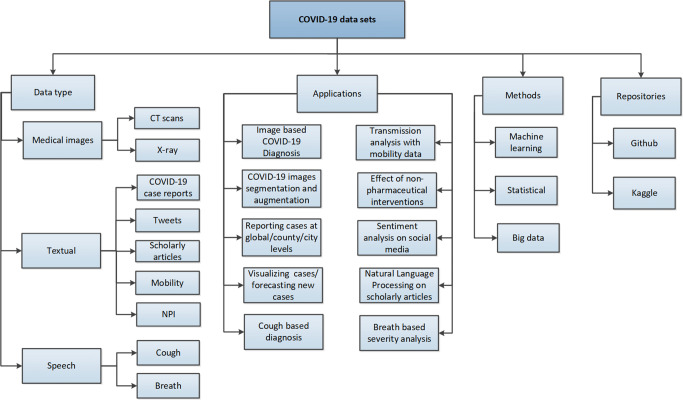
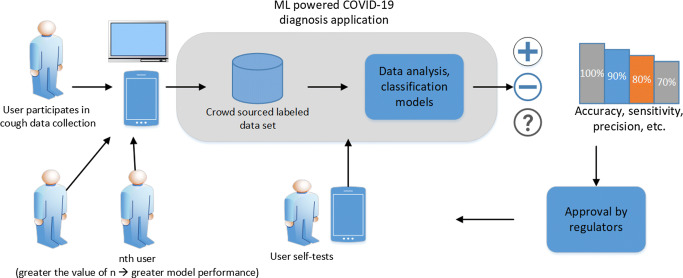
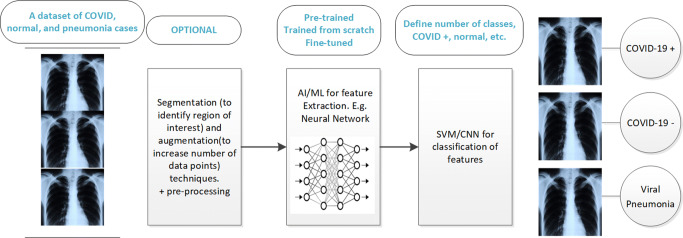
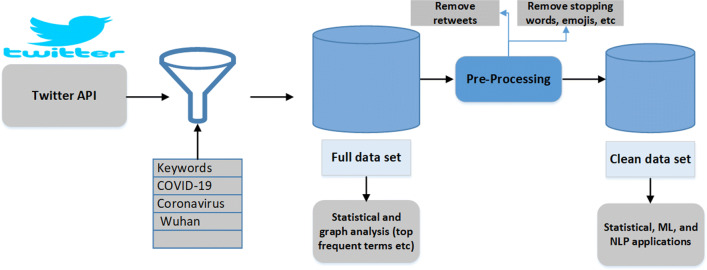
In December 2019, a novel virus named COVID-19 emerged in the city of Wuhan, China. In early 2020, the COVID-19 virus spread in all continents of the world except Antarctica, causing widespread infections and deaths due to its contagious characteristics and no medically proven treatment. The COVID-19 pandemic has been termed as the most consequential global crisis since the World Wars. The first line of defense against the COVID-19 spread are the non-pharmaceutical measures like social distancing and personal hygiene. The great pandemic affecting billions of lives economically and socially has motivated the scientific community to come up with solutions based on computer-aided digital technologies for diagnosis, prevention, and estimation of COVID-19. Some of these efforts focus on statistical and Artificial Intelligence-based analysis of the available data concerning COVID-19. All of these scientific efforts necessitate that the data brought to service for the analysis should be open source to promote the extension, validation, and collaboration of the work in the fight against the global pandemic. Our survey is motivated by the open source efforts that can be mainly categorized as COVID-19 diagnosis from CT scans, X-ray images, and cough sounds, COVID-19 case reporting, transmission estimation, and prognosis from epidemiological, demographic, and mobility data, COVID-19 emotional and sentiment analysis from social media, and knowledge-based discovery and semantic analysis from the collection of scholarly articles covering COVID-19. We survey and compare research works in these directions that are accompanied by open source data and code. Future research directions for data-driven COVID-19 research are also debated. We hope that the article will provide the scientific community with an initiative to start open source extensible and transparent research in the collective fight against the COVID-19 pandemic.
2019年12月,一种名为新冠病毒(COVID-19)的新型病毒在中国武汉市出现。2020年初,新冠病毒在除南极洲以外的世界各大洲传播,因其传染性以及缺乏医学上已证实的治疗方法,导致了广泛的感染和死亡。新冠疫情被称为自两次世界大战以来最严重的全球危机。对抗新冠病毒传播的第一道防线是非药物措施,如保持社交距离和个人卫生。这场影响数十亿人经济和社会生活的大流行病促使科学界基于计算机辅助数字技术提出针对新冠病毒的诊断、预防和评估解决方案。其中一些努力聚焦于对有关新冠病毒的现有数据进行统计分析和基于人工智能的分析。所有这些科学努力都要求用于分析的数据应为开源数据,以促进抗击全球大流行病工作的扩展、验证和协作。我们的调查受到开源努力的推动,这些努力主要可分为:通过CT扫描、X光图像和咳嗽声音进行新冠病毒诊断;根据流行病学、人口统计学和流动性数据进行新冠病毒病例报告、传播估计和预后分析;通过社交媒体进行新冠病毒情绪和情感分析;以及从涵盖新冠病毒的学术文章集合中进行基于知识的发现和语义分析。我们调查并比较了这些方向上伴随开源数据和代码的研究工作。还讨论了数据驱动的新冠病毒研究的未来研究方向。我们希望本文能为科学界提供一个契机,在共同抗击新冠疫情的斗争中开展开源、可扩展且透明的研究。