Naghieh Saman, Chen Xiongbiao
Division of Biomedical Engineering, College of Engineering, University of Saskatchewan, Saskatoon, SK, S7N 5A9, Canada.
Department of Mechanical Engineering, College of Engineering, University of Saskatchewan, Saskatoon, SK, S7N 5A9, Canada.
J Pharm Anal. 2021 Oct;11(5):564-579. doi: 10.1016/j.jpha.2021.02.001. Epub 2021 Feb 10.
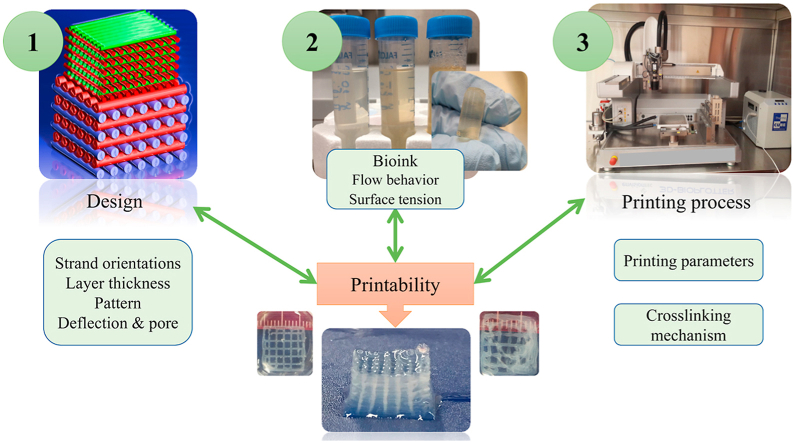
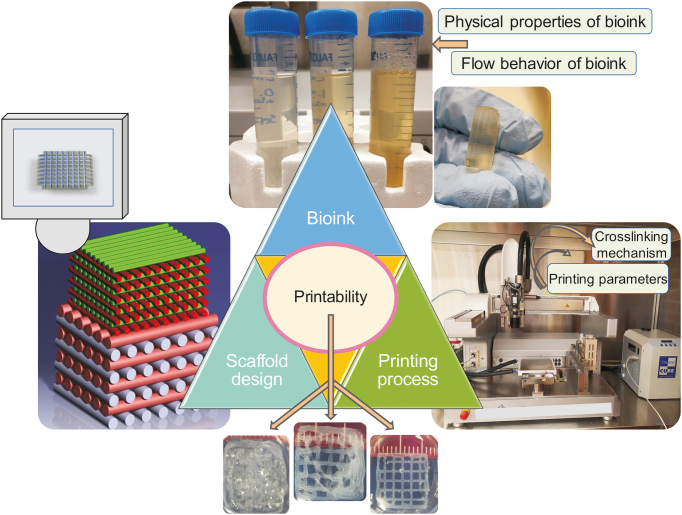
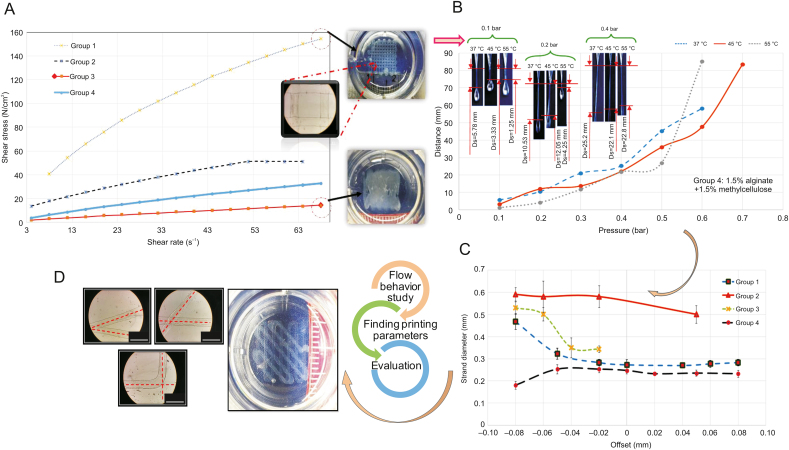
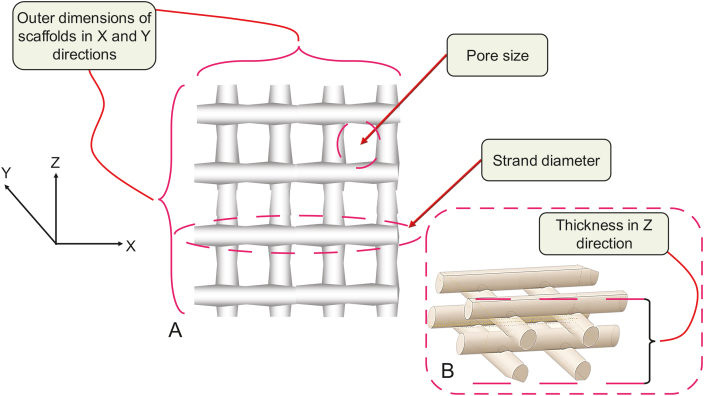
Three-dimensional (3D) extrusion-based bioprinting is widely used in tissue engineering and regenerative medicine to create cell-incorporated constructs or scaffolds based on the extrusion technique. One critical issue in 3D extrusion-based bioprinting is printability or the capability to form and maintain reproducible 3D scaffolds from bioink (a mixture of biomaterials and cells). Research shows that printability can be affected by many factors or parameters, including those associated with the bioink, printing process, and scaffold design, but these are far from certain. This review highlights recent developments in the printability assessment of extrusion-based bioprinting with a focus on the definition of printability, printability measurements and characterization, and printability-affecting factors. Key issues and challenges related to printability are also identified and discussed, along with approaches or strategies for improving printability in extrusion-based bioprinting.
基于三维(3D)挤压的生物打印在组织工程和再生医学中被广泛应用,用于基于挤压技术创建包含细胞的构建体或支架。基于3D挤压的生物打印中的一个关键问题是可打印性,即从生物墨水(生物材料和细胞的混合物)形成并维持可重复的3D支架的能力。研究表明,可打印性会受到许多因素或参数的影响,包括与生物墨水、打印过程和支架设计相关的因素,但这些因素远未明确。本综述重点介绍了基于挤压的生物打印可打印性评估的最新进展,重点关注可打印性的定义、可打印性测量和表征以及影响可打印性的因素。还确定并讨论了与可打印性相关的关键问题和挑战,以及提高基于挤压的生物打印可打印性的方法或策略。