The Jackson Laboratory, Bar Harbor, ME 04609, USA; The University of Maine Graduate School of Biomedical Sciences, Orono, ME 04469, USA.
The Jackson Laboratory, Bar Harbor, ME 04609, USA; The University of Maine Graduate School of Biomedical Sciences, Orono, ME 04469, USA.
Neurobiol Dis. 2021 Dec;161:105558. doi: 10.1016/j.nbd.2021.105558. Epub 2021 Nov 10.
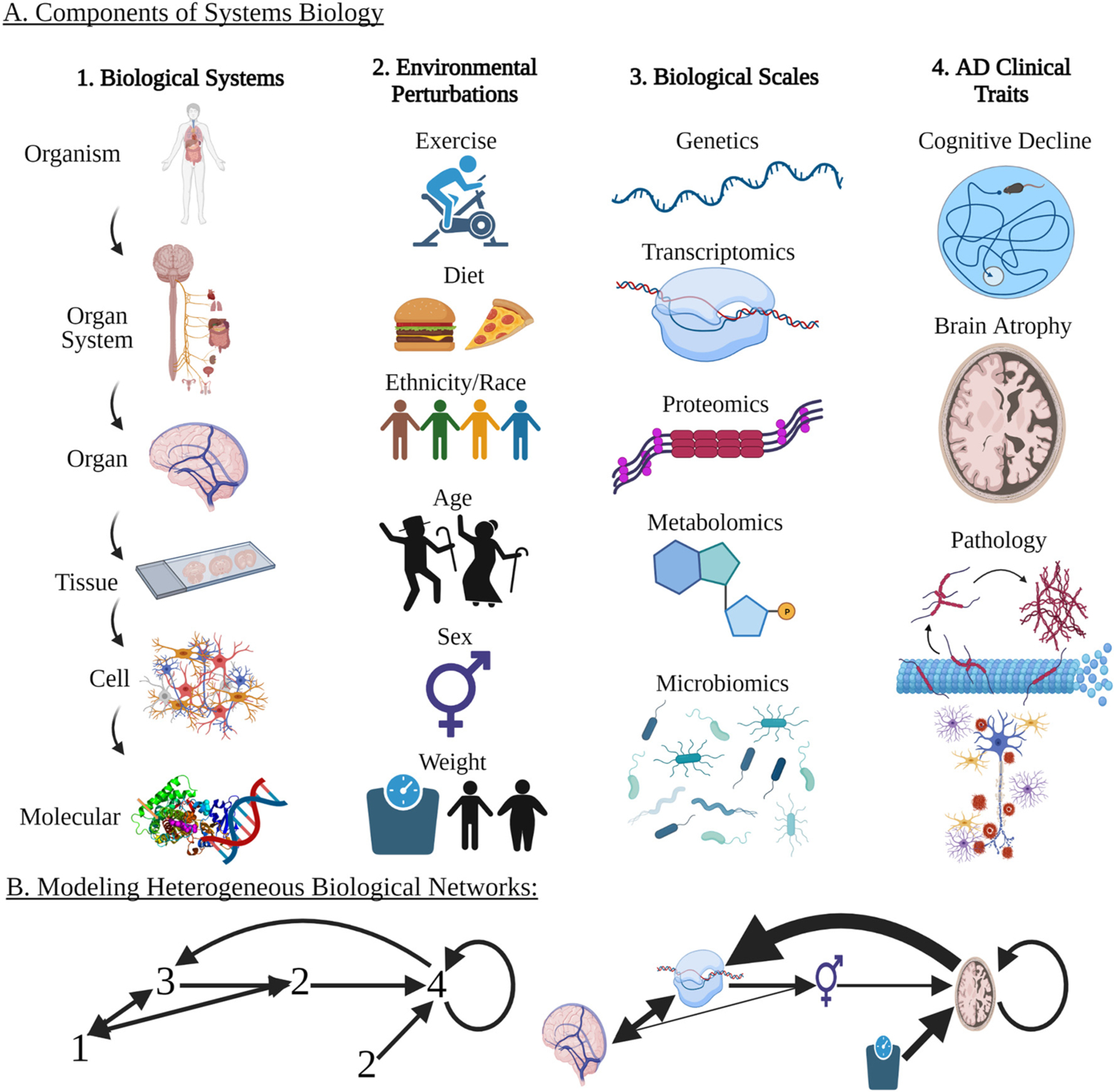
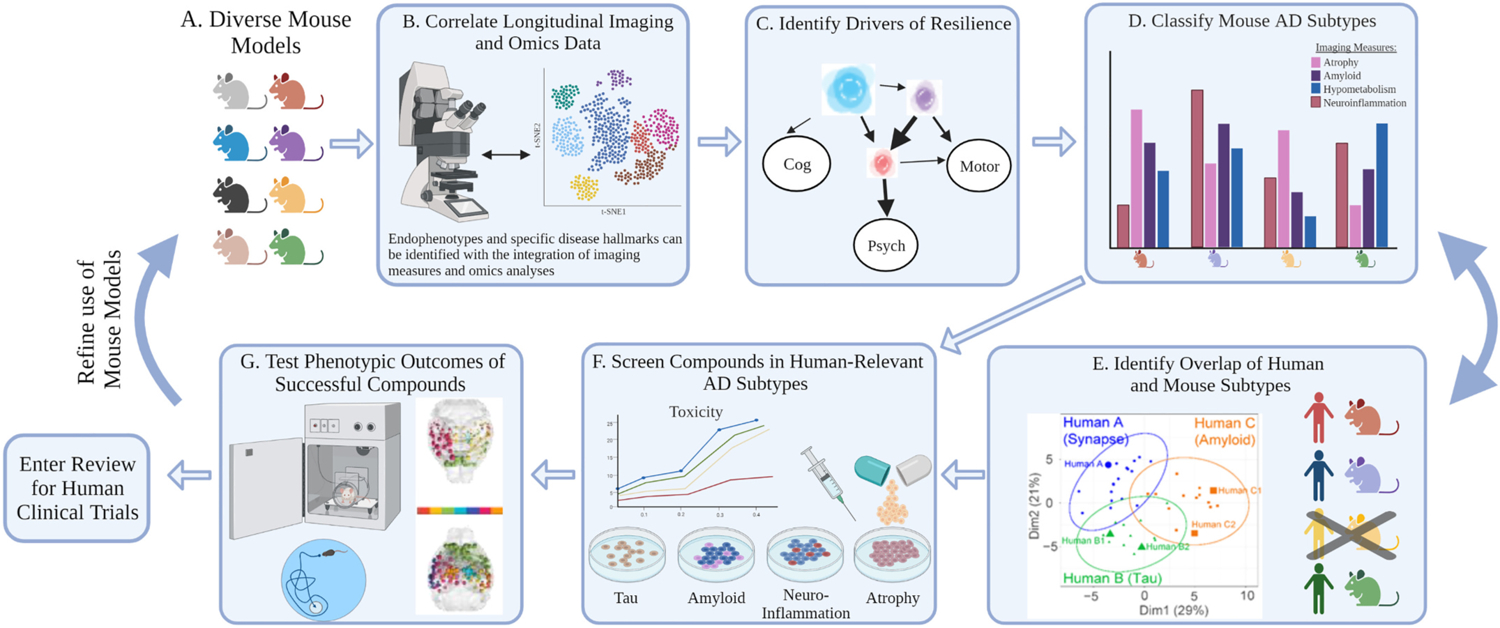
Alzheimer's disease (AD) is a complex disease that is mediated by numerous factors and manifests in various forms. A systems biology approach to studying AD involves analyses of various body systems, biological scales, environmental elements, and clinical outcomes to understand the genotype to phenotype relationship that potentially drives AD development. Currently, there are many research investigations probing how modifiable and nonmodifiable factors impact AD symptom presentation. This review specifically focuses on how imaging modalities can be integrated into systems biology approaches using model mouse populations to link brain level functional and structural changes to disease onset and progression. Combining imaging and omics data promotes the classification of AD into subtypes and paves the way for precision medicine solutions to prevent and treat AD.
阿尔茨海默病(AD)是一种由多种因素介导并表现出多种形式的复杂疾病。采用系统生物学方法研究 AD 涉及对各种身体系统、生物尺度、环境因素和临床结果进行分析,以了解潜在驱动 AD 发展的基因型与表型关系。目前,有许多研究调查了可改变和不可改变因素如何影响 AD 症状表现。本综述特别关注如何使用模型小鼠种群将成像方式整合到系统生物学方法中,以将大脑水平的功能和结构变化与疾病的发生和进展联系起来。将成像和组学数据相结合可以将 AD 分为亚型,并为预防和治疗 AD 的精准医疗解决方案铺平道路。