Department of Biology and Pharmaceutical Botany, Medical University of Gdansk, 80-416 Gdansk, Poland.
Department of Pharmaceutical Technology, Medical University of Gdansk, 80-416 Gdansk, Poland.
Molecules. 2021 Oct 29;26(21):6547. doi: 10.3390/molecules26216547.
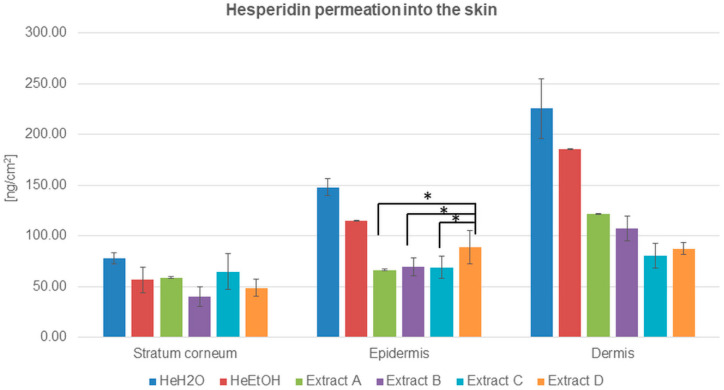
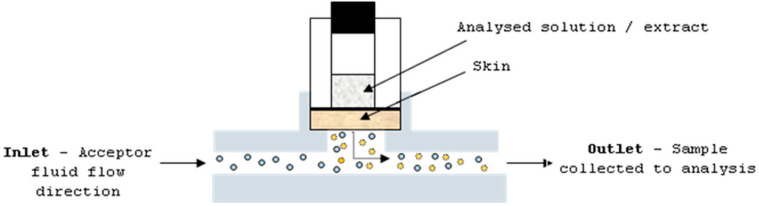
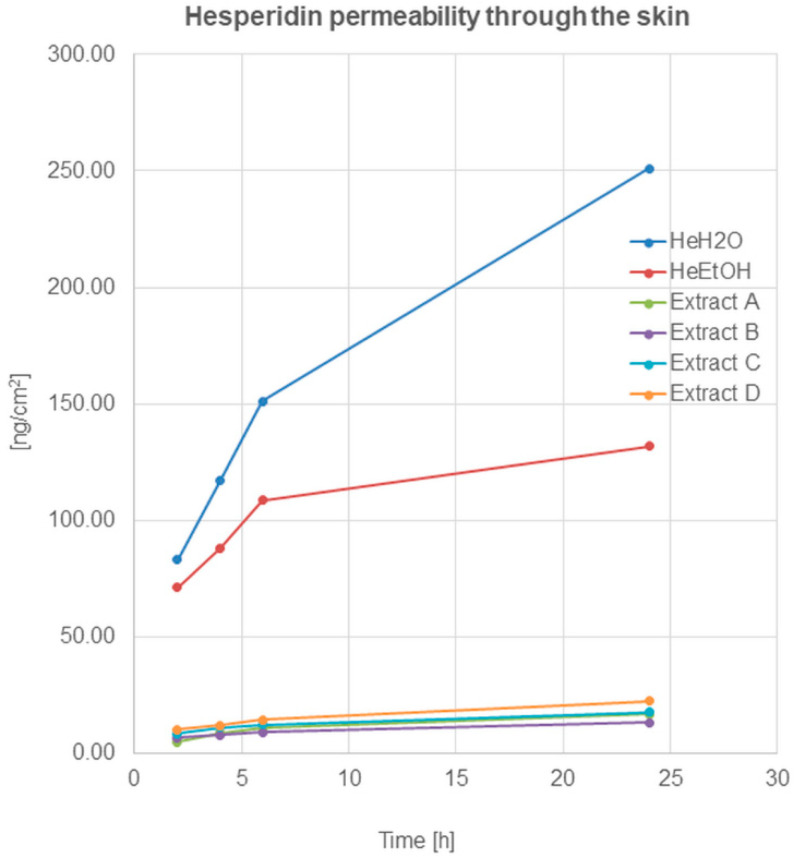
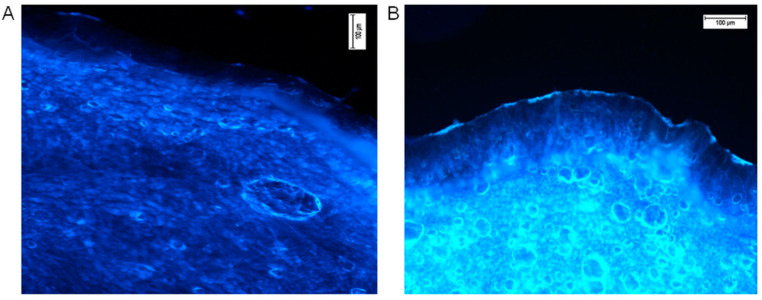
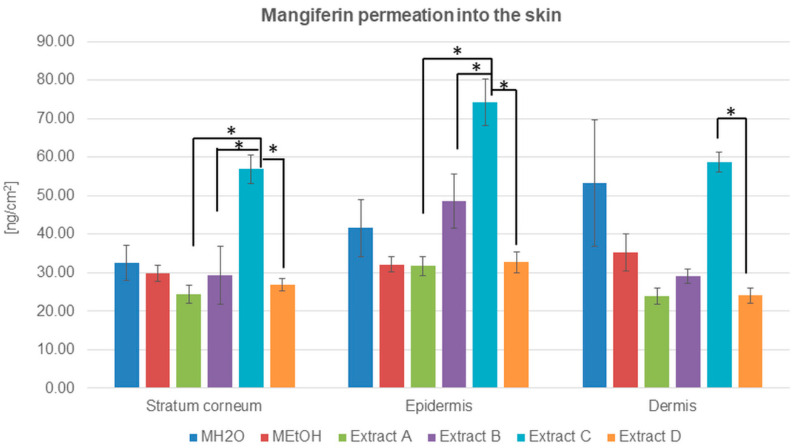
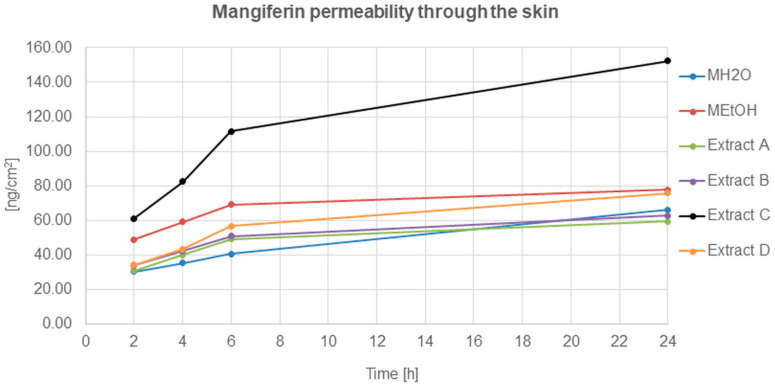
Polyphenolic compounds-mangiferin and hesperidin-are, among others, the most important secondary metabolites of African shrub sp. (honeybush). The aim of this study was to compare the percutaneous absorption of mangiferin and hesperidin from solutions (water, ethanol 50%, ()) and extracts obtained from green and fermented honeybush (water, ethanol 50%, ()). Research was performed with the Bronaugh cells, on human dorsal skin. The mangiferin and hesperidin distributions in skin layers (stratum corneum, epidermis, and dermis) and in acceptor fluid (in every 2, 4, 6, and 24 h) were evaluated by HPLC-Photodiode Array Coulometric and Coulometric Electrochemical Array Detection. The transdermal distribution of hesperidin was also demonstrated by fluorescence microscopy. Results indicated that mangiferin and hesperidin were able to cross the stratum corneum and penetrate into the epidermis and dermis. An advantage of hesperidin penetration into the skin from the water over ethanol solution was observed (451.02 ± 14.50 vs. 357.39 ± 4.51 ng/cm), as well as in the mangiferin study (127.56 ± 9.49 vs. 97.23 ± 2.92 ng/cm). Furthermore, mangiferin penetration was more evident from nonfermented honeybush ethanol extract (189.85 ± 4.11 ng/cm) than from solutions. The permeation of mangiferin and hesperidin through the skin to the acceptor fluid was observed regardless of whether the solution or the honeybush extract was applied. The highest ability to permeate the skin was demonstrated for the water solution of hesperidin (250.92 ± 16.01 ng/cm), while the hesperidin occurring in the extracts permeated in a very low capacity. Mangiferin from nonfermented honeybush ethanol extract had the highest ability to permeate to the acceptor fluid within 24 h (152.36 ± 8.57 ng/cm).
多酚化合物——芒果苷和柚皮苷——是非洲灌木(蜜腺果)等最重要的次生代谢物之一。本研究的目的是比较芒果苷和柚皮苷从溶液(水、50%乙醇、())和从绿茶和发酵蜜腺果中提取的溶液(水、50%乙醇、())的经皮吸收。研究使用 Bronaugh 细胞,在人体背部皮肤进行。通过 HPLC-光电二极管阵列库仑检测和库仑电化学阵列检测,评估了芒果苷和柚皮苷在皮肤各层(角质层、表皮和真皮)中的分布情况以及在接受液中的分布情况(每 2、4、6 和 24 小时)。通过荧光显微镜还证明了柚皮苷在皮肤中的透皮分布。结果表明,芒果苷和柚皮苷能够穿过角质层并渗透到表皮和真皮中。从水中进入皮肤的柚皮苷比从乙醇溶液中进入皮肤的优势更明显(451.02 ± 14.50 比 357.39 ± 4.51 ng/cm),而在芒果苷研究中(127.56 ± 9.49 比 97.23 ± 2.92 ng/cm)也是如此。此外,非发酵蜜腺果乙醇提取物中的芒果苷渗透更为明显(189.85 ± 4.11 ng/cm),而非溶液。无论应用溶液还是蜜腺果提取物,均可观察到芒果苷和柚皮苷透过皮肤进入接受液的渗透。水合柚子苷溶液的皮肤渗透能力最强(250.92 ± 16.01 ng/cm),而提取物中的柚皮苷渗透能力非常低。非发酵蜜腺果乙醇提取物中的芒果苷在 24 小时内具有最高的透皮能力(152.36 ± 8.57 ng/cm)。