de la Rubia Ortí Jose Enrique, Fernández David, Platero Félix, García-Pardo María Pilar
Department of Nursing, Catholic University of Valencia, Valencia, Spain.
Department of Medicine, University of Valencia, Valencia, Spain.
Front Nutr. 2021 Oct 27;8:744398. doi: 10.3389/fnut.2021.744398. eCollection 2021.
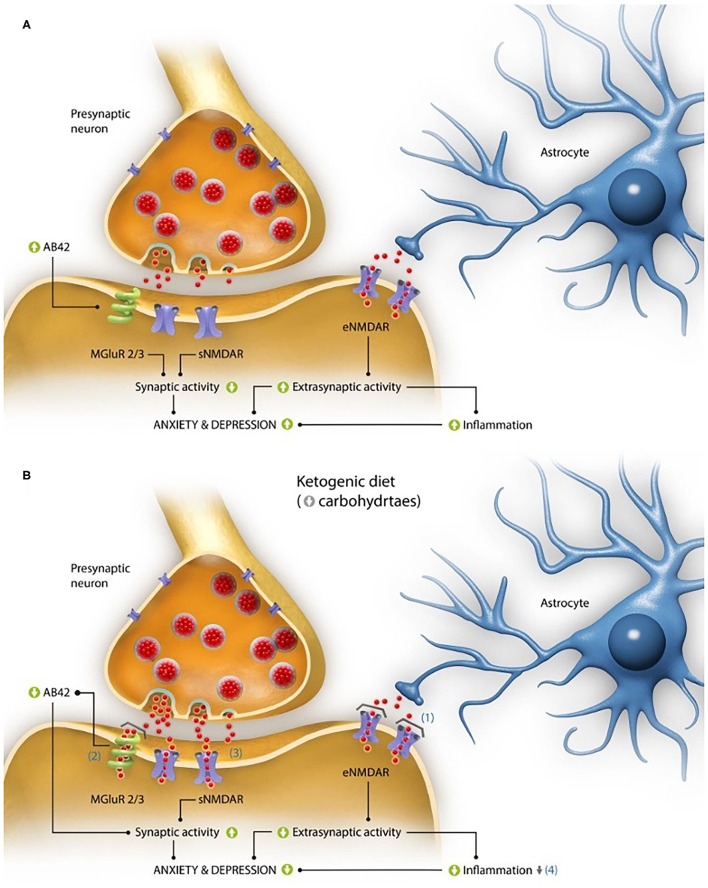
Alzheimer's disease is the most common neurodegenerative disorder in our society, mainly characterized by loss of cognitive function. However, other symptoms such as anxiety and depression have been described in patients. The process is mediated by alterations in the synaptic and extrasynaptic activity of the neurotransmitter glutamate, which are linked to a hypometabolism of glucose as the main source of brain energy. In that respect, Ketogenic diet (KD) has been proposed as a non-pharmacological treatment serving as an alternative energy source to the neurons increasing the fat percentage and reducing the carbohydrates percentage, showing promising results to improve the cognitive symptoms associated with different neurodegenerative disorders, including AD. However, the association of this type of diet with emotional symptoms and the modulation of glutamate neurotransmission systems after this dietary reduction of carbohydrates are unknown. The aim of this short review is to provide update studies and discuss about the relationship between KD, anxiety, depression, and glutamate activity in AD patients. The main results suggest that the KD is an alternative energy source for neurons in AD with positive consequences for the brain at different levels such as epigenetic, metabolic and signaling, and that the substitution of carbohydrates for fats is also associated with emotional symptoms and glutamate activity in AD.
阿尔茨海默病是我们社会中最常见的神经退行性疾病,主要特征是认知功能丧失。然而,患者还出现了焦虑和抑郁等其他症状。这一过程由神经递质谷氨酸的突触和突触外活动改变介导,这些改变与作为大脑能量主要来源的葡萄糖代谢减退有关。在这方面,生酮饮食(KD)已被提议作为一种非药物治疗方法,作为神经元的替代能量来源,增加脂肪比例并降低碳水化合物比例,在改善与包括阿尔茨海默病在内的不同神经退行性疾病相关的认知症状方面显示出有前景的结果。然而,这种饮食类型与情绪症状的关联以及在这种碳水化合物减少的饮食后谷氨酸神经传递系统的调节尚不清楚。本简短综述的目的是提供最新研究,并讨论生酮饮食、焦虑、抑郁和阿尔茨海默病患者谷氨酸活性之间的关系。主要结果表明,生酮饮食是阿尔茨海默病中神经元的替代能量来源,在表观遗传、代谢和信号传导等不同水平上对大脑有积极影响,并且用脂肪替代碳水化合物也与阿尔茨海默病中的情绪症状和谷氨酸活性有关。